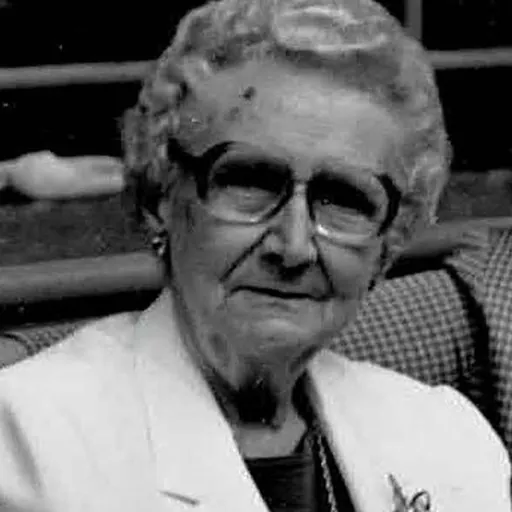
About Thelma Stevens
Lived 1902 – 1990 (aged 87–88). Thelma Stevens was a missionary.
Thelma Stevens (1902–1990) was a Methodist advocate for social and racial justice. From a young age, she dedicated herself to studying and working in favor of integration and racial equality in the United States. From her early career as a teacher in rural Mississippi, to her position as Director of the Bethlehem Center in Augusta, Georgia, to her work in the Woman's Division of The Methodist Church, Stevens contributed to the Civil Rights Movement.
Early life Thelma Stevens was born to Ben and Ida Stevens in 1902 in Montgomery County, Mississippi. She described her family as consisting of white sharecroppers. The youngest of nine, three of Stevens' siblings died before she was born. When she was six years old, her mother died and her father remarried. At age ten, following the death of her father, she went to live with her sister in Slate Springs, Mississippi, whose husband pastored a Methodist Episcopal Church, South. During that time, a group of high school students that Stevens coached in basketball tricked Stevens into taking a bus ride with them to witness a lynching. This formative experience when Stevens was nineteen years of age prompted her involvement in racial justice activism. Scarritt primarily trained social workers, deaconesses, and Methodist missionaries. Stevens graduated from Scarritt in 1928.
Christian Social Relations Department of the Woman's Division (1939–1968) In 1938, Stevens was asked to be the Superintendent of Christian Social Relations and Local Church Activities, one of the three major departments of the Women's Missionary Council of the Methodist Episcopal Church, South. The woman who held the position at the time was planning to retire before the Methodist Church, the Methodist Episcopal Church, and the Methodist Episcopal Church, South merged to become the Methodist Church. In 1939, Stevens accepted the position, moved to New York, and became the senior executive staff of the newly combined Christian Social Relations Department of the Woman's Division of the Methodist Church.
Stevens' work with the Woman's Division challenged her assumption that the Church was irrelevant to racial justice work. Through her work, she "interpreted racial equality and its meaning for Christian life to Methodist women". The Woman's Division raised their own funds rather than relying on the Methodist Church for funding, and therefore could enact more progressive policies and practices than were in place in the Methodist Church at large. In her position, Stevens worked closely with the General Board of Christian Social Concerns and the president of the Woman's Division (Sadie Wilson Tillman) to create the Church Center for the United Nations in New York City, which was built in 1963 and financed by the Woman's Division. The Church Center collaborated with women's groups around the world in support of universal human rights. In 1944, Stevens continued the activism of the Woman's Missionary Council by taking the floor at the Methodist General Conference and demanding that meetings take place in locations that hosted Black people as well as white people. While she was laughed at in this meeting, the Woman's Division was the first branch of the Methodist Church to formally call for the abolition of the racially-segregated Central Jurisdiction in 1948.
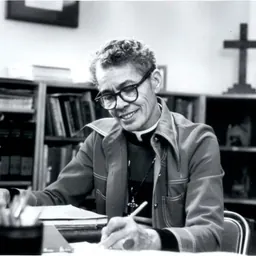
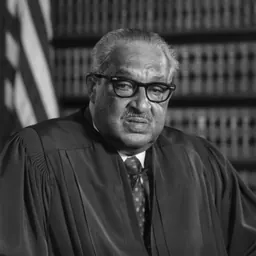
Also in 1948, Stevens hired Pauli Murray to research and gather information concerning states' laws on race and color and city ordinances (primarily known as Jim Crow Laws) and create a pamphlet that could be distributed to Methodist institutions and governing agencies. In late 1949, Murray presented the research to the Woman's Division. Rather than writing a pamphlet, Murray had written four volumes on state laws around race. Murray's compilation was published by the Woman's Division in 1951 as States' Laws on Race and Color, a text which was used in the Brown v. Board of Education Supreme Court decision. Thurgood Marshall called States' Laws on Race and Color "The Bible" for civil rights legislation. States' Laws on Race and Color contributed to a later publication entitled "Charter for Racial Justice in an Interdependent Global Community," which The United Methodist General Conference adopted as denominational policy in 1980.
Additionally, Stevens drafted a Charter for Racial Policies to desegregate the Woman's Division, which the division adopted in 1952. She followed this up by writing a broader Charter in 1962 requiring the elimination of discrimination within the entire Methodist Church, which was adopted by the General Conference in 1964.
Death At the end of her life, Thelma Stevens lived at Brooks-Howell Home, a retirement community founded to care for UMC deaconesses and missionaries in Asheville, North Carolina. She died in Asheville on December 18, 1990, due to complications from a stroke. She left behind no immediate family. Stevens is remembered fondly for her racial justice work.
Writings
1978: Legacy for the Future: The History of Christian Social Relations in Women's Division of Christian Services 1940-1968.
Don’t just read it —
keep it.
Full-length biographies made to live with: read them, listen on the way to work, watch them tonight.
- E-book
- Audio
- Video
Instant download · yours to keep · every purchase keeps this site free
Important facts
People in Thelma Stevens's life
Named in this biography and alive at the same time



Related people
Same field, nearest in time

Contemporaries
People whose lives overlapped Thelma Stevens's




Frequently asked questions
Who was Thelma Stevens?
(1902–1990) Religious and civil rights leader
When was Thelma Stevens born?
Thelma Stevens was born in 1902 in Mississippi.
When did Thelma Stevens die?
Thelma Stevens died in 1990.
What was Thelma Stevens's occupation?
Thelma Stevens was a missionary.
Sources & further reading
Cite this page
APA: Biography.guide. (2026). Thelma Stevens. https://biography.guide/thelma-stevens/
MLA: "Thelma Stevens." Biography.guide, https://biography.guide/thelma-stevens/.
Chicago: "Thelma Stevens." Biography.guide. https://biography.guide/thelma-stevens/.
Data last updated: 2026-09-20 · Spot an error? Report a correction.
Portrait: Wikimedia Commons · author & licence
Page generated 2026-09-27 04:58 UTC