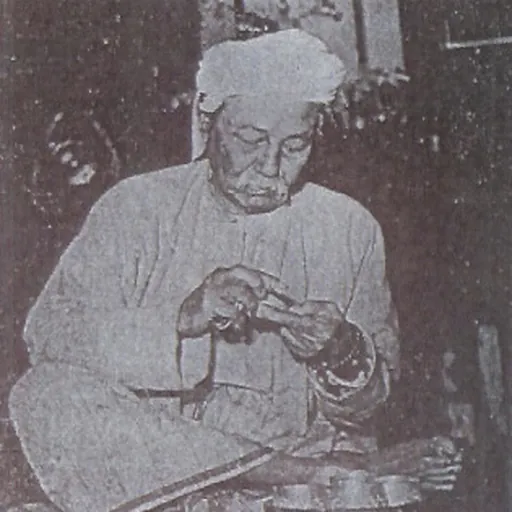
About Thakin Kodaw Hmaing
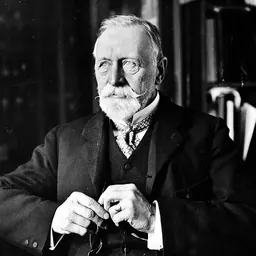
Lived 1876 – 1964 (aged 88). Thakin Kodaw Hmaing was a Myanmar politician, playwright, writer, dramatist, journalist and poet.
Thakin Kodaw Hmaing (, ; 23 March 1876 – 23 July 1964) is considered one of the greatest Burmese poets, writers and political leaders in the 20th century history of Burma. He is regarded as the Father of Burmese nationalist and peace movements as well as a literary genius. His legacy and influence on the post-war generations can still be felt in both literature and the ongoing political situation in Myanmar (Burma).
Formative years Hmaing was born Maung Lun Maung in Wale village near Shwedaung in Lower Burma. He was sent at an early age to be educated in the traditional manner in Mandalay, and at the age of 9 he witnessed the fall of the Konbaung dynasty and the abduction of King Thibaw and Queen Supayalat by the British, being taken away in a carriage, near the queen's own Myadaung Monastery where he was a boarder. It was a scene that he would never forget and one that sparked his nationalist fervour in a lifelong struggle for independence.
Literary genius In 1894 Hmaing moved to Rangoon (now Yangon) to start his career as a playwright, and switched to journalism, later on writing articles for a newspaper in Moulmein (now Mawlamyaing). In 1903 he married Ma Shin whom he had met in Rangoon before moving to Moulmein, and returned to the capital as the nationalist movement was gaining momentum in 1911 to work for the Thuriya (Sun) newspaper. Writing under his own name Maung Lun or Saya Lun, he had already reached a wide audience by now through traditional stage plays written in verse and based on historical Burmese myth and legend. He contributed regularly to the paper and other publications such as the Dagon magazine where he later became an editor.
His mastery of classical Burmese literature enabled him to write extensively in verse with such ease and flair that future generations of writers still find hard to match. A genius in multiple and complex rhyme, here is one of his couplets that has often been quoted: - "May a myriad good things with vigour have a chance; may the peacock have its call and dance". The dancing peacock (, ) was the emblem of Burmese sovereignty featured on pennants, coins and currency notes, whereas the fighting peacock (, ) is the emblem of Burmese student unions. Owei is the call of the peacock and was also the title of the Rangoon University Students Union (RUSU) magazine.
Hmaing also wrote in mixed verse and prose style brilliantly presenting satires in the form of learned religious commentaries, called in Pali, such as (On Dogs) in which he castigated politicians for wasting their time and effort in futile squabbling when they should be concentrating on the fight against colonial rule. By 1941 his reputation as a leading nationalist earned him a place on the colonial authorities' 'Burma List', regarded as an 'enemy of the state'. It was Hmaing along with other leaders of the Dobama who sent Aung San and other young men - later known as the 'Thirty Comrades' - to seek military training abroad in order to fight the British.
Peace activist
After independence in 1948 the country immediately plunged into a widespread civil war which caused great sorrow to Hmaing, and he spent the rest of his life trying to bring internal peace to the land. He was a leading light in the world peace movement in Burma, and in 1952 attended the Peace Conference for Asia Pacific Region in Peking. He was elected Chairman of the World Peace Congress (Burma) the same year, and won the Stalin Peace Prize in 1954. Hmaing also travelled to People's Republic of China, Mongolia, Hungary and the Soviet Union in 1953, and went to Ceylon and India for the World Peace Conference in 1957. He was awarded an honorary doctorate in 1960 by the University of Hamburg, West Germany.
Thakin Kodaw Hmaing gave his active support together with the former Brig.General Kyaw Zaw to the Internal Peace Committee during the 1963 peace parley between the Union Revolutionary Council government of Ne Win and various armed rebel groups including the Communist Party of Burma, Red Flag Communists, and ethnic minorities. Hmaing's was the one voice that all parties across the political divide would listen to with respect, and remained the only alternative political voice the military could not silence, after they took power in 1962, until his death at the age of 88 in 1964 when all political parties except the ruling Burma Socialist Programme Party (BSPP) were abolished by decree.
He devoted his time to peace and national reconciliation with less time for writing towards the end of his life, stating that his last wish was to see a peaceful and united country. He was buried at Kandawmin Garden Mausolea near the Shwedagon Pagoda, and on March 23, 1976, the centenary of Hmaing's birth (Hmaing yabyei), over 100 students were arrested for holding a peaceful ceremony at his mausoleum.
Thakin Kodaw Hmaing was, in Anna Allott's words, "a man of many skills - a true Buddhist and a staunch patriot; poet and playwright; historian and teacher; pioneer writer and satirist - Thakin Kodaw Hmaing is the single most revered literary figure in modern Burma".
Don’t just read it —
keep it.
Full-length biographies made to live with: read them, listen on the way to work, watch them tonight.
- E-book
- Audio
- Video
Instant download · yours to keep · every purchase keeps this site free
Important facts
Family & relationships
People in Thakin Kodaw Hmaing's life
Named in this biography and alive at the same time


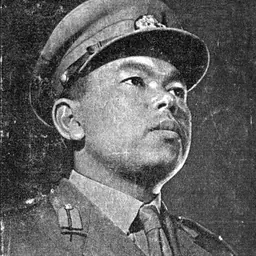
Related people
Same field, nearest in time




Contemporaries
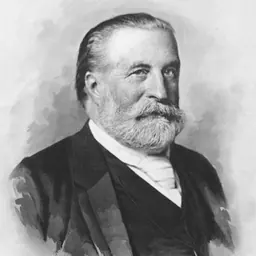
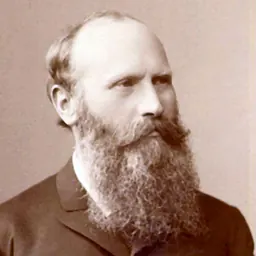
People whose lives overlapped Thakin Kodaw Hmaing's

Frequently asked questions
Who was Thakin Kodaw Hmaing?
Burmese politician (1876-1964)
When was Thakin Kodaw Hmaing born?
Thakin Kodaw Hmaing was born on 23 March 1876 in Konbaung dynasty, Pyay, Shwedaung, Bago, Walei Village.
When did Thakin Kodaw Hmaing die?
Thakin Kodaw Hmaing died on 23 July 1964 in Yangon.
What was Thakin Kodaw Hmaing's occupation?
Thakin Kodaw Hmaing was a politician, playwright, writer, dramatist, journalist and poet.
What nationality was Thakin Kodaw Hmaing?
Thakin Kodaw Hmaing was Myanmar.
Sources & further reading
· Wikipedia: Thakin Kodaw Hmaing
· DBpedia: Thakin Kodaw Hmaing
Cite this page
APA: Biography.guide. (2026). Thakin Kodaw Hmaing. https://biography.guide/thakin-kodaw-hmaing/
MLA: "Thakin Kodaw Hmaing." Biography.guide, https://biography.guide/thakin-kodaw-hmaing/.
Chicago: "Thakin Kodaw Hmaing." Biography.guide. https://biography.guide/thakin-kodaw-hmaing/.
Data last updated: 2026-09-21 · Spot an error? Report a correction.
Portrait: Wikimedia Commons · author & licence
Page generated 2026-09-27 05:00 UTC