
Tetsumi Kudo
Japanese painter, sculptor, and performance artist
About Tetsumi Kudo
Lived 1935 – 1990 (aged 55). Tetsumi Kudo was a Japanese painter, illustrator, performance artist, sculptor, visual artist and artist.
(23 February 1935 – 12 November 1990) was a Japanese avant-garde artist whose multidisciplinary practice included painting, performance, installation and sculpture. Associated with the Anti-Art (Han-geijutsu) movement in Japan in the late 1950s and early 1960s, Kudо̄'s provocative art was nourished by lifelong interests in science, sport and everyday objects. His work often presents a radically transformed and grotesque vision of the human body, calling into question its desires and its limits, as well as its future and origins. Never having officially identified with any one group or movement throughout his international career, the artist's body of work evades art historical classification.
Biography
Early life and education Kudо̄ was born in 1935 in Osaka, Japan to two artist parents, both art teachers. His father, painter Kudо̄ Masayoshi, died when Kudō was ten.
He was evacuated as a child to Aomori prefecture, where he spent the final years of World War II. Art historian Nakamura Keiji has commented that while Kudо̄ and other artists associated with the Anti-Art (Han-geijutsu) movement were too young to participate in the war, they were brought up and educated in the ideals of wartime Japan. As such, their country's eventual defeat still "constituted a psychological shock as brutal as it was unexpected".
In high school, Kudо̄ joined the art club and received private lessons from painter Koiso Ryо̄hei.
While not initially admitted to Tokyo National University of Fine Arts and Music when he first applied in 1953, he was accepted the following year. He graduated in 1958.
Kudо̄'s first solo exhibition was in 1957 at the Gallery Blanche in Tokyo, where he exhibited paintings doubtlessly inspired in part by the 1956 Tokyo exhibition Art of the World Today (Sekai konnichi bijutsu ten). The exhibition, which presented works by European and American painters associated with Abstract Expressionism and Art Informel, invigorated Japanese artists who had debated at length about the future of art after the end of the war, and further encouraged them to go beyond the limits of traditional art forms.
Kudо̄'s gestural abstract paintings are piled thick with paint and occasional drippings. Nakamura Keiji has pointed out that the canvases, despite their "automatic" appearance, suggest a deliberate precision in their composition, as if "expressing the will to construct something." Like his paintings, Kudо̄ titled these works with names evoking scientific phenomena, notably Proliferating Chain Reaction. From 1960 onwards, Kudо̄ produced almost exclusively sculptural works.
Kudо̄ also organized a series of three "Happening" events that he titled Anti-Art (Han-geijutsu) throughout 1957 and 1958. These performances involved the artist painting canvases with his entire body with extreme vigor and powerful gestures, sometimes accompanied by musicians.
In 1960, Kudо̄ participated in the massive Anpo protests against the U.S.-Japan Security Treaty. In the midst of the protests, he was invited to give a speech to the Young Japan Society (Wakai Nihon no Kai), a group of artists, writers, and composers who had banded together to take part in protest activities against the treaty. Instead of giving a lengthy speech, Kudо̄ got up on stage and said only the words "Now there is nothing left but action" (Ima ya akushon aru nomi desu) before leaving the stage, indicating his belief that the time for speeches had passed.
After moving to Paris in 1962, Kudо̄ continued to use the title Philosophy of Impotence for two happenings which utilized elements of his Tokyo installation. A memorable performance included Kudо̄ dressed as a priest, a number of phallic forms dangling from his body, convening with a large penis until finally falling on the ground while moaning. He participated in the 3rd Biennale of Paris at the Musée d'art moderne in 1963, where he submitted three works to the Japanese section (one of the three, however, was refused for being "indecent"). —also served to attack the European idea of human nobility, a major driving force in Kudо̄'s work from his arrival in Paris until the end of his life.
Despite his relative success in Paris, Kudо̄ was careful to maintain his status as an outsider. He spoke little English and did not speak any French. Anne Tronche recalled that the artist often used drawings and almost mathematical diagrams to get his point across during conversations.
1970 marked Kudо̄'s first career survey show, Tetsumi Kudo: Cultivation by Radioactivity, in Düsseldorf. In 1978, he received a fellowship from the German Academic Exchange Service to stay in Berlin. During this time, he stopped calling his performances "Happenings" and instead began calling them "Ceremonies." Indeed, Kudо̄ had abandoned the eccentric, colorful outfits that he had often donned for white robes and adopted a more meditative, mystic ambiance, that included the burning of incense and joining of his hands in prayer. The following year, he traveled with his family to Japan, staying for over a year. From 1983 until the end of his life, he would split his time between Paris and Japan, more precisely in Tsugaru, in Aomori Prefecture. Kudo's interest in Japan grew, and he began incorporating traditional arts and crafts into his own work, such as kite-painting. Kudо̄ has also featured in major exhibitions on the subject of the Japanese avant-garde, such as Japon des avant-gardes, held at the Centre Pompidou in 1986, the 1994 Guggenheim Museum exhibition Japanese Art After 1945: Scream Against the Sky, as well as the 2012 exhibition Tokyo 1955-1970: A New Avant-Garde organized by the Museum of Modern Art, New York.
Since his passing, major institutions in the Netherlands, the United States, France, Japan and Denmark have organized retrospectives of his work.
The late artist Mike Kelley wrote about Kudо̄'s significant influence on his work.
Public collections and selected exhibitions
Collections Kudo's work can be found in the following public collections: Aomori Museum of Art, Aomori Centre Georges Pompidou, Paris Chiba City Art Museum, Chiba City Kurashi City Art Museum, Kurashi City Musée d'Art Contemperain de Marseilles, Marseilles Musée d'Art Moderne de la Ville de Paris, Paris Musée des Beaux Arts de Montréal, Montreal Museum Moderner Kunst Stiftung Ludwig Wien, Vienna, Museum of Contemporary Art, Tokyo Museum of Modern Art, New York National Museum of Art, Osaka Stedelijk Museum voor Actuele Kunst, Ghent Stedelijk Museum, Amsterdam Walker Art Center, Minneapolis
Selected solo exhibitions
1958: Tetsumi Kudo: Demonstration of Making, Blanche Gallery, Tokyo 1961: Tetsumi Kudo: Philosophy of Impotence, Distribution Map of Impotence and the Appearance of Protective Domes at the Points of Saturation, Bungei Shunjū Gallery, Tokyo 1965: Tetsumi Kudo: rien n'est laissé au hasard [Tetsumi Kudo: Nothing is left to chance], Galerie J, Paris 1970: Tesumi Kudo: Cultivation by Radioactivity, Künstverein für die Rheinland und Westfalen, Düsseldorf 1972: Tetsumi Kudo: Pollution - Cultivation - New Ecology - Your Portrait, Stedelijk Museum, Amsterdam 1977: Kudo: Portrait de l'artiste dans la crise/cages - peintures à l'ordinateur [Kudo: Portrait of the artist in crisis/cages - computer paintings], Galerie Beaubourg, Paris 1981: Tetsumi Kudo 1977-1981, Sogetsu Museum, Tokyo 1986: The Path an Artist Has Taken: The World of Tetsumi Kudo, Hirosaki City Museum, Hirosaki 1989: KUDO, Nouvelle écologie [KUDO, New Ecology], Galerie du Génie/FIAC, Paris 1991: Tetsumi Kudo 1935-1990, Stedelijk Museum, Amsterdam 1994: Tetsumi Kudo - Contestation/Création, National Museum of Art, Osaka 2007: Tetsumi Kudo: La montagne que nous cherchons est dans la serre [Tetsumi Kudo: The mountain we seek is in the greenhouse], La Maison Rouge, Paris 2008: Tetsumi Kudo: Garden of Metamorphosis, Walker Art Center, Minneapolis 2013: Your Portrait: A Tetsumi Kudo Retrospective, National Museum of Art, Osaka, 2020: Tetsumi Kudo - Cultivation, Louisiana Museum of Modern Art, Humblebaek
Selected group exhibitions
1961: Adventure in Today's Art of Japan, National Museum of Modern Art, Tokyo 1961: Continuité et avant-garde au Japon, International Center of Aesthetic Research, Torino 1962: Pour conjurer l'esprit de Catastrophe [So as to conjure the spirit of Catastrophe], Galerie Raymond Cordier, Paris 1963: 3e Biennale de Paris (Japan Section), Musée d'art moderne de la ville de Paris, Paris 1965: Les objecteurs, Galerie J, Paris 1967: Science Fiction, Kunsthalle Bern, Bern 1977: 14th Bienale Internacional de São Paolo, São Paulo, Brazil 1981: The 1960s: A Decade of Change in Contemporary Japanese Art, National Museum of Modern Art, Tokyo 1985: Reconstructions: Avant-Garde Art in Japan, 1945-1965, Museum of Modern Art, Oxford 1986: Japon des avant-gardes, 1910-1970, Centre Georges Pompidou, Paris 1994: Japanese Art after 1945: Scream Against the Sky, Guggenheim Museum, New York 1994: Revolution: Art of the Sixties from Warhol to Beuys, Museum of Contemporary Art, Tokyo 1994: Hiroshima: The Past and the Promise, Kunamoto Prefectural museum of Art, Kumamoto 1994: Hors limites: l'art et la vie 1952-1994 [Beyond limits: art and life 1952-1994], Centre Georges Pompidou, Paris 1995: Japanese Culture: The Fifty Postwar Years, Meguro Museum of Art, Tokyo 1998: Out of Actions: Between Performance and the Object, 1949-1979, Museum of Contemporary Art, Los Angeles 2001: Les années pop [The pop years], Centre Georges Pompidou, Paris 2002: The Unfinished Century: Legacies of 20th Century Art, National Museum of Modern Art, Tokyo 2007: Living in the Material World: 'Things' in Art of the 20th Century and Beyond, National Art Center, Tokyo 2012: Objet d'art du Japon: From the 1920s to the 70s, Urawa Art Museum, Saitama 2012: Tokyo 1955-1970: A New Avant-Garde, Museum of Modern Art, New York 2016: Postwar: Art Between the Pacific and the Atlantic, 1945-1965, Haus der Kunst, Munich 2017: Jardin Infini. De Giverny à l'Amazonie [Infinite garden. From Giverny to the Amazon], Centre Pompidou Metz 2022: Future Bodies from a Recent Past, Munich, Museum Brandhorst 2022: Biennale di Venezia, 'The Milk of Dreams', Venice
Don’t just read it —
keep it.
Full-length biographies made to live with: read them, listen on the way to work, watch them tonight.
- E-book
- Audio
- Video
Instant download · yours to keep · every purchase keeps this site free
Important facts
People in Tetsumi Kudo's life
Named in this biography and alive at the same time
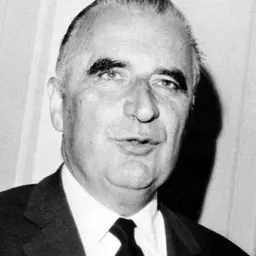
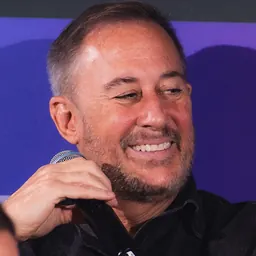
Related people
Same field, nearest in time
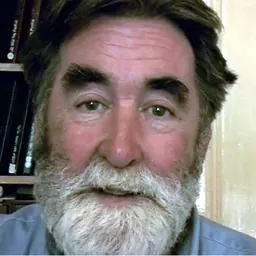
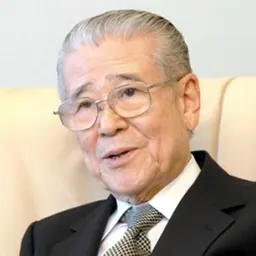

Contemporaries
People whose lives overlapped Tetsumi Kudo's



Frequently asked questions
Who was Tetsumi Kudo?
Japanese painter, sculptor, and performance artist (1935-1990)
When was Tetsumi Kudo born?
Tetsumi Kudo was born on 23 February 1935 in Hyōgo Prefecture.
When did Tetsumi Kudo die?
Tetsumi Kudo died on 12 November 1990 in Tokyo.
What was Tetsumi Kudo's occupation?
Tetsumi Kudo was a painter, illustrator, performance artist, sculptor, visual artist and artist.
What nationality was Tetsumi Kudo?
Tetsumi Kudo was Japanese.
Sources & further reading
Cite this page
APA: Biography.guide. (2026). Tetsumi Kudo. https://biography.guide/tetsumi-kudo/
MLA: "Tetsumi Kudo." Biography.guide, https://biography.guide/tetsumi-kudo/.
Chicago: "Tetsumi Kudo." Biography.guide. https://biography.guide/tetsumi-kudo/.
Data last updated: 2026-09-26 · Spot an error? Report a correction.
Page generated 2026-09-27 05:14 UTC