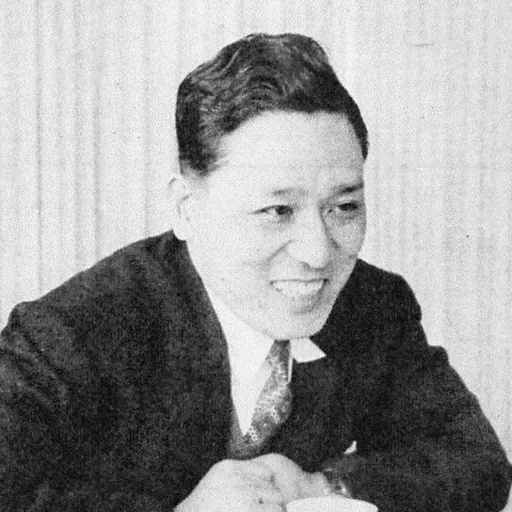
Tetsuji Takechi
Japanese theatrical and film director, critic and author
About Tetsuji Takechi
Lived 1912 – 1988 (aged 75). Tetsuji Takechi was a Japanese film director, impresario, theatre director, writer and kabuki.
Life and career
Early life Tetsuji Takechi was born Tetsuji Kawaguchi in Osaka on 10 December 1912 to a family headed by a wealthy industrialist. He studied economics at Kyoto National University and graduated in 1936. Takechi first became known for his criticism and theoretical writings on the theater. In 1939 he began publishing a journal, Stage Review in which he printed his writings on the theater. In the early 1940s, he began publishing collections of these writings in book form. When World War II came to an end, Takechi used his inheritance from his father to establish a theatrical troupe.
Takechi Kabuki The immediate post-World War II era was a difficult time for kabuki. Besides the devastation caused to major Japanese cities as a result of the war, the popular trend was to reject the styles and thoughts of the past, kabuki among them. Kabuki scholars credit Takechi's innovative productions of the kabuki classics with bringing about a rebirth of interest in the kabuki in the Kansai region after this low point in kabuki history. By bringing out the psychology already present in the classic texts, Takechi felt that actors could interpret their roles with vitality and energy which he felt was lacking in contemporary performances. Of the many popular young stars of the kabuki who performed under Takechi, Nakamura Ganjiro III (born 1931) was the leading figure. At first known as Nakamura Senjaku, this period in Osaka kabuki became known as the "Age of Senjaku" in his honor. Takechi saw in kyōgen a more direct link to a native Japanese folk theatrical tradition, and through the kyōgen wanted to link these folk traditions with the modern theater. As a Western analogy of his intentions, Takechi pointed to the works of Ibsen and Tennessee Williams which had their roots in the classical theater of Racine, Molière and Shakespeare.
In 1954, Takechi followed Susugigawa with a noh-kyōgen version of Junji Kinoshita's Yūzuru. Yūzuru is one of the most successful Japanese post-World War II plays, having received over a thousand performances at schools and theaters both within Japan and internationally since its debut in 1949. Composer Ikuma Dan wrote an opera version of the play in 1952. Since its premiere, Dan's opera has been performed more than 550 times, making it possibly the most popular opera written in Japanese. Dan was recruited to write the original music for Takechi's production of the play. Dan combined the noh-style solo vocal lines with a Western orchestra and chorus. On the same program as Yūzuru was another Takechi-directed kyōgen, Higashi wa Higashi (East is East), a parody of the kyōgen style. Among the innovations Takechi made in this play was the inclusion of a former Takarazuka actress in the usually all-male kyōgen cast. In the ultra-conservative noh and kyōgen communities, simply appearing in a rival school's production could result in an actor's excommunication from the profession. Because of the public attention drawn through Takechi's relentless publicity work and communication with the media, punitive actions against actors who worked with Takechi were avoided.
Besides his work as a theatrical theorist and director, Takechi occasionally appeared in acting roles on the stage and screen. In his series of essays, Chronicles of My Life in the 20th Century, American author and translator of Japanese literature, Donald Keene mentions his own study of kyōgen at this time. In 1956, Keene appeared in a performance of the kyōgen play Chidori with Takechi in the role of the sake shop owner, before an audience including such prominent authors as Tanizaki, Yasunari Kawabata and Yukio Mishima.
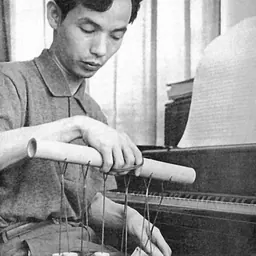
Writing that "every form of art" should be popular with the public, Takechi next sought to rejuvenate noh in a similar manner with which he had kabuki and kyōgen. He worked with the avant-garde group Jikken Kōbō (Experimental Workshop), which had been founded by composers Tōru Takemitsu, Jōji Yuasa and other artists in 1951. One of Takechi's more notable productions with the group was a 1955 noh version of Schoenberg's Pierrot Lunaire (1912).
In October 1955 he directed Mishima's modern noh play, The Damask Drum in a theater-in-the-round production at Osaka's Sankei Hall. Mishima, dubious of Takechi's experimental approach to classical theater, later commented that he felt like a father allowing a disreputable plastic surgeon to operate on his child. Also at Sankei Hall, Takechi directed Mishima's Sotoba Komachi, set as an opera by composer Mareo Ishiketa, in 1956. Confirming that Takechi's methods did make the artform popular, his "Burlesque Noh" productions at Tokyo's Nichigeki Music Hall played to a consistently full house. Again, however, the leaders of the conservative Noh Society of Tokyo threatened any performer who participated in Takechi's productions with excommunication.
From 4 December 1956 to 26 February 1957, Takechi served as the host of the Nippon Television program, The Tetsuji Takechi Hour. The show featured the Takechi Kabuki's interpretations of such Japanese stage classics as Chūshingura, and was also known for pushing the limits of the coverage of sexual subjects on television for its time. Takechi directed two more kabuki performances for the Nissei Theater in Tokyo, not long after it was opened in 1963. Though these would be his last kabuki productions, Takechi's influence on the art form continued to be felt for decades after his departure for the cinema. Some of the innovations and trends in Japanese erotic cinema which Takechi's films pioneered include big-budgets and releases, literary and artistic aspirations, fogging, political themes, and theatrical hardcore.
Takechi ran afoul of the government throughout his film career. The Weissers, in their Japanese Cinema Encyclopedia: The Sex Films, even characterize Takechi's entire film career as "a personal war with Eirin" (the Japanese film-rating board). Turning from the Edo period art form of kabuki to another popular Edo period form of expression, pornography, Takechi decided to enter the film industry through the new genre of low-budget, independent softcore sex-films that were becoming popular in Japan. These films were called eroductions at this time, but are now more commonly referred to as pink films.
Takechi's first film was A Night in Japan: Woman, Woman, Woman Story (Nihon no yoru: Onna onna onna monogatari, 1963), a sex-documentary in the mondo style popular at the time. The film focused on the women of Japan's night life and included scenes of a nude noh performance, strippers, and geisha. Produced independently, Shochiku studios distributed the film, allowing it an international audience. It was released in West Germany on 6 March 1964 as Frauen unter nackter Sonne (alle Frauen Japans). In the U.S., it opened in Los Angeles under the title Women... Oh, Women! on 18 September 1964. Later that year, Takechi appeared in an acting role in director Kaneto Shindō's Mother (1963).
Daydream (1964)
The first Japanese mainstream film with nudity was Seijun Suzuki's Gate of Flesh (1964), and Takechi made the first big-budget, mainstream pink film, Daydream (白日夢), the same year. Like Women... Oh, Women!, Daydream was produced independently but Shochiku studios distributed the film. This time, the studio gave Takechi's film a major publicity campaign.
Though modest in comparison with pink films which would come soon after, Daydream did contain female nudity. The government refused to allow one controversial shot, which gave a brief glimpse of pubic hair. Takechi fought the government's censorship of this shot, but lost. When the censors obscured the offending hair with a fuzzy white dot, Daydream became the first film in Japanese cinema to undergo "fogging", a common element in Japanese erotic cinema for decades to come. The film was released in the U.S. later the same year, and in 1966 Joseph Green, director of the cult film The Brain that Wouldn't Die (1962), re-released Daydream in the U.S. with new American footage. Based on two short stories, "Kasanka Mangansui no Yume" and "Yanagiyu no Jiken" by Jun'ichirō Tanizaki, the film depicts the lurid and violently erotic dreams of a writer, his wife and his sister, after having spent a night out drinking and visiting sex shows. The Dream of the Red Chamber underwent extensive censorship before the government would allow it to be released. Film critic Tadao Sato says that the film uses sex to make a political statement. "In Black Snow... the powerless position of Japan vis-a-vis America, and of the Japanese populace in relation to its rulers is represented by the outraged Japanese women and the G.I. rapists."
Other critics accused the film of racism and ultra-nationalism. Jasper Sharp writes that though Takechi's films did criticize Japanese society, a theme they share with pink films, Takechi identified the problem as coming from foreign influences, rather than from within. This marks him as a reactionary rather than a revolutionary, as were many pink film directors. Takechi himself claimed to be a minzoku shugisha, or "ethnic nationalist", throughout his life. Buruma points out that this ideological affiliation contains a strong racial aspect, and notes that the G.I. the main character murders in Black Snow is African American. Buruma comments further, "This, incidentally, has become a standard cliche: whenever G.I.s are shown in Japanese porno films, invariably in the act of outrageously raping Japanese maidens, they are very often blacks to make the outrage seem even worse."
Though the government had accused earlier films of obscenity, Black Snow became the first film after World War II to be prosecuted by the government on obscenity charges. All copies of the film were confiscated from Nikkatsu and from Takechi's own home, and Takechi was arrested. Japan's intellectual and artistic community came to Takechi's defense. Film directors Nagisa Oshima and Seijun Suzuki and authors Yukio Mishima and Kōbō Abe testified in Takechi's defense at the trial. Takechi took advantage of every opportunity to publicly speak out against censorship, and one Eirin official later admitted to being "terrified by the man".
After Black Snow During the legal battles of the trial, Takechi filmed a pink film re-telling of The Tale of Genji, On 17 September 1967, Takechi won the Black Snow case.
Takechi's next film after the trial was Ukiyo-e Cruel Story (1968), starring the current "Queen" of Pink films, Noriko Tatsumi. The Weissers call this film, about a painter of erotic pictures who is persecuted by the government, "Takechi's personal message to Eirin." Though still containing significant erotic content, this is one of Takechi's few films to pass the censor relatively un-edited, perhaps because Eirin saw the obvious anti-governmental censorship message in the film, and did not wish to be provoked into another embarrassing public confrontation with the outspoken director. In 1972, he again appeared in an acting role for director Kaneto Shindō in his Art Theatre Guild film based on a Tanizaki novel, Sanka.
Return to film In 1981, the then 68-year-old Takechi decided to return to film with a series of theatrical hardcore films, beginning with a remake of his 1964 Daydream, also titled Daydream. Noticing actress Kyōko Aizome in one of her nude photo magazine appearances, Takechi chose her to star in the film. Japan's first theatrically released film featuring hardcore sex, Aizome added to the controversy surrounding the film by admitting to having performed actual sexual intercourse on camera. Though, as Japanese law required, sexual organs and pubic hair were fogged on screen, the Asahi Shimbun called it a breakthrough film, and Japan's first hardcore pornographic movie. Unlike Takechi's earlier Dream of the Red Chamber, the full, uncensored version of Daydream 1981 did survive, and circulated underground in Japan. This uncensored version of the film was released on video at one time in the Netherlands.
Takechi's next film, Courtesan (Oiran, 1983), like his Daydream films, was based on a Tanizaki novel. The film is set at the end of the 19th century, and tells the story of a Yokohama prostitute who services American sailors. The woman is possessed by the spirit of her dead lover, who, in erotic scenes echoing The Exorcist (1973), makes his presence known whenever she is sexually aroused. Because of the large budget involved in the production, the distributing studio submitted Courtesan to Eirin repeatedly, and agreed to every cut the reviewing board recommended. The heavy cutting the film received reduced it from near-hardcore to a very softcore historical drama. Takechi again took advantage of the situation to fight Eirin, and complained publicly about the censorship. He refused to allow the film to be censored in any way, either through cutting or fogging. Refusing to release the film in Japan, he did not submit it for Eirin's approval. Instead, he released it in Guam, where it played primarily to Japanese tourist audiences for several years under the U.S.'s more liberal pornography laws. Takechi died of pancreatic cancer the following year, on 26 July 1988. Without a major studio's backing or interest from the general pink film community, Takechi's name and films faded into obscurity in Japan. In 2006 his career was the subject of a full retrospective showing in Tokyo's Image Forum in 2006.
Legacy Jasper Sharp points out that the Japanese and western views of Takechi's legacy are quite different. While western sources assess him as a major figure in the early development of the pink film, many current Japanese sources on the subject ignore his work. Sharp notes, however, that during his lifetime, he was covered prominently in Japanese sources. He speculates that his legacy has been largely forgotten in his homeland partly because of his status as an outsider in the Japanese film communities—both mainstream and pink. Since his films were self-produced and distributed by major film companies rather than through the eroduction circuit, they are not technically pink films. Also, his right-wing political background conflicts with the generally revolutionary stance more often associated with the pink film. Since his death in 1988, the lack of a studio or other publicist, or coverage by writers on the pink film has kept his work out of the public's eye in Japan. In the west, however, some of Takechi's films, such as Daydream were shown during their first runs, reviewed by major publications such as Variety, and have been preserved and remained available to genre audiences on home video releases.
During his lifetime, Takechi's innovations and contributions to Japanese theater in general and to kabuki specifically were influential for decades. His theoretical work, as well as his mentoring of several important stars, helped bring about a rebirth in kabuki after World War II.
Women... Oh, Women!日本の夜 女・女・女物語Nihon no yoru: Onna onna onna monogatari 15 May 1963 Daydream白日夢Hakujitsumu Kanako MichiAkira Ishihama 21 June 1964 The Dream of the Red Chamber aka Crimson Dream紅閨夢Kōkeimu Yōkichi GotoMina YanagiChiyo Aoi 12 August 1964 Black Snow黒い雪Kuroi yuki Akira IshihamaChitose KurenaiKotobuki HananomotoChōjirō HanagawaYōichirō Mikawa 9 June 1965 The Tale of Genji源氏物語Genji monogatari Kotobuki HananomotoRuriko AsaokaIzumi Ashikawa 14 January 1966 Genjitsu幻日Genjitsu 1966 Postwar Cruel Story戦後残酷物語Sengo zankoku monogatari Chitose KurenaiKanako MichiMasako Arisawa 10 February 1968 Ukiyo-e Cruel Story浮世絵残酷物語Ukiyo-e zankoku monogatari Tamawa KarinaNoriko TatsumiRyuji Inazuma 9 September 1968 Madam Scandalスキャンダル夫人Scandal fujin Junko NishitaniMichiko SakyōToyozo Yamamoto 28 February 1973 Daydream白日夢Hakujitsumu Kei SatōKyōko AizomeTakemi Katsushika 12 September 1981 Courtesan華魁Oiran Takako ShinozukaSatoshi MashibaMidori YuzakiKozue Azusa 19 February 1983 Sacred Koya高野聖Koya Hijiri 1984 Daydream 2 aka Captured For Sex白昼夢2Hakujitsumu zoku Kei SatōKyōko AizomeKenji Hayami 7 February 1987
Selected writings
Don’t just read it —
keep it.
Full-length biographies made to live with: read them, listen on the way to work, watch them tonight.
- E-book
- Audio
- Video
Instant download · yours to keep · every purchase keeps this site free
Important facts
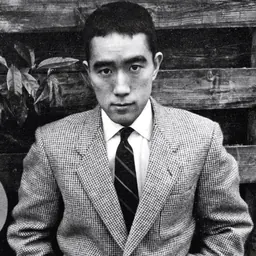
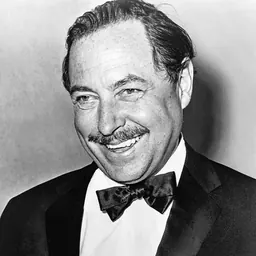
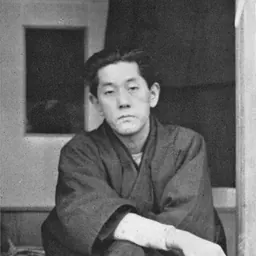
People in Tetsuji Takechi's life
Named in this biography and alive at the same time




Related people
Same field, nearest in time



Contemporaries
People whose lives overlapped Tetsuji Takechi's






Frequently asked questions
Who was Tetsuji Takechi?
Japanese theatrical and film director, critic and author (1912-1988)
When was Tetsuji Takechi born?
Tetsuji Takechi was born on 10 December 1912 in Osaka.
When did Tetsuji Takechi die?
Tetsuji Takechi died on 26 July 1988 in Kanagawa Prefecture.
What was Tetsuji Takechi's occupation?
Tetsuji Takechi was a film director, impresario, theatre director, writer and kabuki.
What nationality was Tetsuji Takechi?
Tetsuji Takechi was Japanese.
Sources & further reading
Cite this page
APA: Biography.guide. (2026). Tetsuji Takechi. https://biography.guide/tetsuji-takechi/
MLA: "Tetsuji Takechi." Biography.guide, https://biography.guide/tetsuji-takechi/.
Chicago: "Tetsuji Takechi." Biography.guide. https://biography.guide/tetsuji-takechi/.
Data last updated: 2026-09-22 · Spot an error? Report a correction.
Portrait: Wikimedia Commons · author & licence
Page generated 2026-09-27 04:59 UTC