
About Terentii Shtykov
Lived 1907 – 1964 (aged 57). Terentii Shtykov was a Russian political commissar and politician.
World War II During World War II, Shtykov served as a political commissar in several fronts near Leningrad. By the end of the war he was one of only three Colonel general political commissars (the highest rank allowed for political commissars in the Red Army). As political commissar of the Far Eastern Front, Shtykov assisted Marshal Kirill Meretskov in accepting the surrender of Japan in northern Korea on August 19, 1945. After the war, he was made deputy commander of the Primorskiy Military District.
Soviet Civil Administration in Korea
Following the division of Korea, Joseph Stalin sought to turn northern Korea into a socialist buffer state between the Soviet bloc and the American occupation in the southern half of the peninsula. Shtykov's influence rose in tandem with the rise of his mentor Andrei Zhdanov, who was thought to be Stalin's most likely successor after the war. As member of the Military Council for the Primorskiy District, Shtykov frequently visited Pyongyang and communicated to Zhdanov and Stalin about developments on the Korean Peninsula. Shtykov "exercised extremely close supervision over political events in North Korea" on Stalin's behalf. As the most powerful man in the northern occupation zone of Korea, Shtykov personally selected the composition of the Soviet Civil Administration, and its second leader would comment that "there was not an event [in North Korea] in which Shtykov was not involved." Shtykov and his aides repeatedly urged the Soviet Union to send more aid to Korea. He became friends with Kim Il Sung, and Shtykov's strong support of Kim was decisive in his rise to power. The original 1948 North Korean constitution was primarily authored by Stalin and Shtykov in Moscow. The constitution went into effect only after the two had a lengthy discussion on editing the draft though some articles were later rewritten by Soviet supervisors. On 10 July 1948, in response to elections in South Korea, the Soviet Politburo instructed Shtykov to implement the constitution, which was done by the People’s Assembly of North Korea, which led to the establishment of the Democratic People's Republic of Korea. On 27 August, Shtykov wrote a preliminary composition of the North Korean cabinet in his diary, as well as a final one on 30 August. Shtykov was later named the first Soviet Ambassador to the DPRK.
Land reform General Shtykov was the main instigator of North Korea's March 1946 land reform program, though Kim Il Sung usually gets the credit for it in both North and South Korea. Originally, the Soviet blueprint for land reform had involved compensating the large landowners and selling the land to the farmers. Shtykov suggested that the land be confiscated from landowners and Japanese collaborators and distributed to poor and landless peasants without compensation. The nationwide land reform broke the feudal socioeconomic structure and proved highly popular with many North Korean peasants. Many rich landowners and collaborators fled to the South, which allowed the reform to happen with little bloodshed.
Korean War While Stalin intended to use North Korea as a buffer state to the Western-friendly South Korea and Japan, Shtykov was sympathetic to North Korean attempts to liberate the South through socialism. Shtykov supported Kim Il Sung and Pak Hon-yong's 31 May 1949 proposal to create a Democratic Front for the Reunification of the Fatherland to advocate for peaceful unification of North and South, noting that Syngman Rhee's likely refusal would damage his legitimacy among the Korean population. Shtykov suspected that Rhee would attack the North by June 1950 and backed the DFUF "to slow down southern aggression, cultivate alliances with anti-Rhee forces in the South, and make the West appear opposed to North-South unification." After the victory of the Chinese Communist Party in the Chinese Civil War Kim persistently lobbied the Soviets to support a Northern-led violent unification of the peninsula.
Shtykov was sympathetic to Kim's proposal and helped him persuade a reluctant Stalin to accept Kim's cause. Kim and Shtykov assured Stalin that the war would be a short blitzkrieg "at almost no cost," and Shtykov predicted that it would not provoke a Western involvement. On 30 January 1950, Stalin telegraphed Shtykov to say that an invasion "would need extensive preparations" and that "it should be organised without taking too big a risk". On June 25, 1950, North Korea invaded the South. Seoul fell rapidly, and by late July, the DPRK controlled all of Korea except Busan and the surrounding area. However, after the UN intervention at the Battle of Inchon, the military situation reversed. North Korea was saved only by Chinese intervention, and Shtykov's diplomatic career ended. On 22 November 1950, Shtykov was dismissed from participating in all military affairs, which were now handled by Lieutenant General Vladimir Razuvayev. He was then recalled home and never returned to Korea.
Later career and death After being fired, Shtykov was demoted to major general on 3 February 1951 and was appointed deputy chairman of Kaluga Oblast. He later served as First Secretary of Novgorod and Primorskiy Oblast, before being named Ambassador to Hungary in 1959. Shtykov's hardline Stalinism clashed with János Kádár's Goulash Communism policies, and he was recalled in 1960. He served as Chairman of the State Control Commission for the Council of Ministers of the Russian Soviet Federative Socialist Republic before dying on vacation in 1964.
Historic significance Shtykov's decisions proved highly consequential for the Korean Peninsula and the world. Although Shtykov was the pre-eminent leader of North Korea from 1945 to 1950, he allowed Koreans to take the credit for his policies. Shtykov's support of Kim over other Korean communists such as Pak Hon-yong was a chief factor in the Kim family's rise to power. Additionally, Shtykov masterminded the 1946 land reform in North Korea, which was arguably the most popular policy conducted in either Korea. South Korea reversed the land reform during the brief United Nations occupation of the North, which provoked a backlash by local farmers. Most significant was Shtykov's decision to support Kim's effort to violently reunite the peninsula, which ended his career. Shtykov's sympathy to Kim's expansionist aims almost certainly made Stalin authorize the Korean War. The war did not end in the capitulation of the American-backed South but allowed Kim to secure effective North Korean independence from the Soviet Union. All of Shtykov's actions are today attributed to Kim by North Korean official media, and even South Korean media assumes that Kim was the driving force behind land reform.
Awards and honors
A village in Shkotovsky District of Primorsky Krai was named in honor of him. An embankment in Staraya Russa was also named after him. From 1967 to 1991, the in Veliky Novgorod was named in honor of Shytkov before its original name was returned.
Don’t just read it —
keep it.
Full-length biographies made to live with: read them, listen on the way to work, watch them tonight.
- E-book
- Audio
- Video
Instant download · yours to keep · every purchase keeps this site free
Important facts
People in Terentii Shtykov's life
Named in this biography and alive at the same time


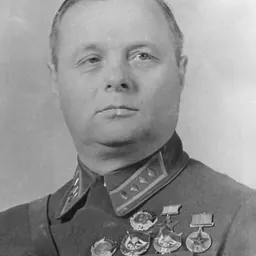
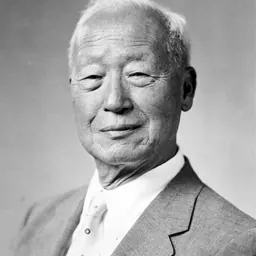
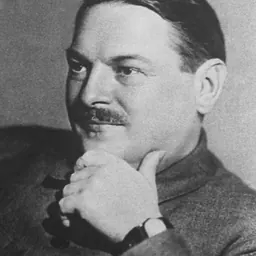

Related people
Same field, nearest in time



Contemporaries
People whose lives overlapped Terentii Shtykov's


Frequently asked questions
Who was Terentii Shtykov?
Soviet politician (1907–1964)
When was Terentii Shtykov born?
Terentii Shtykov was born on 28 February 1907 in Gorodok County.
When did Terentii Shtykov die?
Terentii Shtykov died on 25 October 1964 in Moscow.
What was Terentii Shtykov's occupation?
Terentii Shtykov was a political commissar and politician.
What nationality was Terentii Shtykov?
Terentii Shtykov was Russian.
Sources & further reading
Cite this page
APA: Biography.guide. (2026). Terentii Shtykov. https://biography.guide/terentii-shtykov/
MLA: "Terentii Shtykov." Biography.guide, https://biography.guide/terentii-shtykov/.
Chicago: "Terentii Shtykov." Biography.guide. https://biography.guide/terentii-shtykov/.
Data last updated: 2026-09-20 · Spot an error? Report a correction.
Page generated 2026-09-27 05:20 UTC