
Terence V. Powderly
American labor union leader, politician and attorney
About Terence V. Powderly
Lived 1849 – 1924 (aged 75). Terence V. Powderly was an American politician and trade unionist.
Terence Vincent Powderly (January 22, 1849 – June 24, 1924) was an American labor union leader, politician and attorney, who was the Grand Master Workman of the Knights of Labor from 1879 to 1893.
Born in Carbondale, Pennsylvania, he was later elected mayor of Scranton, Pennsylvania, for three 2-year terms, starting in 1878. A Republican, he served as the United States Commissioner General of Immigration in 1897. The Knights of Labor was one of the largest American labor organizations of the 19th century, but Powderly was a poor administrator and could barely keep it under control. His small central office could not supervise or coordinate the many strikes and other activities sponsored by union locals. Powderly believed that the Knights were an educational tool to uplift the workingman, and he often cautioned against the use of strikes to achieve workers' goals.
Powderly's influence reportedly led to the passing of the alien contract labor law in 1885 and the establishment of labor bureaus and arbitration boards in many states. The Knights failed to maintain its large membership after being blamed for the violence of the Haymarket Riot of 1886. It was increasingly upstaged by the American Federation of Labor under Samuel Gompers, which coordinated numerous specialized craft unions that appealed to skilled workers, instead of the mix of unskilled, semiskilled, and skilled workers in the Knights.
Early life Terence Vincent Powderly was born the 11th of 12 children on January 22, 1849, to Irish parents who had come up from poverty, Terence Powderly and Madge Walsh, who had emigrated to the United States in 1827. (Although tongue-in-cheek, Powderly himself claims to have been found in an old log by a doctor, and left with his mother, who happened to have the home in closest proximity.) As a child he contracted the measles, as well as scarlet fever which left him deaf in one ear.
Scranton Powderly ended his travels in Scranton, Pennsylvania, where he found work as a machinist installing coal breakers. During the election he proposed financing public works project through low interest government loans as a means of providing work for the many unemployed.
Knights of Labor Powderly is most remembered for leading the Knights of Labor ("K of L"), a nationwide labor union. He joined the Knights in 1874, In speaking on nationwide violence against the "Chinese evil", Powderly blamed the "indifference of our law-makers to the just demands of the people for relief."
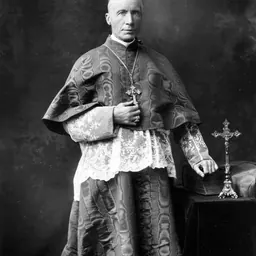
Powderly worked with Bishop James Gibbons of to persuade the Pope to remove sanctions against Catholics who joined unions. The Catholic Church had opposed the unions as too influenced by rituals of freemasonry. The Knights of Labor removed the words "The Holy and Noble Order of" from the name of the Knights of Labor in 1882 and abandoned any membership rituals associated with freemasonry.
Powderly was more influenced by the Greenback ideology of producerism than by socialism, a rising school of thought in Europe and the United States. Since producerism regarded most employers as "producers", Powderly disliked strikes. At times, the Knights organized strikes against local firms where the employer might be admitted as a member. The strikes would drive away the employers, resulting in a more purely working-class organization.
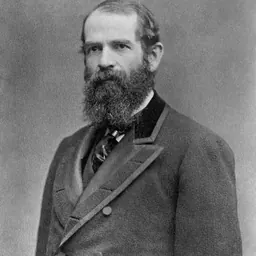
Despite his personal ambivalence about labor action, Powderly was skillful in organizing. The success of the Great Southwest railroad strike of 1886 against Jay Gould's railroad more than compensated for the internal tension of his organization. The Knights of Labor grew so rapidly that at one point the organization called a moratorium on the issuance of charters.
The union was recognized as the first successful national labor union in the United States. In 1885-86 the Knights achieved their greatest influence and greatest membership. Powderly attempted to focus the union on cooperative endeavors and the eight-hour day. Soon the demands placed on the union by its members for immediate improvements, and the pressures of hostile business and government institutions, forced the Knights to function like a traditional labor union. However, the Knights were too disorganized to deal with the centralized industries that they were striking against. Powderly forbade them to use their most effective tool: the strike. Powderly intervened in two labor actions: the first against the Texas and Pacific Railroad in 1886 and the second against the Chicago Meatpackinghouse industry. 25,000 workers in the Union Stockyards struck for an 8-hour day in 1886 and to rescind a wage reduction. In both cases, Powderly ended strikes that historians believe that labor could have won. This is when the Knights of Labor began to lose its influence. Powderly also feared losing the support of the Catholic Church, which many immigrant workers belonged to; the church authorities were essentially conservative and feared that the K of L was plotting a "socialist revolution".
Powderly's insistence on ending both these strikes meant that the companies did not fear the K of L would use strikes as direct action to gain wage and labor benefits. After this, both Jay Gould and the Chicago Packinghouses won complete victories in breaking both strikes.
Powderly, during the Knight's 1886 general assembly in Richmond, Virginia purposely invited a Black member to introduce him before his speech. This was intended by Powderly as an attack on Richmond's segregation codes.
Disaster struck the Knights with the Haymarket Square Riot in Chicago on May 4, 1886. Anarchists were blamed, and two of them were Knights. Membership plunged overnight as a result of false rumors linking the Knights to anarchism and terrorism. However the disorganization of the group and its record of losing strike after strike disillusioned many members. Bitter factionalism divided the union, and its forays into electoral politics were failures because Powderly forbade its members to engage in political activity or to field candidates.
Many KoL members joined more conservative alternatives, especially the Railroad brotherhoods, and the unions affiliated with the American Federation of Labor (AFL), which promoted craft unionism over the one all-inclusive union concept. Powderly was defeated for re-election as Master Workman in 1893. As the decline of the Knights continued, Powderly moved on, opening a successful law practice in 1894.
Powderly was also a supporter of Henry George's popular "single tax" on land values.
Later career
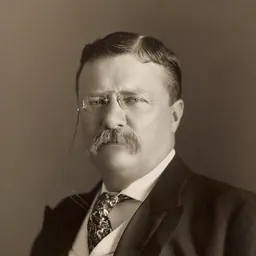
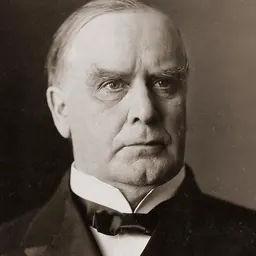
President William McKinley appointed Powderly as the Commissioner General of Immigration where he served from July 1, 1897, to June 24, 1902. In this role he established a commission to investigate conditions at Ellis Island, which ultimately led to 11 employees being dismissed. After being removed from the post in 1902 by Theodore Roosevelt, he continued to serve as Special Immigration Inspector, studying the causes of European emigration to the United States, where he recommended that officials inspect potential immigrants prior to their arrival in the US, station officers on immigrant-carrying ships, and take steps to more evenly distribute arriving immigrant populations geographically across the country. He is buried at nearby Rock Creek Cemetery. A second autobiography by Powderly, The Path I Trod, was published posthumously in 1940. Powderly's papers are available for use at more than a dozen research libraries across the United States. He was survived by his second wife, Emma (Fickensher), who was his late wife's cousin and a former work associate, who he had married in 1919.
Legacy Powderly was inducted into the U.S. Department of Labor Hall of Honor in 1999. The citation reads as follows:
As leader of the Knights of Labor, the nation's first successful trade union organization, Terence V. Powderly thrust the workers' needs to the fore for the first time in U.S. history. In the 1800s, far in advance for the period, he sought the inclusion of blacks, women and Hispanics for full-fledged membership in his trade union. With labor struggling for a place at America's economic table, Powderly achieved national stature as the recognized spokesman for the workers' interest and for the first time made organized labor a political force to be reckoned with.
Writing in Dubofsky and Van Tine's Labor Leaders in America, Richard Oestreicher described Powderly as "the first labor leader in American history to become a media superstar". Oestreicher continues:
No other worker in these years, not even his rival Samuel Gompers, captured as much attention from reporters, from politicians, or from industrialists. To his contemporaries Powderly was the Knights of Labor.
Oestreicher characterizes Powderly's legacy as leader of the Knights as generally one of failure to preserve the organization and its mission through the labor upheavals of the late 19th Century. However, he continues to describe him as an "energetic and capable organizer," and is quick to point out the practical challenges both he and the Knights faced, and that in comparison to his heirs and contemporaries, "quite simply, no one else did much better [than they did] over the next forty years." On November 18, 1947, a historical maker was placed in Scranton honoring Powderly.
Works "The Organization of Labor," North American Review, vol. 135, no. 2, whole no. 309 (August 1882), pp. 118–127. "The Army of the Discontented," North American Review, vol. 140, whole no. 341 (April 1885), pp. 369–378. "A Menacing Irruption," North American Review, vol. 147, whole no. 381 (August 1888), pp. 369–378. "The Plea for Eight Hours," North American Review, vol. 150, whole no. 401 (April 1890), pp. 464–470. "The Workingman and Free Silver," North American Review, vol. 153, whole no. 421 (December 1891), pp. 728–737. Thirty Years of Labor, 1859-1889. Columbus, OH: Excelsior Publishing House 1890. "Government Ownership of Railways," The Arena, vol. 7, whole no. 37 (December 1892), pp. 58–63. The Path I Trod: The Autobiography of Terence V. Powderly. New York: Columbia University Press, 1940.
Don’t just read it —
keep it.
Full-length biographies made to live with: read them, listen on the way to work, watch them tonight.
- E-book
- Audio
- Video
Instant download · yours to keep · every purchase keeps this site free
Important facts
People in Terence V. Powderly's life
Named in this biography and alive at the same time

Related people
Same field, nearest in time






Contemporaries
People whose lives overlapped Terence V. Powderly's



Frequently asked questions
Who was Terence V. Powderly?
American labor union leader, politician and attorney (1849–1924)
When was Terence V. Powderly born?
Terence V. Powderly was born on 22 January 1849 in Carbondale.
When did Terence V. Powderly die?
Terence V. Powderly died on 24 June 1924 in Petworth.
What was Terence V. Powderly's occupation?
Terence V. Powderly was a politician and trade unionist.
What nationality was Terence V. Powderly?
Terence V. Powderly was American.
Sources & further reading
· Wikipedia: Terence V. Powderly
· DBpedia: Terence V. Powderly
Cite this page
APA: Biography.guide. (2026). Terence V. Powderly. https://biography.guide/terence-v-powderly/
MLA: "Terence V. Powderly." Biography.guide, https://biography.guide/terence-v-powderly/.
Chicago: "Terence V. Powderly." Biography.guide. https://biography.guide/terence-v-powderly/.
Data last updated: 2026-09-20 · Spot an error? Report a correction.
Page generated 2026-09-27 05:33 UTC