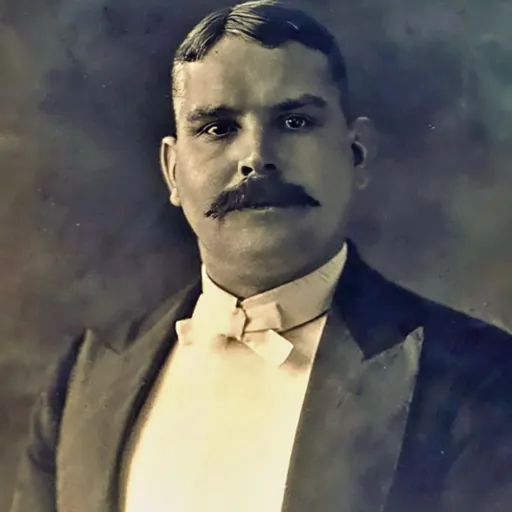
About Ted Heaton
Lived 1872 – 1937 (aged 64–65). Ted Heaton was a swimmer and competitive diver.
20th century Heaton would sometimes combine swimming and diving into a single event, such as in June 1905 when he swam from Eastham to New Brighton, where the climax was diving off New Brighton Pier.
During the 1900s, he made several unsuccessful attempts to swim the English Channel. Despite reportedly first training for the feat back in 1893, his first attempt was in July 1905 and reportedly started well. He entered the water at 7:41am and swam the breaststroke at pace, experiencing fine and sunny weather conditions. His attempt was alongside Annette Kellerman, who also attempted to swim the channel at the same time, but she left the water out due to sea-sickness. Despite swimming through strong currents, Heaton stopped at 2:30pm in a state of sickness, six miles from the shore, having to abandon his efforts due to swallowing a mouthful of oil.
After undergoing vigorous training, Heaton prepared for another attempt to cross the channel in 1907. In late June, he attempted to beat the Wallasey ferryboat on the New Brighton to Egremont service, which was met with great interest from the boat's passengers. Despite not beating the ferryboat, which completed the journey in 20 minutes, Heaton swam the journey in just under 28 minutes, followed by a "brisk walk" along the beach. Two months later in early August, he made another attempt to cross the channel, this time with Jabez Wolffe. He started his swim at 8:55 am and was away from land by 11 am. The conditions were described as calm, with some fog haze caused by the heat which developed into something denser. Conditions for the next hour were described as unpleasant, until a light wind cleared the fog. As the swim developed into something resembling a race between the two swimmers, the weather turned around 2:30 pm with a darker sky that developed into a thunderstorm. Once this passed, the swimmers continued in their efforts, although due to a thick haze, the boats supporting Heaton lost sight of him for a time. Unable to see the coast and with no goal visible, he chose to give up his attempt despite being in fine physical condition, noting that another attempt would be made when the tides were next suitable. He made a fourth attempt several weeks later but left the water after just three hours of swimming due to choppy waters. In August 1909 on his fifth attempt, he reached within of the French coast but adverse tides forced him to give up, having been in the water for over 15 hours by that time.
In early September 1910, he again unsuccessfully attempted to swim the English Channel, coming within four miles of the French shore and being retrieved from the channel in an exhausted state having spent sixteen hours in the water. Despite being a cold night, he continued with his swim but began showing signs of weakness as midnight approached, ultimately giving up on his effort at around 1:21am.
On his seventh and what would be his final attempt to swim the Channel during August 1911, he swam in a warm sea with just a slight breeze. Heaton entered the water around 8:20 am from the supporting boat which was also carrying his wife. Around an hour after entering the water, the wind increased and after over 10 hours swimming at 6:40 pm, abandoned his effort and returned to Dover. He came to within of the French coast.
Outside competitive sport World War I volunteer In late 1914, Heaton joined the Sportsmen's Battalions of London, after being unable to enlist ordinarily due to exceeding the age limit by three years. During the early stages of World War I, he became a prime mover in the Liverpool Volunteer Athletic Corps and felt he wanted to be associated with strenuous wartime activities. Around the start of 1916, he was transferred to the Royal Fusiliers at Dover as a sergeant-instructor, where he was reported in February 1916 to be preparing them for trench warfare and two months later in April, had travelled to India to do duty in a 3000-strong prisoner camp in Rajputana, noting that he did not find the work or climate too taxing on his health. Having served in the military later during the war in the Essex Regiment, he was discharged in December 1919 on disability grounds due to gallstones.
Superintendent and instructor In August 1905, Heaton was appointed by an overwhelming majority as the superintendent of Cornwallis Street baths, earning a salary of £120 a year despite a councillor opposing the appointment on the basis that his "only recommendation was his attempt to swim the channel". The benefits of the role, which he secured from among a number of applicants, included a house, coal and gas and could rise to £150 per annum. with an expected length of service lasting for one year. He returned to Liverpool in mid-1929 and resumed swimming instruction at his Cornwallis Street baths.
During his later years, he advertised himself as a swimming instructor, having been known to teach swimming to school children. In order to assist lessons among groups of students, he devised his own system of wood floats and canvas webs which allowed students to enter the water at a specific depth and familiarise themselves with the concept of buoyancy. The device allowed entire classes to be taken into the water simultaneously, whereas previously it was limited to one at a time. Heaton was inspired by a conversation he had with Lord Wavertree, who remarked on the slow speed of class swimming tuition. The device caught the attention of Poland's Director of Education, who upon witnessing use of the apparatus, expressed amazement at its simplicity. He promoted himself in 1932 as "Liverpool's famous swimming master".
Personal life Heaton reportedly measured in height and weighed around the time he first started training in 1893 to swim the English Channel. He married Julia Rolling on 4 December 1893 at St Peter's Church, Liverpool and they had two sons, Edmund James Whittaker (b. c1894), Regnialan (b. c1905) and a daughter, Ellen (b. c1896). According to the 1901 census, he had a younger brother Thomas Heaton, 16 years his junior who was living with him at the time. His eldest son became incapacitated with frostbite while serving with the Scottish in trenches on the Western Front during World War I, ultimately being treated in Fazakerley Hospital. He died in 1915 at the age of 71 after being knocked down by a taxicab, dying from concussion. Heaton's wife Julia served in Bombay as a Voluntary Aid Detachment nurse during World War I, having served in the role in Liverpool for around a year. In 1927, she committed suicide after swallowing poison whilst of unsound mind. He was known to have a friendship with cricketer Frank Sugg.
He died on 19 September 1937 in Southport General Infirmary while on a visit to the seaside town, leaving effects worth £135, 2 shillings and 1 penny . He was buried at Allerton Cemetery on 22 September 1937. Heaton was still active as an instructor shortly before his death, with advertisements in local press just weeks before he died.
Don’t just read it —
keep it.
Full-length biographies made to live with: read them, listen on the way to work, watch them tonight.
- E-book
- Audio
- Video
Instant download · yours to keep · every purchase keeps this site free
Important facts
People in Ted Heaton's life
Named in this biography and alive at the same time

Related people
Same field, nearest in time


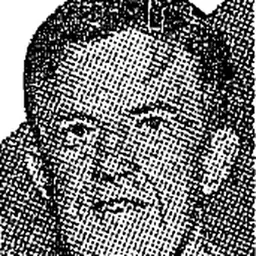
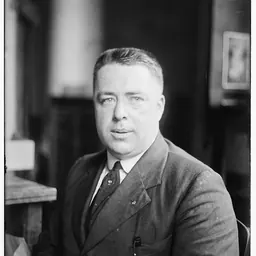
Contemporaries
People whose lives overlapped Ted Heaton's
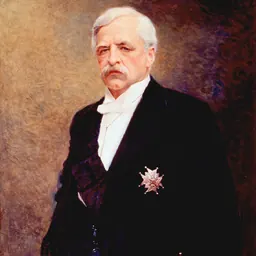

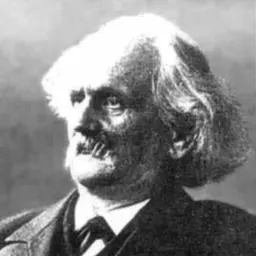

Frequently asked questions
Who was Ted Heaton?
former British swimmer and diver
When was Ted Heaton born?
Ted Heaton was born in 1872 in Liverpool.
When did Ted Heaton die?
Ted Heaton died on 19 September 1937 in Lancashire, Southport.
What was Ted Heaton's occupation?
Ted Heaton was a swimmer and competitive diver.
Sources & further reading
Cite this page
APA: Biography.guide. (2026). Ted Heaton. https://biography.guide/ted-heaton/
MLA: "Ted Heaton." Biography.guide, https://biography.guide/ted-heaton/.
Chicago: "Ted Heaton." Biography.guide. https://biography.guide/ted-heaton/.
Data last updated: 2026-09-23 · Spot an error? Report a correction.
Portrait: Wikimedia Commons · author & licence
Page generated 2026-09-27 05:08 UTC