
Te Kirihaehae Te Puea Herangi
Waikato woman of mana, Kingitanga leader
About Te Kirihaehae Te Puea Herangi
Lived 1883 – 1952 (aged 68). Te Kirihaehae Te Puea Herangi was a New Zealand journalist, farmer and leader.
Te Puea Hērangi (9 November 1883 – 12 October 1952), known by the name Princess Te Puea, was a Māori leader from New Zealand's Waikato region. Her mother, Tiahuia, was the elder sister of King Mahuta.
Early life She was born on 9 November 1883 at Whatiwhatihoe, near Pirongia, in the Waikato, daughter of Te Tahuna Hērangi and Tiahuia. Te Tahuna Hērangi was the son of Hariara Rangitaupua (Ngāti Maniapoto rangatira), Tiahuia was daughter of the second Māori king, Tāwhiao Te Wherowhero, by his principal wife.
Te Puea was educated in the traditional Māori ways, particularly by her uncle, and successor of Tawhiao, Her first leadership task, the one that re-established her mana among her people, was, at the wish of Mahuta to successfully campaign on behalf of Māui Pōmare in his election bid to become the Kingite Member of Parliament, replacing Henare.
During 1913 and 1914 the Māori community suffered a smallpox epidemic. Many Pākehā hospitals refused to treat Māori, and many Māori distrusted western medical professionals and believed that disease was a punishment from displeased spirits, refusing to go to Pākehā hospitals. In response, Te Puea set up a small settlement of nīkau huts devoted to nursing people back to health. This was successful as not one person died and the isolation of the village largely prevented spread of disease.
Following the influenza epidemic of 1918, she took under her wing elderly lacking care, and some 100 orphans, who were the founding members of the community of Tūrangawaewae at Ngāruawāhia. It was through Tūrangawaewae that Te Puea began to extend her influence beyond the Waikato Region. The construction of its carved meeting house was strongly supported by Sir Āpirana Ngata and the Ngāti Porou people. She became friendly with the Prime Minister, Gordon Coates who was raised in a rural community where many Māori lived, and with journalist Eric Ramsden who publicised her tours and the development of the Kīngitanga base at Tūrangawaewae. Coates was keen to lift Waikato Māori out of their sullen depression by addressing land grievances. Coates had been shocked at the conditions in which Waikato Māori lived-calling them the poorest people he had seen in his life. It was through her friendship with Ramsden that articles about her and her work began to appear in the national newspapers. In these she was usually identified as Princess Te Puea, a title that she herself deplored, saying that the role of princess does not exist in Māoritanga. Pōmare pointed out that neither does King.
Te Puea's main drives were to establish Tūrangawaewae as a base for the Kīngitanga, and rebuild mana and economic stability, but she was always short of funds. In 1922 she decided to raise money for her ambitious building programme. She and her people worked under contract for manual labour,
Te Puea was appointed a Commander of the Order of the British Empire, for social welfare services, in the 1937 Coronation Honours. Initially she was confused and reluctant to accept the award because of her dealings with the government. The CBE was awarded for her self-sacrificing devotion and stupendous personal efforts and extraordinary capacity for leadership and organisation, with a talent for diplomacy in her dealings with other tribes and leaders amongst the Pakeha... she turned idle lands into productive excellent farms. A year later another carved meeting house was opened by the Governor General, Lord Galway.
1940s In 1940 she bought a farm near Ngāruawāhia and began developing it provide an economic base for the Tūrangawaewae community. It was there that she began teaching the beliefs that would sustain the King Movement: work, faith (specifically the Pai Mārire faith, which became strongly established in the Waikato region), and pan-Māori unity through the King Movement. Te Puea always stressed the importance of iwi over hapū (the tribe over the sub-tribe or family grouping).
The Government planned nationwide celebrations for the centenary in 1940 of the signing of the Treaty of Waitangi, the document that founded modern New Zealand. Initially Te Puea was in favour, but then withdrew her support when the government refused her request that the Māori king be given the same tax status as the governor-general. At the time she said:
Reconciliation with Pākehā Te Puea was raised by people who had fought war to resist the government invasion of the Waikato in 1863, and by people who had lived through the bitter years that followed. She had little reason to love or trust Pākehā. However, as time went by she came to see the need for reconciliation. In 1946 Te Puea approached the government to say the tribe would be willing to accept money to compensate for the loss of lands after the defeat of the Kīngitanga in 1863. A large meeting was held at Tūrangawaewae in which a wide range of opinions were aired. Then the leadership met privately with Prime Minister Peter Fraser and worked out what would be accepted by the tribe. A deal had already been settled with Taranaki tribes and Waikato were keen to do better. The final deal gave Waikato nearly twice the income of Taranaki. The deal was accepted by Roore Edwards at the urging of Te Puea. After nearly 20 years of negotiation she accepted, on behalf of Tainui, a settlement offered by the Prime Minister of an initial grant of 10,000 pounds and 5,000 pounds (later $15,000) a year spread over 40 years. No provision was made for inflation which at that time was very low. By the time the deal was presented to the tribe the next day the money had been increased again to 6,000 pounds for 50 years and thereafter 5,000 pounds in perpetuity. She recognised this as an acceptable offer. However the payment acknowledged that a grievous wrong had been done to her people. Te Puea also built Tūrangawaewae marae and has a statue of her in front of the house called Mahinārangi.
Later life In the last few years of her life, Te Puea fell out with many of the Māori and Pākehā friends who had worked with her for most of her adult life. She became increasingly demanding and unreasonable when she did not get her way. Te Puea died at her home after a long illness. During her lifetime, she had raised the profile of the King Movement, especially outside of Waikato, and had helped raise the standard of living of Waikato to that of other Māori.
In December 1947, Te Puea became a member of a trust that administered a Māori land reserve in Māngere Bridge, Auckland. The land had been settled in the 19th century by her Ngāti Mahuta relatives, including Pōtatau Te Wherowhero, prior to his becoming the first Māori King, and Kati Takiwaru. Confiscated prior to the invasion of the Waikato, a section of the land was returned by the Native Land Court to Ngāti Mahuta individuals, including Te Puea's mother, Tiahuia, in 1890. and in 1965 the Te Puea Memorial Marae was opened, named after her to acknowledge her contributions to the people of Aotearoa.
Composer Robert Wiremu wrote Te Kai a Te Rangatira which set to music speeches by Māori leaders including Te Puea Hērangi. Written for baritone and chamber ensemble it was commissioned for the IO Festival Kaitaia.
Don’t just read it —
keep it.
Full-length biographies made to live with: read them, listen on the way to work, watch them tonight.
- E-book
- Audio
- Video
Instant download · yours to keep · every purchase keeps this site free
Important facts
People in Te Kirihaehae Te Puea Herangi's life
Named in this biography and alive at the same time




Related people
Same field, nearest in time


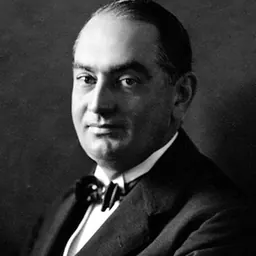
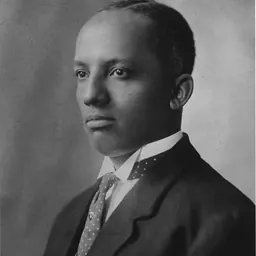
Contemporaries
People whose lives overlapped Te Kirihaehae Te Puea Herangi's
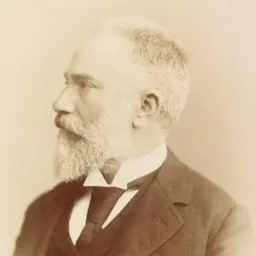
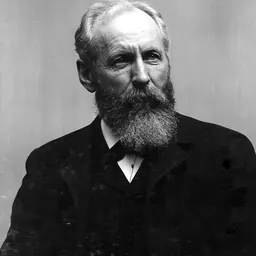

Frequently asked questions
Who was Te Kirihaehae Te Puea Herangi?
Waikato woman of mana, Kingitanga leader (1883-1952)
When was Te Kirihaehae Te Puea Herangi born?
Te Kirihaehae Te Puea Herangi was born on 9 November 1883 in Waikato Region.
When did Te Kirihaehae Te Puea Herangi die?
Te Kirihaehae Te Puea Herangi died on 12 October 1952.
What was Te Kirihaehae Te Puea Herangi's occupation?
Te Kirihaehae Te Puea Herangi was a journalist, farmer and leader.
What nationality was Te Kirihaehae Te Puea Herangi?
Te Kirihaehae Te Puea Herangi was New Zealand.
Sources & further reading
· Wikipedia: Te Kirihaehae Te Puea Herangi
Cite this page
APA: Biography.guide. (2026). Te Kirihaehae Te Puea Herangi. https://biography.guide/te-kirihaehae-te-puea-herangi/
MLA: "Te Kirihaehae Te Puea Herangi." Biography.guide, https://biography.guide/te-kirihaehae-te-puea-herangi/.
Chicago: "Te Kirihaehae Te Puea Herangi." Biography.guide. https://biography.guide/te-kirihaehae-te-puea-herangi/.
Data last updated: 2026-09-20 · Spot an error? Report a correction.
Page generated 2026-09-27 05:30 UTC