
Tatiana Zaslavskaya
Soviet and Russian sociologist and economist
About Tatiana Zaslavskaya
Lived 1927 – 2013 (aged 85). Tatiana Zaslavskaya was a Russian economist, sociologist and university teacher.
Tatyana Ivanovna Zaslavskaya (; April 9, 1927 – August 23, 2013) was a Russian economic sociologist and a theoretician of perestroika. She was the prime author of the Novosibirsk Report and several books on the economy of the Soviet Union (specializing in agriculture) and in sociology of the countryside. She was a member of the Consulting Committee to the President of Russia from 1991 to 1992 and also a member of the Russian Academy of Sciences. Zaslavskaya was the founder of RPORC and also its director in the years from 1987 to 1992. In 2000 she was the Laureate of the Demidov Prize and the honorary president of the Levada Center.
Biography Tatyana Zaslavskaya was born in Kyiv in 1927 and brought up in Moscow. She studied at the Physics Department of Moscow State University for three years, and then graduated from the Economics Department of the university in 1950. She finished her post-graduate study at the Institute of Economics of the Academy of Sciences of the Soviet Union with the degree of Kandidat in 1956 under the supervision of Professor Vladimir Venzher (Владимир Григорьевич Венжер). In 1963 she joined the Novosibirsk Institute of Economics headed by Abel Aganbegyan (Абел Аганбегян) to work in a command of young and talented scientists. In 1965 she did her Doctorate in Economics and in 1968 she was elected an Associate Member (член-корреспондент) of the Academy of Sciences of the Soviet Union.
Research
The analysis of the economic situation in Soviet agriculture led Zaslavskaya to the conclusion that the revealed problems cannot be explained without sociological analysis, which bordered with blasphemy within the canonical Marxist science, which postulated that the development of the society is derived from the economical relations, and not vice versa. At these times Soviet sociology was under the tight scrutiny of the Communist Party (from the position of bourgeois pseudoscience through a brief period of liberalisation during the Khrushchev Thaw to sharp criticism during the Leonid Brezhnev era). The remoteness and relative scientific freedom of the young department of the Academy of Sciences of the Soviet Union at Novosibirsk allowed Zaslavskaya to do her research in sociology of the agricultural sector by studying the Siberian countryside, Altai Krai in particular.
In the later years of the Soviet Union accurate detailed information regarding conditions in Soviet agriculture was considered a state secret when not censored outright. A major breach in security occurred in 1983 when the details of a classified paper, "for internal use only", the report from the closed conference in Novosibirsk by Tatyana Zaslavskaya regarding the crisis in Soviet agriculture, were published in The Washington Post. Zaslavskaya was the author of a number of works in Russian which deal with economics and social conditions in Soviet agriculture although some of her work was suppressed by Soviet censors. For example, The Methodology of Comparing Labour Productivity in Agriculture in the USSR and the USA, written together with M.I. Sidorova, was suppressed due to its pessimistic results.
In 1988 Zaslavskaya came back to Moscow for the formation of the Russian Public Opinion Research Center, which she was the director of until 1992. Afterwards she became the honorable president of RPORC and later the honorable president of the Analytical Center of Yuri Levada (the Levada Center since 2004).
In 1993 she became the co-president of the Interdisciplinary academic center of social sciences (Russian: ). Since 1993 the "Intercenter" has been carrying out ten annual international conferences concerning the question: "Where is Russia going?" under Zaslavskaya's direction. Many representatives of different sciences (historians, jurists, sociologists, economists, political scientists, culturologists, and philosophers) participate in these conferences debating topics such as a better judgment of the post-communist transformation processes or modern problems and prospects of development of the Russian society.
Zaslavskaya's arguments evolved over time. In the Second Socialist Revolution she imagined the possibility that the USSR was experiencing a democratic revolution that would make Russia genuinely socialist. In the next two decades she puzzled over the form and nature of the transition that actually took place in Russia arguing in 1999 that it was some kind of revolution but then in 2002 concluding that "there was no new social revolution in Russia." She saw social change as occurring through crises involving "random transformation" as in the 1990s the Yelt'sin group lost control of the situation. This led her to try to devise various analyses of social groupings and models of change which tended to description and classification.
She died in 2013 having left her role as a member of parliament twenty years before to teach and write. She was survived by her husband Mikhail and her daughter Oksana. (Fund Tyopfera, 1989, Germany), the Demidov Prize (Demidovsky fund, 2000, Russia, Yekaterinburg), founder of the Novosibirsk economic-sociological school. She received Soviet orders: Order of the Badge of Honour (1972), Order of the Red Banner of Labour (1975), Order of Friendship of Peoples (1981), and Order of the October Revolution (1987).
Don’t just read it —
keep it.
Full-length biographies made to live with: read them, listen on the way to work, watch them tonight.
- E-book
- Audio
- Video
Instant download · yours to keep · every purchase keeps this site free
Important facts
People in Tatiana Zaslavskaya's life
Named in this biography and alive at the same time

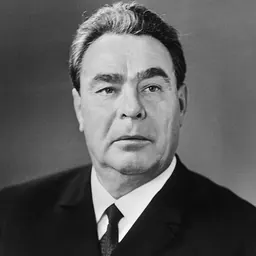

Related people
Same field, nearest in time


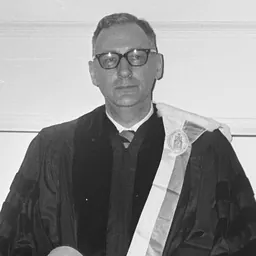
Contemporaries
People whose lives overlapped Tatiana Zaslavskaya's
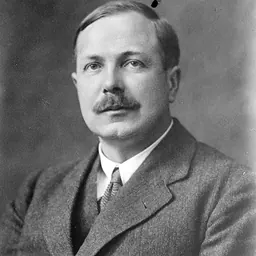
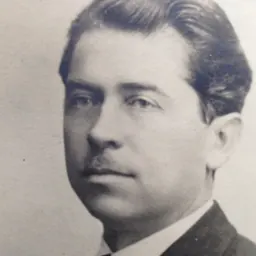


Frequently asked questions
Who was Tatiana Zaslavskaya?
Soviet and Russian sociologist and economist (1927-2013)
When was Tatiana Zaslavskaya born?
Tatiana Zaslavskaya was born on 9 September 1927 in Kyiv.
When did Tatiana Zaslavskaya die?
Tatiana Zaslavskaya died on 23 August 2013 in Moscow.
What was Tatiana Zaslavskaya's occupation?
Tatiana Zaslavskaya was an economist, sociologist and university teacher.
What nationality was Tatiana Zaslavskaya?
Tatiana Zaslavskaya was Russian.
Sources & further reading
· Wikipedia: Tatiana Zaslavskaya
· DBpedia: Tatyana Zaslavskaya
Cite this page
APA: Biography.guide. (2026). Tatiana Zaslavskaya. https://biography.guide/tatiana-zaslavskaya/
MLA: "Tatiana Zaslavskaya." Biography.guide, https://biography.guide/tatiana-zaslavskaya/.
Chicago: "Tatiana Zaslavskaya." Biography.guide. https://biography.guide/tatiana-zaslavskaya/.
Data last updated: 2026-09-27 · Spot an error? Report a correction.
Page generated 2026-09-27 05:16 UTC