
About Tașcu Gheorghiu
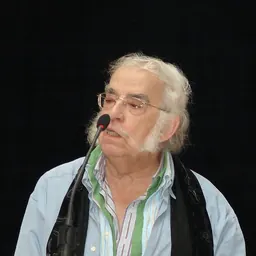
Lived 1910 – 1981 (aged 70). Tașcu Gheorghiu was a Romanian translator, poet and illustrator.
Tașcu Gheorghiu (29 September 1910 – 17 October 1981) was a Romanian writer and visual artist. The scion of an Aromanian-and-Greek family from Constanța, he had a secluded childhood and adolescence—practicing bohemianism and decadent art upon discovering Mateiu Caragiale as his lifelong literary inspiration. He integrated for a while with the Romanian avant-garde scene, publishing the short-lived magazine Liceu, where his colleagues included Virgil Teodorescu. Gheorghiu's accomplished short prose, heavily inspired by Urmuz, announced him as a major talent, but he quit literature abruptly within months of his debut; he stuck to Teodorescu's surrealist group in Bucharest, but only as an animator and illustrator, and, like some of the surrealists, also adopted leftist stances and collaborated with the outlawed Romanian Communist Party. Though improvident and hampered by his lifestyle choices, he eventually obtained a philosophy degree from the University of Bucharest.
Gheorghiu's politics swung to the right during the final stages of World War II, when he came to resent the Soviet occupation. The communist regime formed in 1948 allowed him to publish in its press, but official censors kept watch over his output, rightfully suspecting him of disloyalty. At the onset of de-Stalinization in the late 1950s, he was allowed to publish translations of non-political Western literature, including the forerunners of the decadent style, infusing them with his own stylistic choices—in turn shaped by Caragiale's distinct language. He contributed to the national corpus of Shakespearean translations, with the first-ever Romanian rendition of Pericles, Prince of Tyre (1962). Gheorghiu was also rendered famous by his take on Giuseppe Tomasi di Lampedusa's Leopard (1964). In tandem, he was also rediscovered as a draftsman, his sketches taken up by some of the leading Romanian magazines.
A hero to young bohemians of the 1960s, Gheorghiu maintained a highly unusual schedule, with days spent in restaurants and sleepless work-nights; his material excesses clashed with his poverty, as until 1970 he was confined to a one-room apartment with no plumbing. His fame was increased in the late 1970s, when he published complete illustrated versions of the Chants de Maldoror and the Season in Hell. He died shortly after his 71st birthday, just as his own avant-garde prose was being rediscovered and popularized by scholars of the movement. His translations continued to be published, as was his correspondence with Gelu Voican Voiculescu (the latter being for a while misidentified as surrealist Gellu Naum).
Biography Rebellious youth Gheorghiu was born in Constanța on 29 September 1910. His parents were Aromanians, recently arrived as settlers from the Kingdom of Greece. Tașcu, who tended to describe himself in terms borrowed from Mateiu Caragiale, and as such bookish or self-aggrandizing, once indicated that his ethnic heritage was at least partly Greek, and claimed that his family had aristocratic tastes (if not also aristocratic origins). A novelist friend, Pericle Martinescu, similarly mentioned Tașcu's Hellenic origins, also recounting that his "more distant" relatives included a military man, Mihai Gheorghiu, whose father once owned Constanța's Regal Hotel.
By his own account, Tașcu was lonesome as a child, and inclined to daydream—blaming the Black Sea and Constanța's "harrowing beauty" for his disposition. The young man graduated from the local Mircea cel Bătrân High School, taking his Romanian baccalaureate in July 1929. At age sixteen, he had read Caragiale's breakthrough decadent novel, Craii de Curtea-Veche, and had been amazed by it. Going through the rest of his life as a Caragiale aficionado, he knew the text almost by heart; he only met the author once in his life, introduced to him by another novelist, Anton Holban. He was by then imitating the book's eccentric characters, and, before the age of twenty, was only rarely seen awake in daytime. The other heroes of his adolescence were the Comte de Lautréamont and a local poet-mathematician, Ion Barbu. The fragment called Unghi ("Angle") was later rediscovered by literary historian Matei Călinescu as a "strange and intense" masterpiece of the blossoming avant-garde movement. Young Gheorghiu enlisted at the University of Bucharest, where he was colleagues with Martinescu and scholar Ion Ureche, but continued to live in Constanța, at Principesa Ileana Boulevard 25, to at least 1935. During his studies, he also rented a one-room apartment Broșteanu Street, by Dorobanți. Only fitted with a wood-burning stove, with a squat toilet on the outside, it remained his only home in Bucharest for more than thirty years. However, he still contributed to opinion journalism. A man of left-wing convictions, he collaborated with reportage pieces in Bucharest's Reporter for much of the 1930s. Like his friends Teodorescu and Paul Păun, he adopted programmatic surrealism, describing himself as a follower of André Breton's. However, he insisted that his surrealist contribution was mainly in the visual field, with a large number of drawings that he intentionally destroyed (though "some have escaped this fate"). In May of the following year, he helped draft a protest against Constanța's authorities, after these had rounded up militants of the outlawed Romanian Communist Party (PCR or PCdR) and Dobrujan Revolutionary Organization. This activity drew attention from the far-right daily, Porunca Vremii, who laughed him off as a pseudo-intellectual and an agent of communist subversion, believing that his only diploma was with the Commercial Academy. Around then, Teodorescu and Gheorghiu had become occasional contributors to Ogorul newspaper, put out by the National Peasants' Party in Constanța County. Historian Stoica Lascu believed that they did so as cadres of the PCR or of its Union of Communist Youth, which had friendly relations with Peasantist left. In Ogorul, Gheorghiu objected to the youth's "continuous fascization", proposing instead a rally around "democracy, constitutional liberties, [and] peace." He was still keeping company with the militant avant-garde after the outbreak of World War II: in early 1940, he joined Păun and other surrealists in their conflict with a former ally, Zaharia Stancu, reaffirming their group loyalties with a party in Bucharest; its other guests were Teodorescu, Maria Banuș, Constantin Ionescu Gulian, and Jules Perahim. During a Nazi-aligned rule by Ion Antonescu, Gheorghiu also maintained contacts with his various leftist friends, Romanian as well as Jewish. Paraschivescu attested his presence during an October 1942 gathering at Bucharest's Café de la Paix, which was particularly lively. Other attendees included Perahim, Geo Dumitrescu, Virgil Ierunca, Gherasim Luca, Dolfi Trost, as well as the non-communist Mircea Streinul.
Gheorghiu himself remembered eventually taking his distance from the surrealist cell, indicating that the reasons for this were non-ideological, and the terms amiable. He was finally in contact with Barbu, who was likewise involved in cultivating Caragiale's legacy—he credited the more senior poet as his only living teacher, through whom he got to understand classics such as Mihai Eminescu. formed by him at Casa Capșa restaurant. This gave the young man nominal authority over other Caragiale exegetes, including Marcel Breslașu, Oscar Lemnaru, and Alexandru Rosetti. Gheorghiu was always proud of having been dedicated one of Barbu's short poems, in which he was described as "the perpetual nobleman".
Following the establishment of a Romanian communist regime in 1948, Gheorghiu was exposed to some measure of persecution. At some point before 1970, the first of these three magazines had him as proofreader. In one instance from 1950, he was severely reprimanded for an apparent typo in his texts, which was supposed to include obligatory references to the moral superiority of communism, described therein as "the liquidation of all exploitation of man by man". In the printed version, it came out as "the liquidation of man by man", leading dissident intellectuals to proclaim that Gheorghiu had been an unwitting prophet. The writer also annoyed the authorities by cultivating bohemianism, and inviting his colleagues to have "breakfast" with him at dinner-time, in what his friend Ștefan Stoian describes as "a sordid dive on [Bucharest's] Academiei Street". This was his place of refuge in the early 1960s, after Barbu's death—and after Paul Georgescu, of the Writers' Union, had taken notice of Gheorghiu's "insolent" remarks, banning him from all literary reunions at Casa Capșa. Olariu, who observed his writing process first-hand, praises his "jeweler's meticulousness", which meant abandoning his lifelong lethargy. In 1953, he and Dan Duțescu finished translating a selection of James Aldridge's prose. According to a 2015 article by eyewitness Gabriel Dimisianu, de-Stalinization and a relaxation of communist censorship during the late 1950s signaled more creative liberty, and surer employment, for the "late-wave surrealists"—Gheorghiu, Teodorescu, and Naum. In 1958, Gheorghiu produced a volume of Louis Aragon's poems, followed in 1959 by samples of Theodosios Pieridis' verse (from the Greek) and in 1962 by a collection of "Nordic" poets, co-written with Veronica Porumbacu. As observed by scholar Luminița Marcu, the latter project was tributary to communist guidelines, grouping "irrelevant" leftist authors; it was republished in a more thorough 1968 edition, with additional contributions by Petre Stoica.
Gheorghiu was featured in the state-sponsored Shakespearean corpus, with Pericles, Prince of Tyre (1962), which was that play's first-ever translation into Romanian—and used for the first-ever staging by a Romanian troupe, done by the Brașov State Theater in 1964. As noted by fellow translator George Volceanov, he was pushed by censorship into toning down the play's risqué allusions to prostitution and syphilis. After contributing to Romulus Vulpescu's anthology of Classical Chinese poetry (1963), Gheorghiu was especially acclaimed for his Italian translations. With his version of Giuseppe Tomasi di Lampedusa's Leopard (as Ghepardul), he won the Writers' Union prize for 1964. The book fascinated him with its linguistic and symbolic parallels to Craii; in order to capture its nuances, he spent two years refining it, and thus tested his publisher's patience for a book "that one might translate in three months". He also felt that this project had honored Caragiale's legacy, and for this reason dedicated it to actor Ion Iancovescu, one of Mateiu's few surviving friends. In that context, Foarță also heard Gheorghiu's own thoughts about communism as a peril. Luceafărul journal also accepted his contributions in that field, in particular with versions of poems by Guillaume Apollinaire and Tristan Corbière. Gheorghiu's background as a surrealist was put to use for another anthology, sampling 20th-century French literature—with as Ion Caraion and Ovid S. Crohmălniceanu as editors. Revisiting the edition in 2007, critic Simona Vasilache argued that he was especially good in his renditions of Tristan Tzara and Antonin Artaud, but also that his talents were ill-suited for rendering Dada poetry.
In 1970, the intercession of an unnamed communist official ("one who has done a lot to help the artists") finally allowed Gheorghiu to move out of Broșteanu Street and into a more comfortable dwelling. This was a studio apartment carved out of a property owned by fellow writer Ion Pas, on Rozelor Street; it accommodated Gheorghiu's "thousands of books and a few paintings sent to him by his artist friends." He was then recognized nationally for translating the Comte's Les Chants de Maldoror. Published in 1976, it earned him another Writers' Union prize the following year. The work was met with some criticism by young authors: in 1984, Aurel Dragoș Munteanu complained that, while Lautréamont had were "the acute expression of a positivist century", including in matters of language, Gheorghiu's Chants sounded medieval; in a 2015 interview, Dinu Flămând, who was preparing his own integral translation of Lautréamont, observed that Gheorghiu's project had been "whittled down" by the state censorship apparatus, and had therefore failed its readers.
Engaged in translating Saint-Simon's memoirs, He was by then noted for his unconventional and consuming life-choices. He spent most of his time in restaurants, only leaving his booth in the late afternoon, when he would go on a tour of literary magazines, pestering their managers with various requests regarding his translations and his royalties; though he engaged in conspicuous consumption and was beloved by the waiters for his generous tips, his income always depended on the goodwill of magazine publishers. Comparatist Nicolae Balotă was moved by his "superb renditions" of the cycle (done in "pious fidelity"), as well as by Gheorghiu's portrait of Rimbaud as a "bird-poet", which was printed with the book. Around then, Gheorghiu was in correspondence with the geologist and anti-communist dissident Gelu Voican Voiculescu, who was also his successor as Viața Romîneascăs proofreader. Increasingly isolated and focused during his final years, His death was described by various sources as "sudden".
Legacy Obituary pieces included one by poet Adrian Păunescu, whom the news caught in Satu Mare. He deplored the death of a "kind, humane, irreducible artist", adding: "Now that Tașcu Gheorghiu has died, libraries across this country are witnessing the deaths of all those whom he has translated into Romanian." Gheorghiu was outlived by his sister Chrisanta (or Hrisanta) Russu, who announced his Orthodox funeral service at Boteanu Church and his subsequent burial at Străulești II Cemetery. Chrisanta also organized his parastas service at Old St. Eleftherios Church, on 31 October 1987. She had inherited his papers, some of which she sold to the Museum of Romanian Literature in 1986. His letters from Gelu Zadarnicu were published in Manuscriptums first issue for 2009, under the mistaken assumption that they were by Naum. Voiculescu outed himself as the author in 2011. Some of these texts were sampled in translation by Eva Behring, for an anthology published in East Germany in 1988. Gheorghiu's contribution to the Romanian Shakespeare corpus was still being recovered after both his death and the Romanian Revolution of 1989, with another such volume appearing in early 1991. His Ghepardul had remained a standard of Lampedusa editions in Romanian, with a third edition published in 1995. A competing version, proposing to overcome Gheorghiu's "unmistakable stylistic imprint" and Caragialesque echoes, was produced in 2011 by Gabriela Lungu.
Don’t just read it —
keep it.
Full-length biographies made to live with: read them, listen on the way to work, watch them tonight.
- E-book
- Audio
- Video
Instant download · yours to keep · every purchase keeps this site free
Important facts
People in Tașcu Gheorghiu's life
Named in this biography and alive at the same time




Related people
Same field, nearest in time



Contemporaries
People whose lives overlapped Tașcu Gheorghiu's





Frequently asked questions
Who was Tașcu Gheorghiu?
Romanian translator, poet and illustrator (1910-1981)
When was Tașcu Gheorghiu born?
Tașcu Gheorghiu was born on 20 September 1910 in Constanța.
When did Tașcu Gheorghiu die?
Tașcu Gheorghiu died on 18 September 1981.
What was Tașcu Gheorghiu's occupation?
Tașcu Gheorghiu was a translator, poet and illustrator.
What nationality was Tașcu Gheorghiu?
Tașcu Gheorghiu was Romanian.
Sources & further reading
Cite this page
APA: Biography.guide. (2026). Tașcu Gheorghiu. https://biography.guide/tascu-gheorghiu/
MLA: "Tașcu Gheorghiu." Biography.guide, https://biography.guide/tascu-gheorghiu/.
Chicago: "Tașcu Gheorghiu." Biography.guide. https://biography.guide/tascu-gheorghiu/.
Data last updated: 2026-09-25 · Spot an error? Report a correction.
Page generated 2026-09-27 05:07 UTC