
About Tarrare
Lived 1772 – 1798 (aged 25–26). Tarrare was a French military personnel and street artist.
Tarrare (; – 1798), sometimes spelt Tarar, was a French showman, soldier, and spy noted for his unusual appetite and eating habits. Able to eat vast amounts of meat, he was constantly hungry. His parents could not provide for him and he was turned out of the family home as a teenager. He travelled around France in the company of a band of prostitutes and thieves before becoming the warm-up act for a travelling charlatan. In this act, he swallowed corks, stones, live animals, and a whole basketful of apples. He then took this act to Paris, where he worked as a street performer.
At the start of the War of the First Coalition, Tarrare joined the French Revolutionary Army, where even quadrupling the standard military ration was unable to satisfy his large appetite. He ate any available food from gutters and rubbish heaps but his condition still deteriorated through hunger, and he was hospitalised due to exhaustion. He became the subject of a series of medical experiments to test his eating capacity, in which, among other things, he ate a meal intended for 15 people in a single sitting, ate live cats, snakes, lizards, and puppies, and swallowed eels whole without chewing. Despite his unusual diet, he was underweight and, except for his eating habits, showed no signs of mental illness other than what was described as an apathetic temperament.
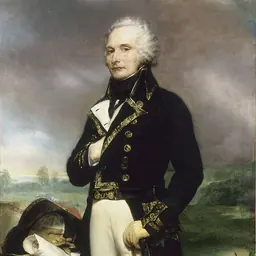
General Alexandre de Beauharnais decided to put Tarrare's abilities to military use, and employed him as a courier for the French army, with the intention that he would swallow documents, pass through enemy lines, and recover them from his stool once safely at his destination. On his first mission, he was captured by Prussian forces, severely beaten, and subjected to a mock execution before being returned to French lines.
Chastened by this experience, he agreed to submit to any procedure that might cure his appetite. The procedures failed, and doctors could not keep him on a controlled diet; he snuck out of the hospital to scavenge for offal in gutters, rubbish heaps and outside butchers' shops, and attempted to drink the blood of other patients in the hospital while they were bloodletting and to eat the corpses in the hospital's morgue. After being suspected of eating a one-year-old toddler, he was ejected from the hospital. He reappeared four years later in Versailles with a case of severe tuberculosis and died shortly afterwards, following a lengthy bout of exudative diarrhoea.
Early life Tarrare was born near Lyon, around 1772. and Pierre-François Percy, surgeon-in-chief of the hospital.
Courville and Percy decided to test Tarrare's capacity for food. A meal had been prepared for 15 labourers near the hospital's gates; although generally hospital staff restrained Tarrare in the presence of food, on this occasion, Courville allowed him to reach the table undisturbed. Tarrare ate the entire meal of two large meat pies, plates of grease and salt and four gallons of milk, and then immediately fell asleep;
Following this successful demonstration, Tarrare became employed officially as a spy of the Army of the Rhine. Although de Beauharnais was convinced of Tarrare's physical capacity to carry messages internally, he was concerned about his mental state and initially reluctant to entrust him with significant military documents. Tarrare was ordered as his first assignment to carry a message to a French colonel imprisoned by the Prussians near Neustadt; he was told that the documents were of great military significance, but in reality, de Beauharnais had merely written a note asking the colonel to confirm that the message had been received successfully, and if so, to return a reply of any potentially useful information about Prussian troop movements.
Tarrare crossed Prussian lines under cover of darkness, disguised as a German peasant. Unable to speak German, he soon attracted the attention of local residents, who alerted the Prussian authorities, and he was captured outside Landau. A strip search found nothing suspicious on his person, and despite being whipped by Prussian soldiers, he refused to betray his mission. Brought before the local Prussian commander, General Zoegli, he again refused to talk and was imprisoned. After 24 hours of captivity, Tarrare relented and explained the scheme to his captors. He was chained to a latrine, and eventually, 30 hours after being swallowed, the wooden box emerged. Zoegli was furious when the documents, which Tarrare had said contained vital intelligence, transpired only to be de Beauharnais's dummy-message, and Tarrare was taken to a gallows and the noose placed around his neck. (Some sources state that General Zoegli never retrieved the box, as Tarrare had the presence of mind to recover and eat the stool containing it before it could be seized by the Prussians. ) At the last minute, Zoegli relented, and Tarrare was taken down from the scaffold, given a severe beating, and released near the French lines.
Attempted cures Following this incident, Tarrare was desperate to avoid further military service, and returned to the hospital, telling Percy that he would attempt any possible cure for his appetite. Percy treated him with laudanum without success; further treatments with wine vinegar and tobacco pills were likewise unsuccessful. Following these failures, Percy fed Tarrare large quantities of soft-boiled eggs, but this also failed to suppress his appetite. Efforts to keep him on any kind of controlled diet failed; he would sneak out of the hospital to scavenge for offal outside butchers' shops and to fight stray dogs for rotting meat in gutters, alleys and rubbish heaps. He was also caught several times within the hospital drinking from patients undergoing bloodletting, and attempting to eat the bodies in the hospital's morgue. Other doctors believed that Tarrare was mentally ill and pressed for him to be transferred to a lunatic asylum, but Percy was keen to continue his experiments and Tarrare remained in the military hospital.
After some time, a 14-month-old toddler disappeared from the hospital, and Tarrare was immediately suspected of having consumed the child due to his past behaviour of eating small animals. Percy was unable or unwilling to defend him, and the hospital staff chased Tarrare from the hospital, to which he never returned.
Death In 1798, M. Tessier of Versailles hospital contacted Percy to notify him that a patient of theirs wished to see him. It was Tarrare, now bedridden and weak. Tarrare told Percy that he had swallowed a golden fork two years earlier, which he believed was now lodged inside him and causing his current weakness. He hoped that Percy could find some way to remove it. Percy, however, recognised that he had advanced tuberculosis. A month later, Tarrare began to experience continuous exudative diarrhoea, dying shortly afterwards.
The corpse rotted quickly; the surgeons of the hospital refused to dissect it. Tessier, however, wanted to find out how Tarrare's intestines differed from those of a normal person; he was also curious as to whether the gold fork was lodged inside him. At the autopsy, Tarrare's oesophagus was found to be abnormally wide, and when his jaws were opened surgeons could see down a broad canal into the stomach. His body was found to be filled with pus, his liver and gallbladder were abnormally large, and his stomach was enormous, covered in ulcers and filling most of his abdominal cavity. No fork was found.
Don’t just read it —
keep it.
Full-length biographies made to live with: read them, listen on the way to work, watch them tonight.
- E-book
- Audio
- Video
Instant download · yours to keep · every purchase keeps this site free
Important facts
People in Tarrare's life
Named in this biography and alive at the same time

Related people
Same field, nearest in time


Contemporaries
People whose lives overlapped Tarrare's



Frequently asked questions
Who was Tarrare?
French showman and eater
When was Tarrare born?
Tarrare was born in 1772 in Lyon.
When did Tarrare die?
Tarrare died in 1798 in Versailles.
What was Tarrare's occupation?
Tarrare was a military personnel and street artist.
What nationality was Tarrare?
Tarrare was French.
Sources & further reading
Cite this page
APA: Biography.guide. (2026). Tarrare. https://biography.guide/tarrare/
MLA: "Tarrare." Biography.guide, https://biography.guide/tarrare/.
Chicago: "Tarrare." Biography.guide. https://biography.guide/tarrare/.
Data last updated: 2026-09-20 · Spot an error? Report a correction.
Page generated 2026-09-27 05:06 UTC