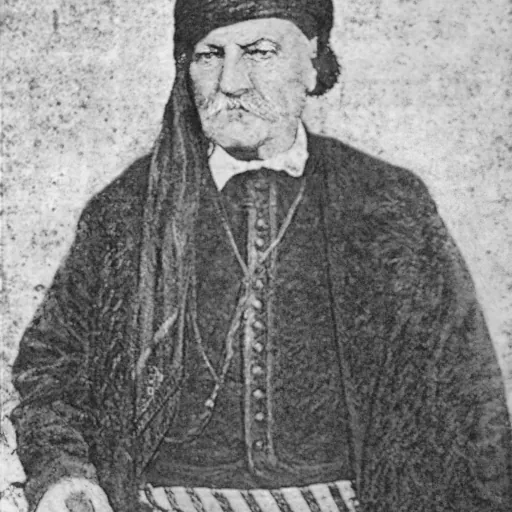
Tanyus Shahin
Maronite muleteer and peasant leader
About Tanyus Shahin
Lived 1815 – 1895 (aged 79–80). Tanyus Shahin was a Turkish.
Tanyus Shahin Saadeh al-Rayfouni (also spelled Tanios Chahine Saadé Al Rayfouné, given name also spelled Taniyus or Tanius; 1815–1895) was a Maronite muleteer and peasant leader from Mount Lebanon. He led a peasants' revolt in the area of Keserwan in 1859, which challenged the authority of established notable families and articulated claims of popular representation, equality, and justice grounded in Ottoman reform discourse rather than sectarian ideology. During the revolt, he drove out the area’s Maronite nobility, the feudal Khazen lords, and declared what contemporaries described as a peasants’ republic. While he had a reputation as a ruffian and provocateur among members of the Maronite clergy and European consuls, Shahin became a popular figure among Christian commoners, many of whom considered him the guardian of their interests, a view which Shahin promoted.
Following his victory in Keserwan, Shahin and his fighters launched intermittent raids against villages in nearby regions, such as Byblos and Matn, often in the name of defending the rights of local Christians. Although contemporaries and later observers portrayed these actions as precursors to the violence of 1860, more recent scholarship emphasises the broader instability produced by reform, elite competition, and contested authority in Mount Lebanon. According to the historian Elizabeth Thompson, Shahin may have been literate as indicated by his early career as an artisan and an entrepreneur, while Lebanese historian Kamal Salibi describes him as "half-literate". Before leading the 1859 peasant revolt in Keserwan, Shahin was a blacksmith and a muleteer who transported goods throughout Keserwan. He was admired and respected by the peasants of Keserwan, some of whom considered him their "redeemer".
Leadership of peasants' revolt
Uprising in Keserwan
Peasant anger in Keserwan had been building since the mid-19th century, due to a number of factors, including the burdens of corvée (unpaid labor for a landlord) that had been imposed during the rule of Emir Bashir Shihab II, general economic hardship, and the decreasing availability of land. The Maronite Khazen family traditionally served as the sheikhs (chiefs) of Keserwan, although their power had been significantly diminished during Emir Bashir's rule. The Khazens opposed the creation of the "Double Qaimaqmate" in Mount Lebanon in the 1840s, which divided Mount Lebanon into Druze and Christian-run sectors, and were incensed at the appointment of a sheikh from the mixed Druze-Christian Abu'l Lama family as the qaimaqam (deputy governor) of the Maronite section of the Qaimaqamate. The Khazens feared that such an appointment would formally subordinate them to the Abu'l Lama sheikhs. Following the Abu'l Lama sheikh's death in 1854, his successor Bashir Ahmad Abu'l Lama attempted to further reduce the Khazens' influence, prompting the Khazens to stir the peasants to revolt against Bashir Ahmad. The revolt against Bashir Ahmad soon turned against the Khazen sheikhs and their feudal allies. and was declared the wakil awwal (first delegate).
In January 1859, Shahin intensified the armed revolt against the Khazen sheikhs and with 800 of his peasant fighters, he besieged the Khazens during a summit they were holding in Ghosta. The siege prompted the sheikhs to flee the village, and the peasants under Shahin subsequently plundered the Khazens' estates. Shahin and his men proceeded to attack the Khazens in other villages with little blood spilled in the process, The Maronite patriarch, Paul Peter Massad, condemned their killing as a "horrific crime". Before 1858, a noble family had never before been uprooted by the ahali (commoners), and the Khazens quickly resolved heated family rivalries in favor of a united front against the revolters. Shahin's government consisted of a 100-member council made up of representatives from the villages of Keserwan. The leaders of some villages, such as those of Ghosta, Aramoun, Ghazir and Ftuh opposed Shahin and his revolt. In March 1859, Shahin rebuffed the church's request to make an agreement with the Khazen sheikhs, citing the need to first "consult with all the ahali and all the villages".
Shahin's rise generally confused the Ottoman government because Shahin used the Tanzimat to legitimize his revolt. The Ottomans did not consider the religious equality called for by the Tanzimat reforms to translate into class equality, which is how Shahin interpreted it. Moreover, the Ottomans did not countenance that a semi-literate Arabic-speaking peasant from a rural region such as Keserwan would serve as a representative of the Tanzimat. They reacted to Shahin's revolt negatively, although the provincial Ottoman authorities of Beirut generally felt powerless to act against the peasant rebels due to a lack of funds and forces on the ground. Khurshid Pasha sympathized more with the Khazen sheikhs and in a letter to the Patriarchate accused Shahin of using "deceit to lead astray the minds of the people and to seduce them into following his evil ways". The principal focus of the Ottoman authorities in Lebanon was containing Shahin's revolt. He threatened Emir Yusuf to "return without delay" and that if he "desires a fight, we are more eager than you, and we are not afraid".
In response to a Maronite priest's complaints about harassment by Shia Muslims against Christians, Shahin's men attacked and plundered Shia villages and travelers in Byblos and demanded that Shia villages convert to Christianity to avoid assault. The Shia residents of Byblos protested these assaults in June 1859. While Shahin's actions further frustrated the local elites, Christian, Muslim and Druze alike, his reputation as the defender of Christian rights was bolstered at the popular level.
Civil war in Mount Lebanon
The increased assertiveness of Maronite peasants as a result of Shahin's revolt and confidence in their demographic majority in Mount Lebanon alarmed the Druze feudal lords; the latter resolved to arm their peasant fighters. Likewise, Maronite peasants, wary of growing Muslim hostility toward Christians in Ottoman Syria, were also being armed, in particular by Maronite bishop Tobia Aoun. Tensions turned into violence, and between March and May 1860, several retaliatory tit-for-tat killings and attacks of sectarian nature between Druzes and Christians occurred throughout Mount Lebanon and its immediate environs. In late May, Shahin and some 300 of his men entered the village of Naccache in the mixed Druze-Maronite Matn district to seize silk owned by a noble family of Keserwan. However, instead of returning to Rayfoun, they proceeded to enter the nearby Maronite village of Antelias. Shahin's incursion into Antelias was considered a provocation by the Druze who feared that the presence of Shahin's fighters in that village threatened the Druze residents of Matn. Many Christians in turn viewed the deployment of Khurshid Pasha's troops in Hazmiyeh on 26 May as a provocation because they suspected Khurshid Pasha of being allied with the Druze and that this was the signal for the beginning of the Druze counter-attack. Shahin's stated purpose for entering Antelias was to protect the Christian Shihab emirs based in the village of Baabda.
The Shihab emirs requested Shahin and his men withdraw from Baabda's vicinity to avoid conflict. However, on 29 May, clashes occurred in the Matn village of Beit Mery between its Druze and Christian residents, which led to the participation of their respective coreligionists from other villages in the vicinity. By 30 May, the Druze had defeated the Keserwan fighters in Beit Meri. Fighting subsequently spread throughout Matn, with 35–40 Christian villages being burned. According to Lebanese historian Leila Tarazi Fawaz, the Keserwan fighters proved to be undisciplined and ineffective against the more experienced, unified and better organized Druze forces. and Christians from areas outside of Keserwan appealed for his intervention. However, when his men were halted by Ottoman forces in Matn, Shahin and other Maronite militia leaders largely restricted their operations to guarding their areas of origin. In mid-June, when Zahle, the last Christian stronghold, was besieged by the Druze, Shahin did not send reinforcements and the town fell. This all but consolidated a Druze victory in Mount Lebanon. On 29 July, under pressure from Bishop Aoun, Shahin agreed to openly declare his obedience to the Ottoman sultan. Although the peasants' revolt had not been directly against the Ottoman state, Shahin's declaration served as a virtual repudiation of the revolt's legitimacy. In his declaration, Shahin asserted that he was forced to revolt by the treacherous "men of corruption".
Later life and death French-led international intervention ended the civil war and order was restored by 1861. Shahin's movement was in a precarious state in the war's aftermath; Shahin could not financially support his impoverished peasant partisans, the Maronite clergy was disillusioned with him, and Ottoman officialdom and the local nobility were arrayed against him. while Patriarch Massad of the Maronite Church was prepared to excommunicate Shahin and his supporters. Shahin opposed Karam, who in a bid to reconcile the Maronite community, issued orders directed to the peasants of Keserwan to restore properties seized from the Khazens and compensate the latter for their losses. Shahin was backed by Emir Majid Shihab, who sought to replace Karam as qaimaqam. in which Shahin was defeated and fled. Karam subsequently raided Shahin's home in Rayfoun, Shahin agreed to submit to the Qaimaqamate's authority without conditions. Later in 1861, Shahin relinquished the republic that he established in Keserwan. Subsequent to his retirement from politics, Shahin served as a judicial official in Rayfoun. There, in 1895, he died in relative obscurity. He left no memoirs about his role in the civil war.
Don’t just read it —
keep it.
Full-length biographies made to live with: read them, listen on the way to work, watch them tonight.
- E-book
- Audio
- Video
Instant download · yours to keep · every purchase keeps this site free
Important facts
People in Tanyus Shahin's life
Named in this biography and alive at the same time

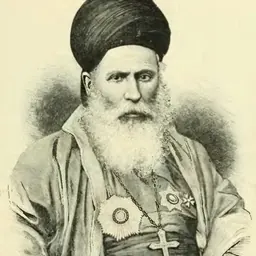
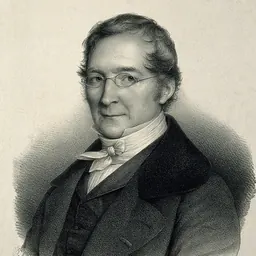
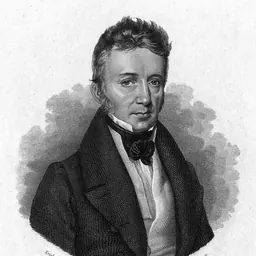
Contemporaries
People whose lives overlapped Tanyus Shahin's




Frequently asked questions
Who was Tanyus Shahin?
Maronite muleteer and peasant leader
When was Tanyus Shahin born?
Tanyus Shahin was born in 1815 in Rayfoun.
When did Tanyus Shahin die?
Tanyus Shahin died in 1895 in Mount Lebanon Mutasarrifate, Ottoman Empire, Rayfoun.
What nationality was Tanyus Shahin?
Tanyus Shahin was Turkish.
Sources & further reading
Cite this page
APA: Biography.guide. (2026). Tanyus Shahin. https://biography.guide/tanyus-shahin/
MLA: "Tanyus Shahin." Biography.guide, https://biography.guide/tanyus-shahin/.
Chicago: "Tanyus Shahin." Biography.guide. https://biography.guide/tanyus-shahin/.
Data last updated: 2026-09-23 · Spot an error? Report a correction.
Portrait: Wikimedia Commons · author & licence
Page generated 2026-09-27 05:05 UTC