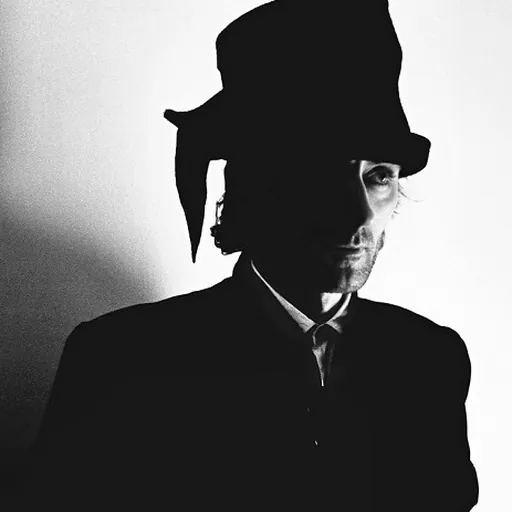
About Tamás Király
Lived 1952 – 2013 (aged 60). Tamás Király was a Hungarian fashion designer.
Tamás Király (; 13 September 1952 – 7 April 2013) was a Hungarian underground avant-garde fashion designer active beginning in the 1980s. In many cases, Király used found materials, took clues from queer art, and employed geometric forms in a "decadent" manner; in at least some projects of the period, he took additional inspiration from previous experiments within the Russian avant-garde scene. Though not expressly political, his work sometimes flaunted the artistic conventions permitted by the communist regime; authorities tolerated his shows, which came with performance art elements, but did not promote them. He relied on self-promotion, establishing an unconventional store in Budapest and living in poverty. Throughout his life, he was opposed to selling his creations as wearable clothes.
Beyond his cult following in Hungary, Király achieved international fame after he participated in the 1988 Dressater fashion show in West Berlin, as the only designer from the Eastern Bloc. This allowed him to live from his shows in post-communist Hungary. Though he remained focused on Budapest—he had a studio in Józsefváros, and was affiliated with the NA-NE artists' collective—he would sometimes showcase his work in provincial Hungarian towns. He was murdered in 2013 by a man with whom he was possibly having a sexual encounter. Academics have posthumously given additional attention to his work, much of which is preserved by the Museum of Applied Arts.
Biography Early life and debut years Király was born on 13 September 1952, and grew up in the town of Gyöngyös, in what was then the Hungarian People's Republic. Reportedly, he first performed in public in that town. He also traveled to neighboring Vámosgyörk, where, as he recalled in 1998, he "got my ears pierced. This was not an everyday thing at that time." In May 1971, as a student at , he was granted a second prize ("bronze certificate") at an art festival organized by the Hungarian Young Communist League. He moved to Budapest, where, after receiving encouragements from costume-maker Gizella "Gizi" Koppány, he began to study design. For a time, he was employed as a display window designer. Király also flaunted convention by using live models in the display window. In 1988, he presented at the Dressater fashion show in West Berlin as the only designer from an Eastern Bloc country, having been recruited by Vivienne Westwood. He called his collection, which featured black velvet dresses stretched into geometric shapes, "Open Doors," a subtle jab at the Soviet authorities who had granted him permission to attend in an attempt to demonstrate their openness.
Király lacked the credentials to be officially registered as an artist, complicating his career. His devotees greeted him with a related pun: ("Long live the King!").
1989 and after
Király's performance art was awarded public visibility during 1989, the year when communism ended in Hungary. In June or July 1989, Between 1989 and 1992, he presented no catwalk shows in his native country; from as early as 1987, he had refused to sell his creations through any boutique business. Király had opened his own workshop in Józsefváros, and, as Szerényi notes, used it as a "base from which corridors lead to the wider world." According to legend, American avant-garde guru Allen Ginsberg promised to contribute a poem for the event, if it ever took place (which it did not). In May 2005, Király arranged for one of his fashion shows to be hosted by Mátra Cultural Center in Gyöngyös. Critic József Keresztesi gave it a positive review, arguing that Király's feat was outstanding in itself: "Anyone who spent his childhood in a small town is aware of the risk of returning." The costumes presented were "pictures, very consciously selected, to intense musical accompaniment." That same year, fellow designer Kati Zoób referred to Király as "perhaps the greatest talent in domestic fashion design", noting that he still would not "sell clothes". He reportedly made most of his income from his costume design and from selling tickets to a worldwide audience of "Király fans". He instead referred to his garments as "clothing sculptures". These were constructed out of found material, including fishing rope and kitchen supplies.
Curator Gyula Musckovics characterized Király's work as anti-political, existing in a parallel realm not directly in opposition to the political one. He was tolerated by the communist authorities despite flouting norms of socialist fashion good taste of the era. According to initial reports, the man strangled him and then robbed his home. Court records identified him as "József L.", who "lives by loitering and sometimes prostitutes himself". He allegedly "testified that the fashion designer, upon learning that he was homeless, had invited him to sleep at his place."
As Trufelman notes, public perception of Király's works was negatively influenced by a hostile 2013 documentary that aired on TV2 and portrayed him as insane, and by coverage of his death that emphasized its scandalous aspects. The academic world took greater interest in his works after a 2014 exhibition at the art gallery Tranzit.hu, which was followed by a 2019 retrospective at the in Budapest. In July of that year, a "mini-exhibit", focusing on Király's private life, was opened at Pizzica Pizza restaurant in Terézváros. Its organizers were the designer's son, Iliasz, alongside writer György Kozma and radio personality Tivadar Krausz. Trufelman profiled Király in a 2023 episode of her podcast about fashion, Articles of Interest, examining him as an example of fashion transcending capitalism. According to Trufelman, the difficulty of classifying Király's work, as well as lingering censorship of Hungarian arts institutions, has hampered efforts to preserve his legacy. His surviving designs are kept by the Museum of Applied Arts in Budapest, as part of its collections, though many were reportedly stored in poor condition as of 2023.
Don’t just read it —
keep it.
Full-length biographies made to live with: read them, listen on the way to work, watch them tonight.
- E-book
- Audio
- Video
Instant download · yours to keep · every purchase keeps this site free
Important facts
People in Tamás Király's life
Named in this biography and alive at the same time
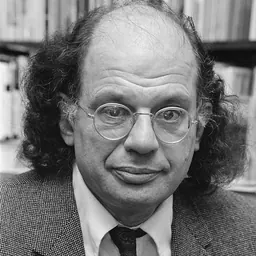

Related people
Same field, nearest in time



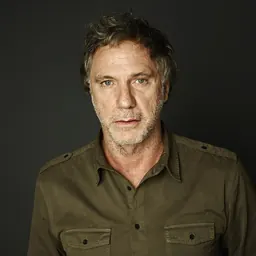


Contemporaries
People whose lives overlapped Tamás Király's

Frequently asked questions
Who was Tamás Király?
Hungarian fashion designer (1952–2013)
When was Tamás Király born?
Tamás Király was born on 13 September 1952.
When did Tamás Király die?
Tamás Király died on 7 April 2013 in Budapest.
What was Tamás Király's occupation?
Tamás Király was a fashion designer.
What nationality was Tamás Király?
Tamás Király was Hungarian.
Sources & further reading
Cite this page
APA: Biography.guide. (2026). Tamás Király. https://biography.guide/tamas-kiraly/
MLA: "Tamás Király." Biography.guide, https://biography.guide/tamas-kiraly/.
Chicago: "Tamás Király." Biography.guide. https://biography.guide/tamas-kiraly/.
Data last updated: 2026-09-20 · Spot an error? Report a correction.
Page generated 2026-09-27 05:09 UTC