
About Talib Al Mamari
Born 1972. Talib Al Mamari is a politician.
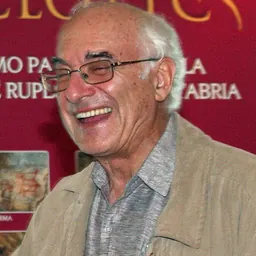
Talib Al Mamari (, ; born 24 May 1972) is an Omani academic, activist, human rights defender, writer, and former parliamentarian. He served in the Omani Consultative Assembly (Majlis al-Shura) from 2011 until his arrest in 2013 following his participation in a peaceful demonstration against pollution from petrochemical industries in his native constituency of Liwa.
Born in the Wilayah (Province) of Liwa in Oman's Al Batinah North Governorate, Al Mamari worked as an Arabic language teacher before serving as head of the Arabic Language Department at Sohar University for 12 years. Following parliamentary reform in Oman that took place in 2011, he was elected to the Omani Consultative Assembly (Majlis al-Shura), the lower house of the Council of Oman, where he represented the Wilayah of Liwa.
Al Mamari received widespread attention in 2013–2014 when he was arrested in August 2013 for participating in an environmental protest. His detention prompted statements from several human rights organisations and governments calling for his release. In 2014, the United Nations Working Group on Arbitrary Detention issued Opinion No. 53/2014 (Al Mamari v. Oman), concluding that his detention was arbitrary and that his right to freedom of expression had been violated. He was convicted of "harming the State's prestige", "obstructing traffic", and "disturbing public order", and was sentenced to three years before being granted a royal pardon.
Early life Talib Ahmad Muhammad Al Mamari was born on 24 May 1972 in the Wilayah (Province) of Liwa, in Oman's Al Batinah North Governorate. He graduated from Sohar University with a degree in Literature and Linguistics and later obtained a PhD in Arabic Language from Cairo University. He pursued an academic career as a lecturer and Arabic language teacher before serving as head of the Arabic Language Department at Sohar University for 12 years.
During the 2011 Omani protests, Al Mamari was detained in Sohar but was released without conviction.
Literary career During the early 2000s, Al Mamari worked as a writer for the Omani newspaper Al-Shabiba, contributing to its cultural supplements Ibdaʿ and Afaq. He wrote a weekly cultural column covering subjects including the Arabic language, poetry, and Arab poets. He subsequently discontinued his newspaper writing while working as a lecturer at Sohar University.
In 2010, Al Mamari published Sufi Discourse in Contemporary Arabic Poetry, a study of Sufi elements in modern Arabic poetry. The book examines the poetic works of Adonis, Salah Abdel Sabour, Abd al-Wahhab al-Bayati, and Muhammad Afifi Matar, focusing on the ways in which modern poets incorporated elements of the Arabic Sufi tradition into their poetry.
Member of the Majilis al-Shura (2011–2013) Al Mamari was elected as a member of the Consultative Assembly following the 2011 parliamentary reforms in Oman, introduced by Sultan Qaboos through a royal decree that expanded the legislative powers of the Assembly. A vocal advocate against environmental damage and pollution in Liwa, he also criticised the government's commitment to the rule of law and its system of governance.
Al Mamari emerged as one of the Assembly's most outspoken members. He became known for scrutinizing government ministers, criticizing government policies, and advocating on behalf of his constituents in Liwa, particularly those affected by industrial pollution. His parliamentary interventions, which were broadcast on national television and widely shared on social media, significantly increased his public profile.
In May 2012, after Al Mamari criticized an employee of the Ministry of Housing on Facebook, the Public Prosecution initiated defamation proceedings against him, requesting that the Consultative Assembly lift his parliamentary immunity so that he could be prosecuted. The Assembly rejected the request, with the case prompting protests in Sohar and Liwa.
According to the submission to the United Nations Working Group on Arbitrary Detention, Al Mamari was beaten, threatened, and handcuffed by police officers while staying at a hotel in late 2012. The submission alleged that the threats were linked to his role in the Consultative Assembly and his criticism of the government.
Arrest The day after the protest, on 23 August 2013, Al Mamari met with members of the Consultative Assembly and security authorities to discuss the demonstrations and the security forces' response. After the meeting, Al Mamari returned to his brother, Captain Murad Al Maamari's house in the early hours of 24 August 2013, where he was staying at the time. According to the submission to the United Nations Working Group on Arbitrary Detention, the house was subsequently surrounded by dozens of police vehicles before officers entered and arrested him. He was later charged with the offence of "gathering in public".
On 10 October 2013, Al Mamari was found guilty of the charges against him and was sentenced to seven years in jail and a fine of 1,000 Omani rials (approximately US$ at the time) for "obstructing traffic", "disturbing public order", and "impairing the honour of the state". After being released on bail on 11 October 2013, Al Mamari was rearrested later that same day based on accusations that he was responsible for incitement during Friday prayers at a mosque. On 16 December 2013, a court of appeals upheld the verdict against Al Mamari, reducing his sentence to four years in prison and a 500 rial (approximately US$ at the time) fine.
Following further appeals, during which one of the complainants alleged violations of due process and judicial independence, the Court of Appeal reduced his sentence to three years' imprisonment in October 2014. During this period, Al Mamari was repeatedly detained for extended periods without being granted bail.
International reaction The arrest and detention of Al Mamari prompted a number of human rights organisations and nations including the Inter-Parliamentary Union, the Gulf Centre for Human Rights, the Parliament of Zambia, and Human Rights Watch to issue statements calling for his release.
In December 2014, the United Nations Working Group on Arbitrary Detention (UNWGAD) concluded that Al Mamari's detention was arbitrary and violated Articles 19 and 21 of the Universal Declaration of Human Rights. Nevertheless, the Omani authorities did not comply with the request of the WGAD to release Al Mamari and he remained in custody.
In 2023, Al Mamari stated on X (formerly Twitter) that he had been unable to obtain employment and alleged that he was effectively being prevented from working because of his previous imprisonment since his release from prison, claiming that prospective employers had cited “higher orders” when rejecting his applications. He also alleged that his curriculum vitae had been discarded or withheld from hiring committees at some institutions, which he attributed to his previous imprisonment and political activism.
Awards
On 8 December 2015 while he was still imprisoned, Al Mamari received Alkarama, a Geneva-based human rights organisation's 2015 Award for Human Rights Defenders in the Arab World. Mourad Dhina, executive director at Alkarama, stated:
"Talib Al Mamari is a prisoner of conscience and a courageous human rights defender. By his unwavering non-violent fight against harmful environmental policies in Oman, he has become a model in the region as a dedicated militant who is genuinely close to the citizens' concerns. Alkarama is proud to honour him."
The award was presented in Geneva on 8 December 2015, with Swiss politician Ueli Leuenberger accepting it on Al Mamari’s behalf.
Works
Sufi Discourse in Contemporary Arabic Poetry
Don’t just read it —
keep it.
Full-length biographies made to live with: read them, listen on the way to work, watch them tonight.
- E-book
- Audio
- Video
Instant download · yours to keep · every purchase keeps this site free
Important facts
People in Talib Al Mamari's life
Named in this biography and alive at the same time



Related people
Same field, nearest in time





Contemporaries
People whose lives overlapped Talib Al Mamari's




Frequently asked questions
Who is Talib Al Mamari?
Omani politician & activist (born 1972)
When was Talib Al Mamari born?
Talib Al Mamari was born on 24 May 1972 in Liwa Province.
What is Talib Al Mamari's occupation?
Talib Al Mamari is a politician.
Sources & further reading
Cite this page
APA: Biography.guide. (2026). Talib Al Mamari. https://biography.guide/talib-al-mamari/
MLA: "Talib Al Mamari." Biography.guide, https://biography.guide/talib-al-mamari/.
Chicago: "Talib Al Mamari." Biography.guide. https://biography.guide/talib-al-mamari/.
Data last updated: 2026-09-20 · Spot an error? Report a correction.
Page generated 2026-09-27 05:31 UTC