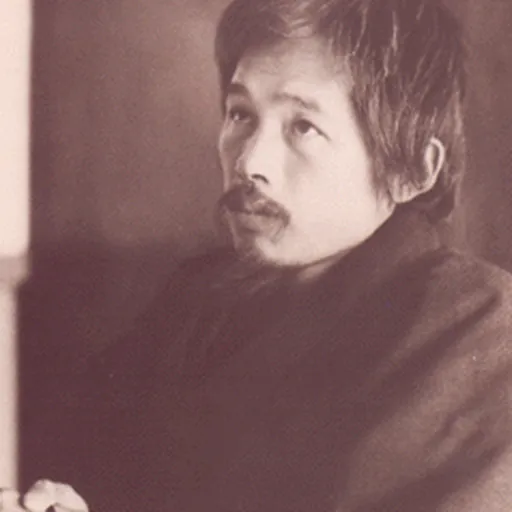
About Takashi Nagai
Lived 1908 – 1951 (aged 43). Takashi Nagai was a Japanese diarist, writer, radiologist and physician.
was a Japanese Catholic physician, author, and survivor of the atomic bombing of Nagasaki. His subsequent life of prayer and service earned him the affectionate title "saint of Urakami". His cause for canonization was opened in 2021 and he has been titled a Servant of God.
Biography
Early years Takashi (meaning "nobility") Nagai had a difficult birth that endangered his and his mother's life. His family was highly educated. His father, Noboru Nagai, was trained in Western medicine; his paternal grandfather, Fumitaka Nagai, was a practitioner of traditional herbal medicine; and his mother, Tsune, was the descendant of an old family of samurai.
Nagai was born in Matsue and grew up in the rural area of Mitoya, raised according to the teachings of Confucius and the Shinto religion. In 1920, he commenced his secondary studies at Matsue High School boarding at his cousins' home close by. He became increasingly interested with the surrounding atheism but was curious about Christianity.
Life in Nagasaki
In April 1928, he joined the Nagasaki Medical College where he joined the Araragi, a poetry group founded by Mokichi Saito
In 1930 his mother died from a brain hemorrhage, which led him to ponder the works of philosopher and scientist Blaise Pascal. He began to read the Pensées, which influenced his later conversion to Catholicism, and boarded with the Moriyama family, who for seven generations had been the hereditary leaders of a group of Kakure Kirishitans in Urakami. Takashi learned that the construction of the nearby Immaculate Conception Cathedral in Nagasaki was financed by poor Christian farmers and fishermen.
He graduated in 1932 and was supposed to deliver an address at the ceremony. However, five days before the event, he became intoxicated at a farewell party and returned home completely soaked with water from the rain. He slept without drying himself and found the next morning that he had contracted a disease of the right ear (signs of meningitis), which made him depressed and partially deaf. He could not practice medicine and agreed to turn to radiology research.
Upon his return from Manchuria, he continued his reading of the Catholic catechism, the Bible, and the Pensées. He met with a priest, Fr Matsusaburo Moriyama, whose father had been deported to Tsuwano (Shimane Prefecture) for his faith, along with many other Christian villagers in Urakami, by the Government of Meiji Japan from the 1860s to the 1870s (Urakami Yoban Kuzure). Eventually, Nagai's spiritual progress took a decisive turn when he thought about Pascal's words:"There is enough light for those who only desire to see, and enough obscurity for those who have a contrary disposition."
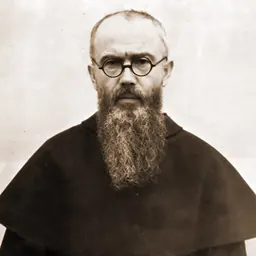
Conversion to Catholicism On 12 June 1934, Nagai received baptism in the Catholic faith. He chose the Christian first name Paul and in August of the same year he married Midori Marina Moriyama. Midori was president of the association of the women of the Urakami district. Takashi became a member of the Society of Saint Vincent de Paul (SSVDP), discovered its founder, Frédéric Ozanam, and his writings, and visited his patients and the poor, to whom he brought assistance, comfort and food. From 1931 to 1936, Father Maximilian Kolbe lived in a suburb of Nagasaki, where he started a monastery. Takashi met Kolbe through involvement with his parish St. Vincent de Paul Society in Nagasaki. In April 1935 the first son of Takashi and Midori Nagai, Makoto, was born.
Military service On 7 July 1937, after the breakout of the Second Sino-Japanese War he was mobilized as a surgeon in the service in the Medical Corps of the 5th Division. He was affected by the harsh winter in China, and the distress of the civilians and soldiers, both Chinese and Japanese. During his stay in China, their second child, Ikuko, was born (October 1937) and died (July 1938). On 4 February 1939, he received news of the death of his father and that of his daughter Ikuko. He remained in China until 1940. Upon his return, he continued his work and research at the college.
World War II After the Japanese declaration of war on the United States on 8 December 1941, Nagai had a somber presentiment: His city could be destroyed during this war. In August of the same year and in 1943, their third and fourth children, respectively Kayano and Sasano, were born. In 1944 Sasano died.
He obtained his doctorate in 1944. On 26 April 1945, an air raid on Nagasaki left numerous victims. The hospital was overwhelmed. Takashi spent his days and nights serving the wounded in his radiology department. In June 1945, he was diagnosed with leukemia and given a life expectancy of three years.
On 11 August, he found his house destroyed and his wife dead. Months later, Nagai was found to be seriously affected by his head wound. He was confined to bed for a month, with death for a time seeming close as he began suffering from Cheyne–Stokes respiration. According to Nagai, when he drank water taken from Lourdes in Honkawachi, where Fr. Kolbe had founded a monastery, he heard a voice urge him to ask an intercession from the priest.
Postwar years He returned to the district of Urakami (the epicenter of the bomb) on 15 October 1945 and built a small hut (about six tatami) from pieces of his old house. He remained there with his children (Makoto and Kayano), his mother-in-law, and two other relatives.
For six months, he observed mourning for Midori and let his beard and hair grow. On 23 November 1945, a mass was celebrated, in front of the ruins of the cathedral, for the victims of the bomb. Takashi gave a speech filled with faith, comparing the victims to a sacred offering to obtain peace.
In the following years, Nagai resumed teaching and began to write books. The first of these, The Bells of Nagasaki, was completed by the first anniversary of the bombing. Although he failed to find a publisher at first, eventually it became a best seller and the basis for a top box-office movie in Japan. In July 1946, he collapsed on a station platform. Now disabled, he was henceforth confined to bed.
In 1948, he used 50,000 yen paid by the Kyushu Times to plant 1,000 three-year-old sakura (cherry) trees in the district of Urakami to transform this devastated land into a "Hill of Flowers". Although some have been replaced, these cherry trees are still called "Nagai Senbonzakura" ("1,000 cherry trees of Nagai"); their flowers decorate the houses of Urakami in spring. By 2010, the numbers of these cherry trees were reduced to only about 20 due to aging and other causes.
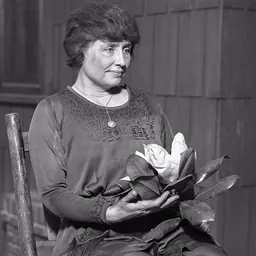
On 3 December 1949, he was made freeman of the city of Nagasaki. He received a visit from Helen Keller in October 1948. He was visited, in 1949, by Emperor Hirohito and by Cardinal Norman Gilroy of Australia, a papal emissary.
His name was added to the Monument to the X-ray and Radium Martyrs of All Nations erected in Hamburg, Germany.
In 1991 in Nagasaki, the Takashi Nagai Peace Award was founded, with the purpose of annually awarding individuals and/or organizations, both domestic and overseas, for their contributions to world peace through the improvements and developments of medicare for hibakusha and related social welfare.
On April 1, 2003, for the succession of Nagai's spirit and a center to offer medical care for domestic and overseas hibakusha, the Nagai Takashi Memorial International Hibakusha Medical Center was founded at Nagasaki University Hospital.
Shunichi Yamashita, the director of the center, who was appointed as an adviser to Fukushima Prefecture on radiation exposure after the Fukushima nuclear accident, wrote:"I myself [am] just a younger alumnus of the same university, I found Nagai Takashi Memorial International Hibakusha Medical Center at Nagasaki University Hospital. Furthermore, by founding the Takashi Nagai Memorial Nagasaki Peace Award as an international activity of Nagasaki Association for Hibakushas' Medical Care, I am making an effort in order to honor the doctor for a long time succeeding the last wishes of those who [know] the doctor like the late Soshino Hisamatsu, the director of [the] nursing service department."
In Korea in 2004, the Most Rev. Paul Ri Moun-hi, then Archbishop of Daegu, founded the Korean Association of "Love Your Neighbor as Yourself".
Beatification
Nagai's cause for canonization was opened after his death, together with his wife Midori, granting them the title Servant of God. An organisation in Rome called Amici di Takashi e Midori Nagai was established to promote their cause.
Thought
Use of nuclear power Although Nagai opposed the use of nuclear weapons, he hoped atomic energy might be used for peaceful purposes. At the end of the Atomic Bomb Rescue and Relief Report, he writes: "We should utilize the principle of the atomic bomb. Go forward in the research of atomic energy contributing to the progress of civilization. A misfortune will then be transformed to good fortune. The world civilization will change with the utilization of atomic energy. If a new and fortunate world can be made, the souls of so many victims will rest in peace."
Works Nagai left behind a voluminous output of essays, memoirs, drawings, and calligraphy on themes including God, war, death, medicine, and orphanhood. These enjoyed a large readership during the American occupation of Japan (1945–52) as spiritual chronicles of the atomic bomb experience. His books have been translated into various languages, including Chinese, Korean, French, and German. Four of his literary works are currently available in English: We of Nagasaki, a compilation of atomic-bomb victim testimonies edited by Nagai; The Bells of Nagasaki (trans. William Johnston); Leaving My Beloved Children Behind (trans. Maurice M. Tatsuoka and Tsuneyoshi Takai); and Thoughts from Nykodo (trans. Gabriele di Comite). His works were republished in new Japanese editions by Paulist Press.
Much of Nagai's writing is spiritual, consisting of Christian reflections on the experience (or, just as often, imagined future experience) of himself and the people around him, especially his children, in the aftermath of the war. His intensely personal meditations are often addressed to his children or to God, and he works out his own spiritual issues on the page as he writes in a visceral and uncensored prose. Nagai's more technical writings, in the Atomic Bomb Rescue and Relief Report (Nagasaki Idai Genshi Bakudan Kyuugo Houkoku), were discovered in 1970.
Don’t just read it —
keep it.
Full-length biographies made to live with: read them, listen on the way to work, watch them tonight.
- E-book
- Audio
- Video
Instant download · yours to keep · every purchase keeps this site free
Important facts
People in Takashi Nagai's life
Named in this biography and alive at the same time



Related people
Same field, nearest in time



Contemporaries
People whose lives overlapped Takashi Nagai's


Frequently asked questions
Who was Takashi Nagai?
Japanese physician, writer, diarist, Roman Catholic convert and Servant of God (1908–1951)
When was Takashi Nagai born?
Takashi Nagai was born on 3 February 1908 in Matsue.
When did Takashi Nagai die?
Takashi Nagai died on 1 May 1951 in Nagasaki University Hospital, Nagasaki.
What was Takashi Nagai's occupation?
Takashi Nagai was a diarist, writer, radiologist and physician.
What nationality was Takashi Nagai?
Takashi Nagai was Japanese.
Sources & further reading
Cite this page
APA: Biography.guide. (2026). Takashi Nagai. https://biography.guide/takashi-nagai-diarist/
MLA: "Takashi Nagai." Biography.guide, https://biography.guide/takashi-nagai-diarist/.
Chicago: "Takashi Nagai." Biography.guide. https://biography.guide/takashi-nagai-diarist/.
Data last updated: 2026-09-24 · Spot an error? Report a correction.
Portrait: Wikimedia Commons · author & licence
Page generated 2026-09-27 05:09 UTC