
About Takaaki Yoshimoto
Lived 1924 – 2012 (aged 87). Takaaki Yoshimoto was a Japanese poet, philosopher, literary critic and writer.
, also known as Ryūmei Yoshimoto, was a Japanese poet, philosopher, and literary critic. As a philosopher, he is remembered as a founding figure in the emergence of the New Left in Japan, and as a critic, he was at the forefront of a movement to force writers to confront their responsibility as wartime collaborators.
Yoshimoto is the father of Japanese writer Banana Yoshimoto and of cartoonist Yoiko Haruno.
Early life
Yoshimoto was born in 1924, in Tsukishima, Tokyo, the third son of family of boatmakers who managed a small boatyard. Shortly before his birth, his family had moved to Tokyo from Amakusa, Kumamoto prefecture, on the southern island of Kyushu. Yoshimoto was invited to give speeches at Zengakuren meetings in December 1959 and January 1960, and he joined the student activists in a sit-in at Shinagawa Station in Tokyo as part of a nationwide general strike against the Treaty on June 4, 1960. In the aftermath, Yoshimoto was arrested and interrogated for three days by the police, before being released without charges. Yoshimoto concluded that the only path forward was to reject the oppression of existence and pursue absolute individual autonomy (jiritsusei). New Left activists especially appreciated that Yoshimoto was developing a positive theoretical discourse in the midst of the collapse of the Communist Party's heroic status after the failure of the anti-Treaty movement and endless, contentious and dispiriting schisms within the left. Yoshimoto's books became best-sellers, especially his 1962 essay collection The End of Fictions, named after his famous 1960 essay of the same name (which was anthologized within). In these and other essays, Yoshimoto developed an independent theory of the arts in the face of criticisms of the Communist Party and sectarian literary theories, emphasizing the aesthetics of language and psychological phenomena, and his concept of "communal fantasy" (共同幻想, kyōdō gensō), describing how the propaganda and militarism of the wartime era "swept away virtually the entire population in a wave of war frenzy". Yoshimoto's philosophy of radical individualism became a refuge for students and intellectuals exasperated by the then-current sectarian and bureaucratic Marxism.
As a result, Yoshimoto's anti-sectarian philosophy of independence and individualism became a major influence and theoretical resource in the 1960s and 1970s for the Zengakuren, Zenkyoto, and other 'non-sect' New Leftists. He was regarded as required reading for participants in the 1968–69 Japanese university protests. This was in spite of his remaining aloof from, and taking a critical stance toward, the student protests of the later 1960s, a stance which was a consequence of his aversion to sectarianism and party-driven movements. Yoshimoto eventually concluded that even the radically egalitarian and highly individualistic New Left protest groups were not individualistic enough, and were still part of the same form of "communal fantasy" (共同幻想, kyōdō gensō) which had led Japan into World War II.
From the 1980s
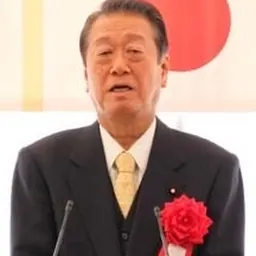
Beginning in the 1980s, Yoshimoto published a theory of the masses, The Mass Image, and particular a theory of the city in The High Image I-III. At this time, Yoshimoto appeared in the women's magazine AnAn wearing clothing by Comme des Garçons. Criticized by Haniya Yutaka as "wearing capitalism itself", Yoshimoto was criticized for turning right. Indeed, afterwards Yoshimoto did become more politically conservative, becoming a supporter of Ichirō Ozawa.
In the latter part of the 1980s, Yoshimoto criticized the anti-nuclear power and anti-nuclear weapons movements started by intellectual advocates of postwar democracy such as Kenzaburō Ōe as 'Anti-Nuclear Fascism".
In the 1990s, after characterizing the yoga practices of Asahara Shoko of Aum Shinrikyo as expressing the inner core of early Buddhist asceticism, Yoshimoto was criticized along with Nakazawa Shin'ichi as a defender of Aum following the Sarin gas attack on the Tokyo subway.
In August 1996, Yoshimoto was in critical condition after falling unconscious while swimming in Toicho, Shizuoka Prefecture, but survived. After the mid-1990s, his work tended towards informal essays.
In 2003, he won the Kobayashi Hideo Prize for his book Reading Natsume Sōseki (夏目漱石を読む), and his collected works received the Fujimura Memorial prize.
Philosophy and reception
Yoshimoto was a wide-ranging author who wrote on literature, subculture, politics, society, and religion (including Shinran and the New Testament).
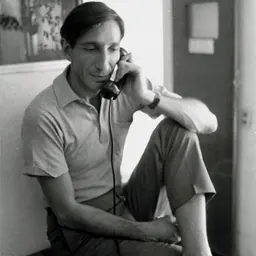
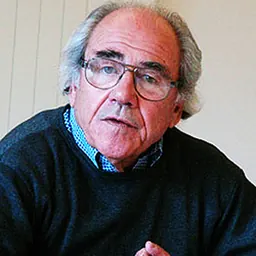
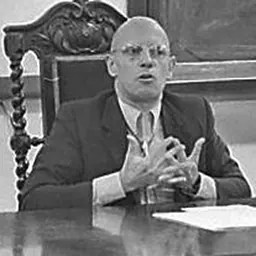
Yoshimoto is known as a giant of postwar thought, and had an enormous influence in the 1960s and 1970s in Japan. He published many dialogues with overseas intellectuals visiting Japan, such as Michel Foucault, Félix Guattari, Ivan Illich, and Jean Baudrillard.
Yoshimoto, who did not hold an academic pedigree, supported intellectuals who have devoted themselves to solitary study. He has also engaged in a number of belligerent exchanges. Famous among these have been his dispute with Kiyoteru Hanada, with New Testament scholar Kenzō Tagawa, and with his former friend and critic Yutaka Haniya.
Don’t just read it —
keep it.
Full-length biographies made to live with: read them, listen on the way to work, watch them tonight.
- E-book
- Audio
- Video
Instant download · yours to keep · every purchase keeps this site free
Important facts
People in Takaaki Yoshimoto's life
Named in this biography and alive at the same time


Related people
Same field, nearest in time


Contemporaries
People whose lives overlapped Takaaki Yoshimoto's



Frequently asked questions
Who was Takaaki Yoshimoto?
Japanese poet and Philosopher (1924–2012)
When was Takaaki Yoshimoto born?
Takaaki Yoshimoto was born on 25 November 1924 in Tokyo.
When did Takaaki Yoshimoto die?
Takaaki Yoshimoto died on 16 March 2012 in Bunkyō-ku.
What was Takaaki Yoshimoto's occupation?
Takaaki Yoshimoto was a poet, philosopher, literary critic and writer.
What nationality was Takaaki Yoshimoto?
Takaaki Yoshimoto was Japanese.
Sources & further reading
· Wikipedia: Takaaki Yoshimoto
Cite this page
APA: Biography.guide. (2026). Takaaki Yoshimoto. https://biography.guide/takaaki-yoshimoto/
MLA: "Takaaki Yoshimoto." Biography.guide, https://biography.guide/takaaki-yoshimoto/.
Chicago: "Takaaki Yoshimoto." Biography.guide. https://biography.guide/takaaki-yoshimoto/.
Data last updated: 2026-09-25 · Spot an error? Report a correction.
Page generated 2026-09-27 05:11 UTC