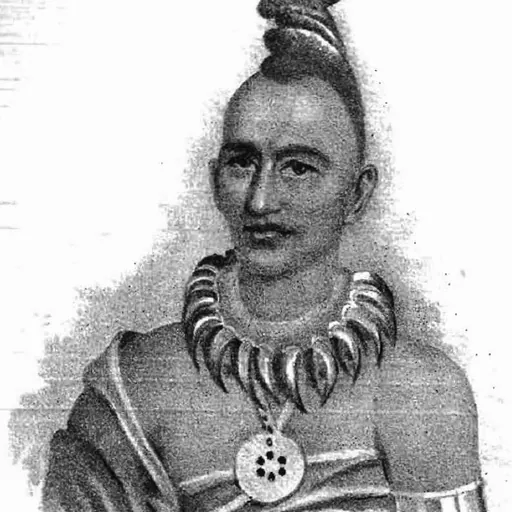
Taimah
Native American chief
About Taimah
Lived 1790 – 1830 (aged 39–40).
Taimah (c. 1790-1830; var. Taiomah, Tama, Taima, Tiamah, Fai-inah, Ty-ee-ma, lit. "sudden crash of thunder" or "thunder") was a Meskwaki (Fox) leader in the early 19th century in present-day Wisconsin, Iowa and Illinois. He was often called Chief Tama in historical accounts and was one of the signatories of an 1824 treaty in Washington, D.C. ceding land to the United States.
Life Taimah was born into a Meskwaki family in their historic territory in present-day Wisconsin. His name was spelled by many variations in historic records. Ty-ee-ma in Meskwaki means "sudden crash of thunder" or "thunder." He grew up in the Meskwaki culture, when they came under increasing pressure from United States encroachment. He became noted among Americans for saving the life of the United States Indian agent at Prairie du Chien, Wisconsin, by warning him of an assassination attempt. The Meskwaki had long occupied territory around the Great Lakes, in Wisconsin, Michigan and Illinois, moving into Iowa.
After the Meskwaki migrated from Wisconsin, Taimah became the principal leader of one of their villages near what later developed as Burlington, Iowa. He also maintained a village near Gladstone, Illinois in the 1820s. Caleb Atwater mistakenly credited Taimah with being the leader of Quashquame's village, but he was this chief's son-in-law.
In 1820 Taimah was interviewed by Jedidiah Morse at Fort Armstrong in Illinois. Morse was gathering information from tribes as an agent for the US Department of War, which then had jurisdiction over Native Americans. Morse wrote of Taimah:
Taimah signed the 1824 treaty in Washington, DC by which the Meskwaki ceded much of their land in Wisconsin to the United States.
He died in 1830. Taimah is buried near what developed as Kingston, about 1/4 mile from the Mississippi River, in a small patch of land in the middle of a corn field. A stone bearing his name is located about 20 rods west. Never having been plowed, this land is covered in trees, and foliage. The gravesite is on private property, and is not open to visitors. Des Moines County Highway 99 runs near this site.
Legacy Taimah's grave marker, near, Kingston, Iowa. The image on the grave shows Taimah with a stylized Plains Indian headdress, which was not typical of his people's attire; the "Tama Indian Tribe" refers to the Meskwaki who lived at the Meskwaki Settlement. He was the namesake of the city of Tama, and Tama County, Iowa. The city is located near the Meskwaki Settlement, founded in 1857 when the Meskwaki were allowed to buy land in the state.
Taimah's son was Appanoose; he also became a chief. Appanoose County, Iowa was named for him.
Don’t just read it —
keep it.
Full-length biographies made to live with: read them, listen on the way to work, watch them tonight.
- E-book
- Audio
- Video
Instant download · yours to keep · every purchase keeps this site free
Important facts
People in Taimah's life
Named in this biography and alive at the same time

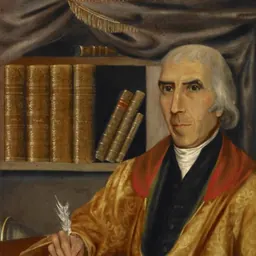
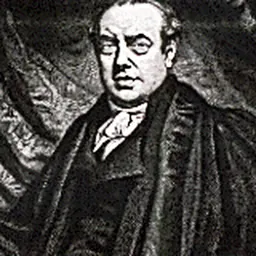
Contemporaries
People whose lives overlapped Taimah's




Frequently asked questions
Who was Taimah?
Native American chief (1790–1830)
When was Taimah born?
Taimah was born in 1790.
When did Taimah die?
Taimah died in 1830.
Sources & further reading
Cite this page
APA: Biography.guide. (2026). Taimah. https://biography.guide/taimah/
MLA: "Taimah." Biography.guide, https://biography.guide/taimah/.
Chicago: "Taimah." Biography.guide. https://biography.guide/taimah/.
Data last updated: 2026-09-23 · Spot an error? Report a correction.
Portrait: Wikimedia Commons · author & licence
Page generated 2026-09-27 05:06 UTC