
About Tadeusz Różewicz
Lived 1921 – 2014 (aged 92). Tadeusz Różewicz was a Polish translator, poet, playwright, dramaturge, prose writer and writer.
Tadeusz Różewicz (9 October 1921 – 24 April 2014) was a Polish poet, playwright, writer, and translator. Różewicz was in the first generation of Polish writers born after Poland regained its independence in 1918, following the century of foreign partitions. He was born in Radomsko, near Łódź, in 1921. He first published his poetry in 1938. During World War II, he served in the Polish underground Home Army. His elder brother, Janusz, also a poet, was executed by the Gestapo in 1944 for serving in the Polish resistance movement. His younger brother, Stanisław, became a noted film director and screenwriter.
Różewicz wrote and published fifteen volumes of poetry between 1944 and 1960. Czesław Miłosz wrote a poem dedicated to Różewicz and his poetry in 1948. Różewicz's debut as a playwright was in 1960, with The Card Index (Kartoteka).
He wrote over a dozen plays and several screenplays. His dramaturgical work continued to be accompanied by volumes of poetry and prose. Some of Różewicz's best known plays, other than The Card Index, include: The Interrupted Act (Akt przerywany, 1970), Birth Certificate (Świadectwo urodzenia, screenplay to an award-winning film by the same title, 1961), Left Home (Wyszedł z domu, 1965), and The White Wedding (Białe małżeństwo, 1975). His New Poems collection was nominated for the National Book Critics Circle Award in 2008. Two of his plays were translated into English and produced at La MaMa Experimental Theatre Club in New York City during the 1960s and 1970s. In 1965, Karen Cross and Johan Holm directed a series of Różewicz's three short plays, collectively titled The Witnesses. A Village Voice review of the production reads: The first play, the most abstract, is a string of metaphors meant... to convey a view of man's condition... The second play presents a young married couple at breakfast planning their day. They work very hard at it, as if a night of sleep cuts them off drastically from life and contact must be reestablished. By means of a forced calm, a dedicated attention to trivia, and a patronizing attitude toward other people, they organize the day's activity... The key to the piece is the husband's matter-of-fact account, as he watches at the window, or two children tormenting and then destroying a kitten... The children quite coldly mutilate and murder the animal and the husband blandly but not indifferently reports the event to his wife who isn't listening. In the third play two men facing in opposite directions have a conversation of sorts. Constantly demanding attention of each other, they deliver up monologues of self-revelation which reveal next to nothing and on top of it are not being listened to. Through it all an injured dog suffers an elaborate death agony at the feet of one of the men, whose only response is to intersperse his fatuous self-revelations with bulletins on the progress of the dog's demise." In 1972, Mavis Taylor directed a production of Różewicz's The Old Woman Broods. The piece was partially funded by the New York State Council on the Arts and was performed at the College of White Plains, Hudson River Museum, and Community Action Program in Mamaroneck in addition to La MaMa's theatre in the East Village, Manhattan.
Różewicz has been regarded as "one of the most versatile and creative continuators of the Polish and international avant-garde". He was a member of the Polish Writers' Union and was nominated multiple times for the Nobel Prize in Literature. In 1987, he received the Golden Wreath at the Struga Poetry Evenings festival in Struga, Macedonia. In 2000, Różewicz received Poland's top literary prize, the Nike Award, for his book Matka odchodzi (Mother Is Leaving).
Różewicz died in Wrocław from natural causes on 24 April 2014 from. He was 92.
Awards and decorations 1948 – Army Medal for War 1939-45 1955 – Gold Cross of Merit 1955 – State Prize, 2nd class 1966 – State Prize, 1st class 1974 – Home Army Cross 1974 – Polish Army Medal 1977 – Order of the Banner of Work, 2nd class; for his entire literary work 1981 – Operation Tempest medal 1982 – Austrian State Prize for European Literature 1987 – Struga Poetry Evenings Golden Wreath 1991 – Honorary degree from the University of Wroclaw 1996 – Grand Cross of the Order of Polonia Restituta 1997 – Golden Ball award 1997 – Polish PEN Club award (Jan Parandowski) 1999 – Honorary degree from the University of Silesia 2000 – Order Ecce Homo: Polish church decoration awarded by the Chapter of the Order of the Ecce Homo, "by exploring the dark side of a world full of chaos and divisions, the hope of beating the assessment everyday, seemingly impassive gray, for coming to terms with the inevitability and consistency in the pursuit of the truth about man, even worst"; for poetry that "touches the hearts and stuff". 2000 – Honorary doctorate from the University of Opole 2000 – Honorary degree from the Jagiellonian University 2000 – Nike Award (Polish literary award) 2001 – Honorary degree from the University of Warsaw 2005 - Gold Medal for Merit to Culture – Gloria Artis 2006 – Honorary doctorate from the University of Gdansk 2006 – Golden Sceptre award 2007 – Honorary degree from the Academy of Fine Arts in Wroclaw 2007 – European Prize for Literature 2008 – Laurel Award in poetry 2009 – Honorary degree from the Jan Kochanowski University in Kielce 2011 – Policy Wizard special Culture 2010 award – "Award for the fidelity of poetry and themselves. Certificate data for several subsequent epochs and questions that included the Polish literature and theater in the European debate on the most important experiences of modern man". 2012 – Griffin Poetry Prize international shortlist for Sobbing Superpower: Selected Poems of Tadeusz Różewicz (translated by Joanna Trzeciak)
Selected bibliography Różewicz' works include: 1947: Niepokój ("Anxiety") 1948: Czerwona rękawiczka ("The Red Glove") 1955: Opadly liscie z drzew ("The Leaves Have Fallen from the Trees") 1960: Rozmowa z księciem ("Conversation with a Prince") 1961: Głos Anonima ("The Anonymous Voice") 1962: Nic w płaszczu Prospera ("Nothing Dressed in Prospero's Cloak") 1964: Twarz ("The Face") 1968: Twarz trzecia ("The Third Face") 1968: Kartoteka ("The Card Index") 1969: Stara kobieta wysiaduje ("The Old Lady Sits Waiting") 1972: Na czworakach ("On All Fours") 1975: Białe małżeństwo ("White Wedding") 1979: Próba rekonstrukcji ("An Attempt to Reconstruct") 1982: Pułapka ("The Trap"), Warszawa: Czytelnik 1991: Płaskorzeźba ("Bas-Relief"), Wrocław: Wydawnictwo Dolnośląskie 1992: Nasz starszy brat ("Our Elder Brother") 1996: Zawsze fragment. Recycling ("Always a Fragment: Recycling"), Wrocław: Wydawnictwo Dolnośląskie 1999: Matka odchodzi ("Mother Departs"), Wrocław: Wydawnictwo Dolnośląskie 2001: Nożyk profesora ("The Professor's Knife"), Wrocław: Wydawnictwo Dolnośląskie 2002: Szara strefa ("Gray Zone"), Wrocław: Wydawnictwo Dolnośląskie 2004: Wyjście ("Exit"), Wrocław: Wydawnictwo Dolnośląskie 2007: Nauka chodzenia, Wrocław: Biuro Literackie 2008: Kup kota w worku, Wrocław: Biuro Literackie
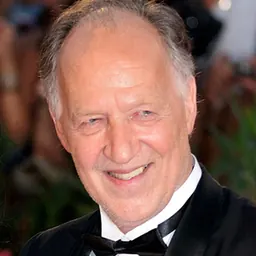
In pop culture Slovenian punk band Niet used parts of Rozewicz's poem Pierwsza miłość and recreated it in their 1984 punk balade Lep dan za smrt (A Nice Day for Death). Filmmaker Werner Herzog paraphrased a line from Rozewicz's "Draft of a Modern Love Poem" in his 2007 film Encounters at the End of the World, observing that "For me, the best description of hunger is a description of bread. A poet said that once, I think." In 2008, mainstream Slovenian band Dan D remade the Niet's song for what was to become one of the 2008 top hits on Slovenian radio stations.
Don’t just read it —
keep it.
Full-length biographies made to live with: read them, listen on the way to work, watch them tonight.
- E-book
- Audio
- Video
Instant download · yours to keep · every purchase keeps this site free
Important facts
People in Tadeusz Różewicz's life
Named in this biography and alive at the same time



Related people
Same field, nearest in time


Contemporaries
People whose lives overlapped Tadeusz Różewicz's





Frequently asked questions
Who was Tadeusz Różewicz?
Polish poet, dramatist and writer
When was Tadeusz Różewicz born?
Tadeusz Różewicz was born on 9 October 1921 in Radomsko.
When did Tadeusz Różewicz die?
Tadeusz Różewicz died on 24 April 2014 in Wrocław.
What was Tadeusz Różewicz's occupation?
Tadeusz Różewicz was a translator, poet, playwright, dramaturge, prose writer and writer.
What nationality was Tadeusz Różewicz?
Tadeusz Różewicz was Polish.
Sources & further reading
Cite this page
APA: Biography.guide. (2026). Tadeusz Różewicz. https://biography.guide/tadeusz-rozewicz/
MLA: "Tadeusz Różewicz." Biography.guide, https://biography.guide/tadeusz-rozewicz/.
Chicago: "Tadeusz Różewicz." Biography.guide. https://biography.guide/tadeusz-rozewicz/.
Data last updated: 2026-09-27 · Spot an error? Report a correction.
Page generated 2026-09-27 05:17 UTC