
Tad Wieman
American football player and coach, college athletics administrator
About Tad Wieman
Lived 1896 – 1971 (aged 75). Tad Wieman was an American american football player.
Elton Ewart "Tad" Wieman (October 4, 1896 – December 26, 1971) was an American college football player and coach and athletics administrator. He played football for the University of Michigan from 1915 to 1917 and 1920 under head coach Fielding H. Yost. He was a coach and administrator at Michigan from 1921 to 1929, including two years as the school's head football coach. Wieman served as a football coach at the University of Minnesota from 1930 to 1931, Princeton University from 1932 to 1942, and Columbia University from to 1945, and as an athletic director at the University of Maine from 1945 to 1951 and the University of Denver from 1951 to 1962. He was inducted into the College Football Hall of Fame as a coach in 1956.
Youth in California Wieman was born in Tulare County, California, and raised in Los Angeles. His father, William H. Wieman, was a native of Missouri and a Presbyterian minister. Wieman was the seventh of eight children born to William and his wife Alma. At the time of the 1900 United States census, the family lived in Orosi, California. By 1910, the family had moved to Los Angeles. Wieman followed in the footsteps of four older brothers, Henry, "Ink," Drury and "Tabby" Wieman. All had been excellent athletes in football, track, baseball and basketball. "Tad" played at "breakaway" in rugby football for Los Angeles High and was heralded as the best athlete in a family regarded as "the greatest athletic one in the history of Southern California athletics." Wieman had been expected to follow his older brothers who had all enrolled at Occidental College, but he broke the family tradition when he decided to attend the University of Michigan. The Times reported at length on Wieman's decision, noting:"The fifth of the Wieman tribe has upset the most ancient tradition of Occidental College. The mighty Tad, terror of all Rugbyites last year, while playing for Los Angeles High, last Sunday quietly folded his tent like the Arab and stole away. ... Tad promised to be the greatest of them all. ... What Occidental will do without the great Tad nobody knows."
Though he had only played rugby football before coming to Michigan, Wieman played on Michigan's freshman football team. As Wieman progressed, the Times ran a feature story reporting that "the big, raw-boned freshman from Southern California" was stopping Michigan's top varsity players, including All-American John Maulbetsch, and leaving them piled up "in a squirming heap." Coach Yost was reported to have bawled many varsity players for their inability to get past Wieman, with Maulbetsch complaining, "It can't be done, coach." Wieman played for the varsity football team and was moved from end to the line, playing seven games at left tackle. Wieman has been called "one of the greatest linemen ever developed" by Yost. Wieman played eight games at fullback and one at left tackle, and "starred in each position." An October 1917 newspaper account described Wieman's value to the team as follows:"Yost's one lucky move seems to hinge on the recent change of 'Tad' Wieman from tackle to fullback. Wieman is a giant who musters nearly 200 pounds of actual muscle. This is only his third year in the university, but he already was talked of a sure all-American tackle. Shifting him to fullback may have ruined his chances of making Camp's all-American this year, but it undoubtedly will save the Michigan team. The whole Michigan offense will be built around Wieman. He has developed the plunging habit that results in big gains every time he tries it in scrimmage. Wieman also is a lad who can use his head. Nobody knows what Yost would do if Wieman got laid out, but he is not the type of man that is likely to spend any time flat on his back. As a kicker, Wieman is beginning to shine too, scoring from drop and place kicks in scrimmage after only a few days of practice in the toe art." After a close 17–13 win over Kalamazoo's Western State Normal School in early October 1917, the headline read "Wieman Saves Day for Wolverines at Close." Wieman kicked a field goal early and scored the winning touchdown late in the fourth quarter. In a late October 1917 game against the Nebraska Cornhuskers, Wieman scored a touchdown, kicked two field goals and two extra points, and scored 14 of Michigan's 20 points. In all, Wieman scored 125 of Michigan's 304 points in 1917, including 76 successful point after touchdown kicks out of 80 attempts. However, in December 1917, Wieman announced his intention of enlisting in the Aviation Corps. During Wieman's visit to Los Angeles in 1918, the Los Angeles Times reported that although "the strapping celebrity now wears college-cut, tailor-mades instead of whistling corduroy knickerbockers," he was still the same "bashful, moon-faced, good-natured Tad." Though he did not play a single game for the University of Michigan in 1918, the team continued to recognize Wieman as captain of the 1918 team that was undefeated and recognized as a national champion.
Senior season
After completing his military service, Wieman returned to Michigan with one year of eligibility remaining. In 1920, the 24-year-old, 177-pound senior was 17 pounds lighter than he was in his junior year and played five games at right tackle. Wieman was "one of the best liked and respected men on the team," and finished his football career playing with a badly injured knee.
Wieman was a member of Phi Beta Kappa and won the Western Conference Medal for excellence in scholarship and athletics. Wieman coached several All-American linemen, and the 1924 Michigan yearbook noted that "he has consistently produced lines that have ranked with the best in the country." By 1924, Wieman had also been named Michigan's Assistant Athletic Director under Yost. Wieman's line stopped Red Grange and the Illinois team in 1925 by a score of 3–0. In Wieman's first year as head coach, Michigan went 6–2 with All-American Bennie Oosterbaan leading the effort. In December 1927, Wieman expressed concern about the team's prospects for 1928 without Oosterbaan: "We have been riding on the crest of the wave for some time, and perhaps we are due for a poor season, possibly not; who can tell?"
1928 season
In 1928, the Michigan football team finished with a record of 3–4–1. The 1928 season also saw conflict between Wieman and Yost. Before the season began, Yost became restless and announced that he would return to his head coaching responsibilities. Wieman reportedly contended that he had never really been allowed to take control of the team and felt that he was being used as a scapegoat for the team's poor showing. In late October 1928, the athletic department issued a "joint statement" from Wieman and Yost denying any estrangement and noting that their relationship was too long and intimate to be jeopardized by "any minor misunderstandings." Wieman was again caught by surprise and told reporters, "I have not resigned from my position and have no desire or intention of resigning." Wieman was replaced as head football coach by Harry Kipke and assigned to other duties for the balance of 1929. At the time of the 1930 United States census, Wieman was living in Ann Arbor, Michigan, with his wife, Margaret, and their two children Robert A. Wieman and Helen E. Wieman. His occupation was listed as a teacher at the university.
Minnesota In February 1930, the University of Minnesota hired Fritz Crisler as its head football coach, and Wieman was hired as Crisler's first assistant and line coach. Crisler and Wieman remained at Minnesota for two years.
Princeton In 1932, Crisler accepted the position of head football coach at Princeton University, and Wieman went with him as an assistant coach. In February 1938, Crisler resigned as head coach at Princeton to become the head coach at Michigan. Crisler offered Wieman a spot as an assistant coach at Michigan, but Wieman declined and became Princeton's head football coach in 1938. Wieman was the first Princeton coach to lead the Tigers to four consecutive victories over Yale.
U.S. Army and Columbia During World War II, Wieman worked for the United States Department of War. He was a civilian consultant to director of military training and chief of the physical training section of the Army Specialized Training Program for the Army Service Forces. He served in that capacity for five years. While at Denver, Wieman was an active participant in the NCAA football rules committee. In 1957, he led the effort to prohibit the practice of grabbing an opposing player's face mask and declaring it a personal foul penalty. Wieman noted at the time: "The use of the protective face mask is becoming quite general, and the practice of players grabbing opponents by the masks is also becoming all too common. Such a procedure is not a part of football. It can't be an accident and the feeling of the committee is to cut down on this type of thing before it leads to worse conditions." Wieman retired from his position at the University of Denver in June 1962, after more than 40 years as a college athlete, coach and athletic administrator.
Retirement and death During his retirement years, Wieman lived in Portland, Oregon and Lake Arrowhead, California. Wieman died in December 1971 in Portland at age 75. In 1956, he was inducted in the College Football Hall of Fame. In 1962, Wieman received the Amos Alonzo Stagg Award from the American Football Coaches Association.
Head coaching record
Don’t just read it —
keep it.
Full-length biographies made to live with: read them, listen on the way to work, watch them tonight.
- E-book
- Audio
- Video
Instant download · yours to keep · every purchase keeps this site free
Important facts
People in Tad Wieman's life
Named in this biography and alive at the same time




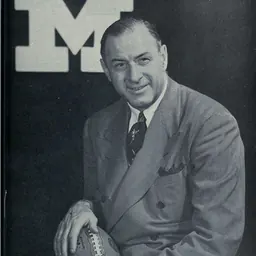



Related people
Same field, nearest in time

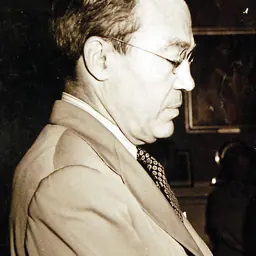

Contemporaries
People whose lives overlapped Tad Wieman's

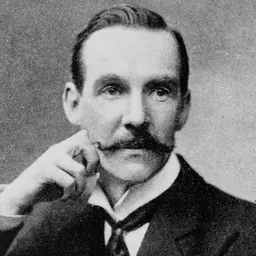

Frequently asked questions
Who was Tad Wieman?
American football player and coach, college athletics administrator (1896-1971)
When was Tad Wieman born?
Tad Wieman was born on 4 October 1896 in Orosi.
When did Tad Wieman die?
Tad Wieman died on 26 December 1971 in Portland.
What was Tad Wieman's occupation?
Tad Wieman was an american football player.
What nationality was Tad Wieman?
Tad Wieman was American.
Sources & further reading
Cite this page
APA: Biography.guide. (2026). Tad Wieman. https://biography.guide/tad-wieman/
MLA: "Tad Wieman." Biography.guide, https://biography.guide/tad-wieman/.
Chicago: "Tad Wieman." Biography.guide. https://biography.guide/tad-wieman/.
Data last updated: 2026-09-27 · Spot an error? Report a correction.
Page generated 2026-09-27 05:17 UTC