
About T. R. N. Rao
Lived 1933 – 2024 (aged 90). T. R. N. Rao was a computer scientist and university teacher.
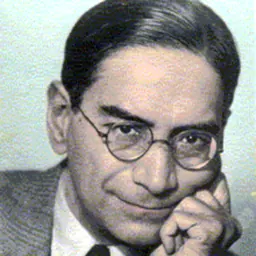
Thammavaram Rudra Narasimha Rao (June 5, 1933 – February 14, 2024), widely known as T. R. N. Rao, was an Indian-born American computer scientist recognized for foundational contributions to error-control coding, coding theory, and arithmetic processor reliability. A Fellow of both the Institute of Electrical and Electronics Engineers (IEEE) and the Association for Computing Machinery (ACM), Rao was a long-serving faculty member and Professor Emeritus at the University of Louisiana at Lafayette.
Rao's career spanned theoretical computer science, applied coding theory, computational complexity, and historical mathematics. His work includes the Rao–Feng theorem, widely used textbooks, and research connecting ancient Indian computational methods with modern algorithmic systems.
Early life and education Rao was born on June 5, 1933, in Timmanapalem near Medarametla, Andhra Pradesh, India. He was raised in a traditional Niyogi Brahmin family and demonstrated early mathematical aptitude.
He earned his bachelor's degree from Andhra University, where he received the Tamma Sambaiah Gold Medal for excellence in mathematics.
He later taught at Southern Methodist University (SMU) in Dallas, Texas.
In 1980, Rao joined the University of Louisiana at Lafayette (then the University of Southwestern Louisiana) as part of the Center for Advanced Computer Studies (CACS). He supervised 25 doctoral dissertations and helped strengthen the university's research presence. He retired as Professor Emeritus.
Rao delivered invited lectures internationally, including in Italy and Germany. He enjoyed bridge, tennis, philosophy, and classical Indian literature.
Research contributions Rao's research spans several areas of coding theory and computation.
Error-control coding Rao co-authored influential textbooks, including:
Error-Control Coding for Computer Systems Error Coding for Arithmetic Processors
Coding theory and arithmetic Co-developer of the Rao–Feng theorem Contributions to coding for arithmetic processors Research into algebraic structures applied to computational complexity
History of computation Computing Science in Ancient India
Editorial work Co-editor, IEEE Computer Society Sixth Symposium on Computer Arithmetic (1983)
Honors and recognition Fellow, IEEE Fellow, ACM Tamma Sambaiah Gold Medal (Andhra University) Professor Emeritus, University of Louisiana at Lafayette
Personal life Rao had three children from his first marriage, all raised in the United States. After relocating to Louisiana in 1980, he remarried and later had a youngest daughter, with whom he shared a close bond.
He died on February 14, 2024, in Missouri City, Texas.
Selected publications Error-Control Coding for Computer Systems – Error Coding for Arithmetic Processors – Computing Science in Ancient India – Aryabhata Remainder Theorem: Relevance to Public-Key Crypto-Algorithms (2006) IEEE Computer Society Sixth Symposium on Computer Arithmetic – Rao's Real American Dream: Horoscope to Horizons –
Don’t just read it —
keep it.
Full-length biographies made to live with: read them, listen on the way to work, watch them tonight.
- E-book
- Audio
- Video
Instant download · yours to keep · every purchase keeps this site free
Important facts
People in T. R. N. Rao's life
Named in this biography and alive at the same time

Related people
Same field, nearest in time



Contemporaries
People whose lives overlapped T. R. N. Rao's




Frequently asked questions
Who was T. R. N. Rao?
computer scientist
When was T. R. N. Rao born?
T. R. N. Rao was born on 5 June 1933.
When did T. R. N. Rao die?
T. R. N. Rao died on 14 February 2024 in Missouri City.
What was T. R. N. Rao's occupation?
T. R. N. Rao was a computer scientist and university teacher.
Sources & further reading
Cite this page
APA: Biography.guide. (2026). T. R. N. Rao. https://biography.guide/t-r-n-rao/
MLA: "T. R. N. Rao." Biography.guide, https://biography.guide/t-r-n-rao/.
Chicago: "T. R. N. Rao." Biography.guide. https://biography.guide/t-r-n-rao/.
Data last updated: 2026-09-20 · Spot an error? Report a correction.
Page generated 2026-09-27 05:23 UTC