
About T. B. Walker
Lived 1840 – 1928 (aged 88). T. B. Walker was an American art collector, teacher, lumber merchant and businessperson, known for Lumber, Minneapolis Public Library and Walker Art Center.
Thomas Barlow Walker (February 1, 1840 – July 28, 1928) was an American business magnate who acquired lumber in Minnesota and California and became an art collector. Walker founded the Minneapolis Public Library. He was among the ten wealthiest men in the world in 1923. He was born in Xenia, Ohio, in 1840, where in 1849 he got his first job in a bakery cutting biscuits. He had accompanied his parents and siblings west from New York when his father died of cholera in 1849 at Westport, Missouri, on their way to the California gold fields to seek their fortune. Harriet G. Walker, wife, mother of eight children and president of Northwestern Hospital In 1854, his mother married Oliver Barnes and in 1855 his family moved to Berea, Ohio, where while traveling for Fletcher Hulet, at Baldwin University. When he finished college at age 19, he filled a contract in Paris, Illinois for railroad ties. He then taught school and then became a traveling salesman of grindstones. One of Walker's grandsons was Olympic hurdler Walker Smith.
Forestry From a man in Iowa,
Red River Lumber Company (RRLC) was founded in 1883 and incorporated the following year. became partners with Walker and the company built more mills in Crookston, Minnesota and at Grand Forks, Dakota Territory.
He was concerned about forest conservation and wrote an article for the National Magazine about what had become the "forestry question". During his lifetime, he gave papers to the Conservation Commission, the U.S. Forestry Department, the U.S. Interior Department and to the U.S. House Ways and Means Committee for their consideration for a tariff on lumber. He gave a presentation on conservation to the Minnesota Academy of Science. Walker was a director and president of the library board from its founding in 1885 until he died in 1928. He was particularly interested in creating a public art gallery, a museum, and the Minneapolis Art School. 103 portraits of Native American chiefs, medicine men and warriors, and 24 portraits of renowned cowboys, scouts and guides,
During the early 20th century, Walker published catalogs of his art collection which he wanted to give to the city of Minneapolis. According to the Minnesota Historical Society, the city refused the gift. —the Minnesota legislature authorized bonds for $500,000 but only half of them sold. the city negotiated with Walker but never reached mutual satisfaction, and in 1923 he rescinded the offer. A gallery across the street at Hennepin Avenue United Methodist Church holds several of the works in his collection by 16th- and 19th-century European masters, which Walker donated to decorate the Sunday school. Around this time, Walker was the richest man in Minnesota. About 50 of the houses remained in 1999 in the Edgebrook neighborhood. the Walker/Syndicate building (still standing), the St. Louis Park Hotel (which the village later demolished), and a streetcar line to Minneapolis. Walker was among the 15 or so wealthiest persons in the world when he died. In the Walker's recent collection, Walker appears in Lost Forty (2011), a huge tapestry by Goshka Macuga picturing a tract of unlogged land in the Chippewa National Forest.
Westwood, California Left to right: Fletcher, Willis, Archie, T.B., Gilbert and Clinton Walker in 1907. He also had daughters, Julia, and Harriet who died in 1904. Leon, another son, died in 1887. Walker started to acquire northeastern California land in 1894. In 1909 he bought property near Mountain Meadows, California. In 1912 RRLC signed an agreement with the Southern Pacific Railroad giving them the right to build a line (the Fernley and Lassen Railway) and exclusive right to haul lumber.
List of associations and affiliated businesses Walker's many business ventures and associations included the Crookston Boom and Water Power Company, the International Lumber Company in Minneapolis, the Metropolitan Trust Company in Minneapolis, the Minneapolis Central City Market Company, the Minneapolis Esterly Harvester Company, the Minnesota and Dakota Elevator Company in Minneapolis, the National Lumber Convention in Washington, D.C., the Northern Minnesota Log Driving & Boom Company, the Northwestern Elevator Company in Minneapolis, Pacific Investment Company, and the Waland Lumber Company. Walker was president of the Flour City National Bank in Minneapolis from 1887 to 1894. He was one of the incorporators of Edison Light & Power Co. He was one of the managers of the State Reform School in Saint Paul. He was involved in the Panama-Pacific International Exposition in San Francisco in 1915.
Walker was a trustee of the Hennepin Avenue Methodist Episcopal Church (now known as the Hennepin Avenue United Methodist Church in Minneapolis), a member of the Executive Committee of the Methodist Episcopal General Conference in Minneapolis, and a president of the Minneapolis Methodist Church Extension Society. He was a member of the executive committee of the See America League, a president of Walker Galleries, Inc., a president and a trustee of the Minneapolis Society of Fine Arts, president of the Minnesota Academy of Natural Sciences and its successor, the Minnesota Academy of Science where he donated boxes of specimens, and a trustee of the Young Men's Christian Association (YMCA) of the City of Minneapolis.
Butler, Mills & Walker, later L. Butler & Company, reestablished as Butler & Walker, lumber 1869–1872 Camp & Walker 1877–1887, Pacific Mill 1877–1887 Walker & Akeley 1887 Red River Lumber Company (RRLC) 1883–1897, California 1912–1944 Akeley, Minnesota (developed town), also mill 1899–1915 Westwood, California (company town) approx. 1912–1913 to retirement Walker, Minnesota was named for him
Don’t just read it —
keep it.
Full-length biographies made to live with: read them, listen on the way to work, watch them tonight.
- E-book
- Audio
- Video
Instant download · yours to keep · every purchase keeps this site free
Important facts
Family & relationships
People in T. B. Walker's life
Named in this biography and alive at the same time


Related people
Same field, nearest in time
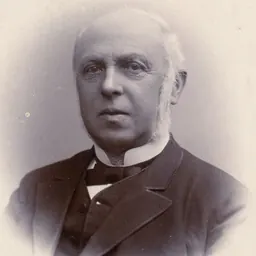
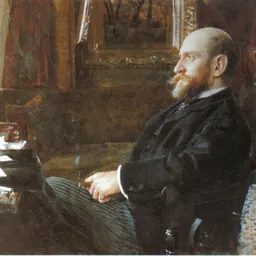
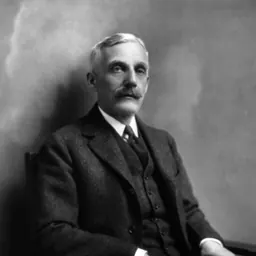

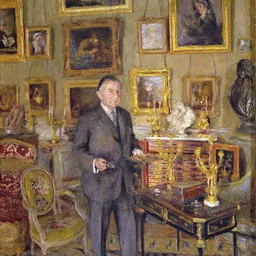
Contemporaries
People whose lives overlapped T. B. Walker's

Frequently asked questions
Who was T. B. Walker?
American lumberman and art collector (1840–1928)
When was T. B. Walker born?
T. B. Walker was born on 1 February 1840 in Xenia.
When did T. B. Walker die?
T. B. Walker died on 28 July 1928 in Minneapolis.
What was T. B. Walker's occupation?
T. B. Walker was an art collector, teacher, lumber merchant and businessperson.
What was T. B. Walker known for?
T. B. Walker was known for Lumber, Minneapolis Public Library and Walker Art Center.
What nationality was T. B. Walker?
T. B. Walker was American.
Sources & further reading
Cite this page
APA: Biography.guide. (2026). T. B. Walker. https://biography.guide/t-b-walker/
MLA: "T. B. Walker." Biography.guide, https://biography.guide/t-b-walker/.
Chicago: "T. B. Walker." Biography.guide. https://biography.guide/t-b-walker/.
Data last updated: 2026-09-22 · Spot an error? Report a correction.
Page generated 2026-09-27 05:28 UTC