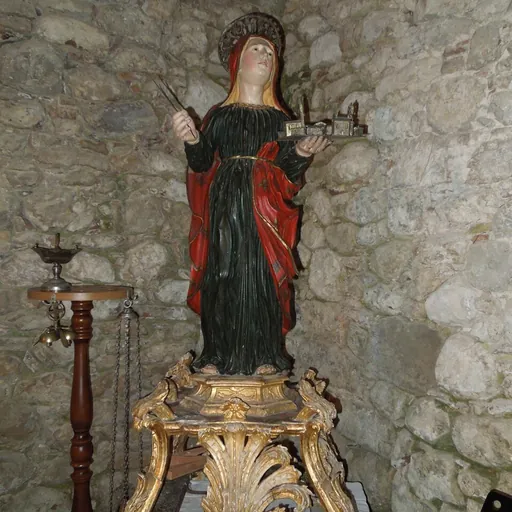
Symphorosa
Roman saint
About Symphorosa
Lived 100 – 135. Symphorosa was a Roman.
Symphorosa (; died circa AD 138) is venerated as a saint of the Catholic Church. According to tradition, she was martyred with her seven sons at Tibur (present Tivoli, Lazio, Italy) toward the end of the reign of the Roman Emperor Hadrian (117–38), or during the reign of Trajan.
Narrative The story of their martyrdom is told in an ancient Passio, the credibility of which is seriously questioned by many modern hagiologists. According to the Passio, Symphorosa was a Tiburtine matron and the widow of Getulius, a native of Gabii in Sabina. He was a tribune in the Roman army, but resigned upon being baptized a Christian, ultimately retiring to his estate near Tivoli, where he was joined by his brother, Amantius. Getulius and Amantius were subsequently beheaded under Emperor Hadrian. Symphorosa buried his remains on their estate.
Not long after, Symphorosa and her children were arrested. When all of the Emperor's attempts to induce Symphorosa and her sons to sacrifice to the pagan Roman gods were unsuccessful, he ordered her to be brought to the Temple of Hercules, where, after various tortures, she was thrown into the Anio River with a heavy rock fastened to her neck. Her brother Eugenius, who was a member of the council of Tibur, buried her with her husband. The emperor ordered all seven to be tortured, and finally pierced with the sword.
Their bodies were thrown en masse into a deep ditch at a place the pagan priests afterwards called Ad septem Biothanatos (the Greek word biodanatos, or rather biaiodanatos, was employed for self-murderers and, by the pagans, applied to Christians who suffered martyrdom). Hereupon the persecution ceased for one year and six months, during which period the bodies of the martyrs were recovered by the Christian community The Acts and the Hieronymian Martyrology agree in designating this spot as the tomb of Symphorosa and her sons. Further discoveries, that leave no room for doubt that the basilica was built over their tomb, were made by Stevenson. The remains were transferred to the Church of Sant'Angelo in Pescheria at Rome by Pope Stephen II in 752. A sarcophagus was found here in 1610, bearing the inscription: Hic requiescunt corpora SS. Martyrum Simforosae, viri sui Zotici (Getulii) et Filiorum ejus a Stephano Papa translata (Here rest the bodies of the holy martyrs Symphorosa, her husband Zotius (Getulius) and her sons, transferred by Pope Stephen).
Veneration
The Diocese of Tivoli honours them as patron saints and they are mentioned in the Roman Martyrology on 18 July. However, they are no longer included in the General Roman Calendar. The reason given for their removal was that the information given in their Acts, which are thought to be an imitation of the Passio of Saint Felicitas of Rome and her seven sons, is untrustworthy.
In medieval times Settecamini was called "Field of Seven Brothers" in relation to the legend of Saint Symphorosa and her seven children.
There is a St. Symphorosa Elementary School in Chicago, Illinois.
Don’t just read it —
keep it.
Full-length biographies made to live with: read them, listen on the way to work, watch them tonight.
- E-book
- Audio
- Video
Instant download · yours to keep · every purchase keeps this site free
Important facts
People in Symphorosa's life
Named in this biography and alive at the same time
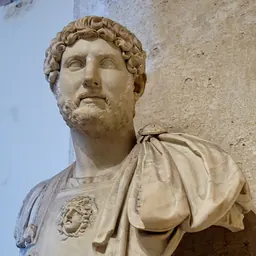
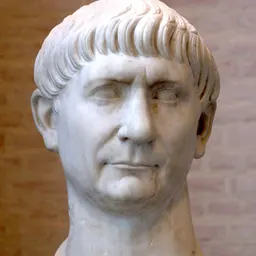
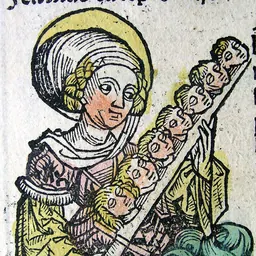
Contemporaries
People whose lives overlapped Symphorosa's

Frequently asked questions
Who was Symphorosa?
Roman saint
When was Symphorosa born?
Symphorosa was born in 100 in Tivoli.
When did Symphorosa die?
Symphorosa died in 135 in Tivoli.
What nationality was Symphorosa?
Symphorosa was Roman.
Sources & further reading
Cite this page
APA: Biography.guide. (2026). Symphorosa. https://biography.guide/symphorosa/
MLA: "Symphorosa." Biography.guide, https://biography.guide/symphorosa/.
Chicago: "Symphorosa." Biography.guide. https://biography.guide/symphorosa/.
Data last updated: 2026-09-23 · Spot an error? Report a correction.
Portrait: Wikimedia Commons · author & licence
Page generated 2026-09-27 05:06 UTC