
Sylvia Robinson
American singer, record producer, and executive
About Sylvia Robinson
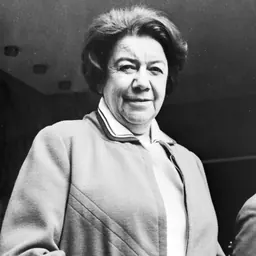
Lived 1936 – 2011 (aged 75). Sylvia Robinson was an American record producer, singer, songwriter, rapper, music executive and artist and repertoire.
Sylvia Robinson (née Vanterpool; May 29, 1935 – September 29, 2011), known mononymously as Sylvia, was an American singer and record producer. Robinson achieved success as a performer on two R&B chart toppers: as half of Mickey & Sylvia with the 1957 single "Love Is Strange", and her solo record "Pillow Talk" in 1973. She later became known for her work as founder and CEO of the pioneering hip hop label Sugar Hill Records.
Robinson is credited as the driving force behind two landmark singles in the hip hop genre: "Rapper's Delight" (1979) by the Sugarhill Gang, and "The Message" (1982) by Grandmaster Flash and the Furious Five, both of which she produced. At the 11th Annual Rhythm and Blues Awards Gala in 2000, she received a Pioneer Award for her career in singing and for founding Sugarhill Records. Several publications have dubbed her the "Mother of Hip Hop". In 2022, she was posthumously inducted into the Rock and Roll Hall of Fame in the Ahmet Ertegun Award category for being a major influence on the creative development of hip-hop's early successes, and she is the first woman to receive the award unaccompanied by another person.
Life and career
Early life
Robinson was born as Sylvia Vanterpool on May 29, 1935, in Harlem, New York, United States, to Herbert, who worked for General Motors, and Ida Vanterpool. Robinson attended Washington Irving High School until dropping out at the age of 14, and began recording music in 1950 for Columbia Records under the stage name "Little Sylvia", including with the trumpeter / vocalist / bandleader Hot Lips Page.
Early career
In 1954, she began teaming up with Kentucky guitarist Mickey Baker, who taught her how to play guitar. In 1956, the duo now known as Mickey & Sylvia recorded the Bo Diddley and Jody Williams-penned rock single, "Love Is Strange", which topped the R&B chart and reached number eleven on the Billboard pop chart in early 1957. After several more releases including the modestly successful "There Oughta Be a Law", Mickey & Sylvia split up in 1958 and she later married Joseph Robinson. Sylvia restarted her solo career shortly after her initial split from Baker, first under the name Sylvia Robbins. In 1960, Robinson produced the record "You Talk Too Much" by Joe Jones, but she did not receive credit.
In 1961, Mickey & Sylvia recorded more songs together for various labels including their own. Their label was called Willow Records and was distributed by King Records of Cincinnati. That year, Baker provided vocals and Robinson played guitar on Ike & Tina Turner's hit single "It's Gonna Work Out Fine" which earned Ike & Tina their first Grammy nomination. "I paid for the session, taught Tina the song; that's me playing guitar," Robinson said in a 1981 interview with Black Radio Exclusive.
In 1964, frustrated with the music business, Baker moved to Paris.
In 1966, the Robinsons moved to New Jersey where they formed a soul music label, All Platinum Records, the following year, with artist Lezli Valentine, formerly of the Jaynetts, bringing the label its first hit with "I Won't Do Anything". In 1968, the duo signed a Washington, D.C. act named The Moments, who immediately found success with "Not on the Outside". Within a couple of years and with a new lineup, the group scored their biggest hit with "Love on a Two-Way Street" (1970), which Sylvia co-wrote and produced with Bert Keyes and (uncredited) lyrics by Lezli Valentine. Other hits on the label and its subsidiaries, including Stang and Vibration, included Shirley & Company's "Shame, Shame, Shame" (1975), The Moments' "Sexy Mama" and "Look at Me (I'm in Love)", Retta Young's "(Sending Out An) S.O.S." (1975), and the Whatnauts/Moments collaboration, "Girls". Robinson co-wrote and produced many of the tracks, although later she was supported by two members of The Moments, Al Goodman and Harry Ray, as well as locally based producers, George Kerr and Nate Edmonds.
Solo career
In 1972, Robinson sent a demo of a song she had written called "Pillow Talk" to Al Green. When Green passed on it due to his religious beliefs, "Pillow Talk"'s subtly orgasmic gasps and moans predated those of the 1975 Donna Summer song "Love to Love You Baby". (Both were preceded by Serge Gainsbourg's 1967 "Je t'aime... moi non plus," first recorded with Brigitte Bardot, then the following year with Jane Birkin.) Reviewing Robinson's 1973 debut LP (also titled Pillow Talk), Robert Christgau wrote in Christgau's Record Guide: Rock Albums of the Seventies (1981) that it is "Let's Get It On without production values. Call it underdeveloped if you want; I'll mention that it's unaffected. Including the best peace lyric heard lately, entitled 'Had Any Lately?
Robinson recorded four solo albums on the Vibration subsidiary and had other R&B hits including "Sweet Stuff" and "Pussy Cat". "Pillow Talk" was a soulful medium dance number.
Sugar Hill Records
In the 1970s, the Robinsons co-founded Sugar Hill Records. The company was named after the culturally rich Sugar Hill area of Harlem, an affluent African-American neighborhood in Manhattan, New York City, known as a hub for artists and performers in the early and mid-1900s. The song "Rapper's Delight" (1979), performed by The Sugarhill Gang, brought rap into the public music arena by attaining one of the first commercially successful hip hop songs and revolutionized the music industry by introducing rap, scratch, and breakdance. Later acts signed to Sugar Hill Records included all-female rap/funk group The Sequence, featuring a teenage Angie Stone (recording as "Angie B"), who had a million-selling hit in early 1980 with "Funk U Up".
In 1982, Sylvia Robinson with Grandmaster Melle Mel produced the record "The Message", which was performed by Grandmaster Flash and The Furious Five. The record discussed life in the ghetto and became one of the most influential tracks of the hip-hop genre. Once the votes were in, "The Message" was placed in the number 1 spot on the list. Without Sylvia Robinson's insistence and pressure there would be no "The Message". This was the first record of its kind, where the DJ who was the cornerstone of hip hop at the time (1980s) was not involved in creating a track that they performed. continued her efforts as a music executive, forming Bon Ami Records in 1987. The label was noted for signing the act The New Style, who later left and found success as Naughty by Nature.
Personal life
Robinson was married to businessman Joseph Robinson Sr. from May 1959 until their amicable divorce in the late 1980s. Leland Robinson (b. 1965 or 1966) and Rhondo "Scutchie" Robinson (1970–2014). Robinson owned a bar in Harlem, New York, named "Joey's Place" after her husband in the 1960s. Robinson also owned another New York bar and nightclub named the Blue Morocco during the mid-1960s.
Death
Robinson died on September 29, 2011, at the age of 76, at Meadowlands Hospital in Secaucus, New Jersey, due to congestive heart failure.
In popular culture
In 2003, American electronic musician Moby sampled her song "Sunday" for his song "Sunday (The Day Before My Birthday)". In the Drunk History episode "American Music" (2014), Sylvia Robinson was portrayed by Retta. Sylvia Robinson is one of the inspirations for the character Cookie Lyon (portrayed by Taraji P. Henson) on the popular Fox television show Empire. Robinson is featured on the documentary series Profiles of African-American Success.
Biopic
In 2014, producer Paula Wagner acquired the film rights to Robinson's life story from her son, Joey Robinson, an executive at Sugar Hill Records. Joey (who died in July 2015) In October 2015, Warner Bros. announced that it would be the studio producing the film, and that Malcolm Spellman and Carlito Rodriguez, two of the writers on Empire, were writing the script.
Discography
Studio albums +List of studio albums, with selected chart positions Title Details Peak chart positions US US R&B Pillow Talk Released: May 1973 Label: Vibration Formats: LP, CD, cassette, 8-track 70 16 Sweet Stuff Released: 1975 Label: Vibration Formats: LP, CD — — Sylvia Released: 1976 Label: Vibration Format: LP — — Lay It on Me Released: 1977 Label: Vibration Format: LP — — "—" denotes a recording that did not chart or was not released in that territory.
Compilation albums +List of compilation albums, with selected details Title Details Pillow Talk Released: 1991 Label: K West Format: CD The Queen of Sexy Soul Released: 1991 Label: P-Vine Format: CD Queen & King of Sweet N.J. Released: 1991 Label: P-Vine Format: LP The Greatest Hits Released: 1994 Label: Sugar Hill Formats: CD, cassette Pillow Talk: The Sensual Sounds of Sylvia Released: August 20, 1996 Label: Rhino Formats: CD, cassette Pillow Talk: The Best of Sylvia Released: 22 April 1997 Label: Deepbeats Format: CD The Best of Sylvia Released: September 29, 2014 Label: Sanctuary Formats: Digital download, streaming
Singles + List of singles, with selected chart positions Title Year Peak chart positions Album US US R&B AUS CAN IRE NZ UK "Little Boy" 1951 — — — — — — — "I Went to Your Wedding" 1952 — — — — — — — "I Found Somebody to Love" — — — — — — — "A Million Tears" — — — — — — — "The Ring" 1953 — — — — — — — "Fine Love" 1954 — — — — — — — "Frankie and Johnny" 1960 — — — — — — — "Don't Let Your Eyes Get Bigger Than Your Heart" 1964 — — — — — — — "Our Love" — — — — — — — "Oo-Wee Baby" 1967 — — — — — — — "I Can't Help It" — — — — — — — "Have You Had Any Lately?" 1970 — — — — — — — "Lieutenant (Had Any Lately?)" 1971 — — — — — — — "Pillow Talk" 1973 3 1 59 3 18 15 14 Pillow Talk "Didn't I" 70 21 — — — — — "Soul Je T'aime" 99 39 — — — — — Sweet Stuff "Alfredo" — 62 — — — — — "Private Performance" — — — — — — — "Sweet Stuff" 1974 — 16 — — — — — "Sho Nuff Boogie (Part 1)" 80 45 — — — — — "Easy Evil" — 68 — — — — — "Gimme a Little Action" — — — — — — — "Pussy Cat" 1975 — — — — — — — Sweet Stuff "L.A. Sunshine" 1976 — 54 — — — — — Sylvia "We Can't Hide It Anymore" 1977 — — — — — — — "The Lollipop Man (Kojak-Theme '77)" — — — — — — — Lay It on Me "Lay It on Me" — 65 — — — — — "Automatic Lover" 1978 — 43 — — — — — "It's Good to Be the Queen" 1982 — 53 — — — — — "—" denotes a recording that did not chart or was not released in that territory.
Don’t just read it —
keep it.
Full-length biographies made to live with: read them, listen on the way to work, watch them tonight.
- E-book
- Audio
- Video
Instant download · yours to keep · every purchase keeps this site free
Important facts
People in Sylvia Robinson's life
Named in this biography and alive at the same time







Related people
Same field, nearest in time


Contemporaries
People whose lives overlapped Sylvia Robinson's





Frequently asked questions
Who was Sylvia Robinson?
American singer, record producer, and executive (1936–2011)
When was Sylvia Robinson born?
Sylvia Robinson was born on 6 March 1936 in Harlem, New York City.
When did Sylvia Robinson die?
Sylvia Robinson died on 29 September 2011 in Secaucus.
What was Sylvia Robinson's occupation?
Sylvia Robinson was a record producer, singer, songwriter, rapper, music executive and artist and repertoire.
What nationality was Sylvia Robinson?
Sylvia Robinson was American.
Sources & further reading
Cite this page
APA: Biography.guide. (2026). Sylvia Robinson. https://biography.guide/sylvia-robinson/
MLA: "Sylvia Robinson." Biography.guide, https://biography.guide/sylvia-robinson/.
Chicago: "Sylvia Robinson." Biography.guide. https://biography.guide/sylvia-robinson/.
Data last updated: 2026-09-20 · Spot an error? Report a correction.
Page generated 2026-09-27 05:19 UTC