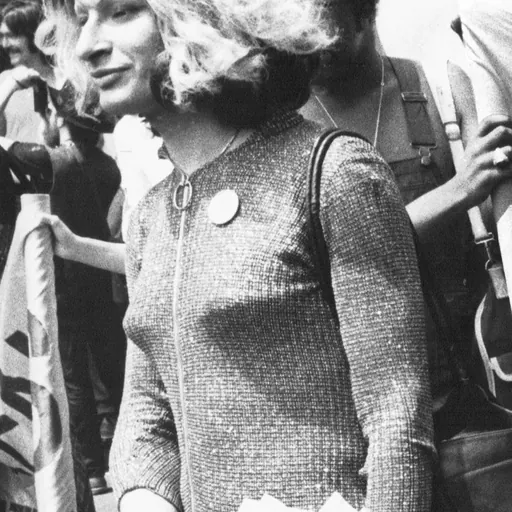
Sylvia Rivera
American LGBT activist, transgender rights activist, and community worker
About Sylvia Rivera
Lived 1951 – 2002 (aged 50). Sylvia Rivera was an American lGBTQ rights activist, women's rights activist, activism, catering and drag queen, known for Gay liberation and Transgender.
Sylvia Rivera (July 2, 1951 – February 19, 2002) was an American gay liberation and transgender rights activist who was also a noted community worker in New York. Rivera, who identified as a drag queen for most of her life participated in demonstrations with the Gay Liberation Front.
With close friend Marsha P. Johnson, Rivera co-founded the Street Transvestite Action Revolutionaries (STAR), a group dedicated to helping homeless young drag queens, gay youth, and trans women.
Early life Rivera was born and raised in New York City and lived most of her life in or near the city; she was born to a Puerto Rican father and a Venezuelan mother. Rivera was then raised by her Venezuelan grandmother, who disapproved of Rivera's effeminate behavior, particularly after Rivera began to wear makeup in fourth grade. Like many other homeless youth in the community, she engaged in survival sex as a child prostitute. She was taken in by the local drag queens, including Marsha P. Johnson, who became Rivera's best friend and protector.
Early activism
Rivera's activism began in 1970 after she participated in actions with the Gay Liberation Front's Drag Queen Caucus and later joined the Gay Activists Alliance at 18 years old, where she fought for not only the rights of gay people, but also for the inclusion of drag queens like herself in the movement. Rivera sometimes exaggerated her importance, purporting to have been active during the civil rights movement, the movement against the Vietnam war, second-wave feminist movements, as well as Puerto Rican and African American youth activism, particularly with the Young Lords and the Black Panthers, In 1970, Rivera and Johnson co-founded Street Transvestite Action Revolutionaries (STAR). STAR offered services and advocacy for homeless queer youth, and fought for the Sexual Orientation Non-Discrimination Act in New York. SONDA prohibits discrimination on the basis of sexual orientation in employment, housing, public accommodations, education, credit, and the exercise of civil rights. Johnson is one of the few people who multiple, independent witnesses all agree was instrumental in the week of rioting and "known to have been in the vanguard" of the pushback against police once the rioting peaked late the first night. After Johnson was being praised for being involved in the Stonewall uprising, Rivera began claiming that she (Rivera) was also instrumental in the riots, even going so far as to have claimed to have started the riots herself. Stonewall historian David Carter, however, questioned Rivera's claims of even being at the riots, based on contradictory statements that Rivera made, and on testimony relayed to him by early gay rights activists, such as Marsha P. Johnson, who denied in multiple interviews that Rivera had been there. Kohler responded, "Sylvia, you didn't throw a Molotov cocktail!" Rivera continued to bargain with him, asking if he'd say she threw the first brick. He replied, "Sylvia, you didn't throw a brick." The first bottle? He still refused. Finally Kohler agreed to lie and say Rivera had been there and had at some point thrown a bottle. During this speech from the main stage, Rivera, representing STAR, called out the heterosexual males who were preying on vulnerable members of the community. Rivera espoused what could be seen as a third gender perspective, saying that LGBT prisoners seeking help "do not write women. They do not write men. They write to STAR." After the speech, Rivera was backstage talking to people about having been at the Stonewall uprising. Doric Wilson recalls that Marsha P. Johnson said to Rivera, “You know you weren't there.” In these years Rivera lived with her lover and together they ran a catering business.
Return to NYC In early July 1992, shortly after the New York City Pride March, Marsha P. Johnson's body was found floating in the Hudson River off the West Village Piers. Police promptly ruled Johnson's death a suicide, despite the presence of a head wound and multiple witness reports that described her being followed by men the night before her death. Johnson's friends and supporters, Rivera included, insisted Johnson had not been suicidal, and a people's postering campaign later declared that Johnson had earlier been harassed near the spot where Johnson's body was found.
After receiving a telegram with the notification of her friend's death, Rivera returned to the city. Homeless now, she took up residence on the "Gay Piers" at the end of Christopher Street, and became an advocate for homeless members of the gay community. While living at the Christopher Street Piers, she faced frequent battles with law enforcement, who eventually forced her to leave the area.
In May 1995, Rivera tried to end her life by walking into the Hudson River. That year she also appeared in the Arthur Dong documentary episode "Out Rage '69", part of the PBS series The Question of Equality, which featured the 1973 footage of her "Gay Power" speech at Pride and gave an extensive interview to gay journalist Randy Wicker in which she discussed her suicide attempts, Johnson's life and death, and her advocacy for poor and working-class gay people made homeless by the AIDS crisis. Rivera fought partly for herself for those reasons but most importantly for the rights of people of color and low-income LGBT people. As someone who suffered from systemic poverty and racism, she used her voice for unity, sharing her stories, pain, and struggles to show her community they are not alone. She amplified the voices of the most vulnerable members of the gay community: drag queens, homeless youth, gay inmates in prison and jail, and transgender people.
In the last five years of her life, Rivera gave a number of speeches about the Stonewall Uprising and the necessity for all transgender people (which Rivera, in this early definition, defined as including drag queens and butch dykes) to fight for their legacy at the forefront of the LGBT movement. She became heavily involved in the AIDS Coalition to Unleash Power (ACT UP) organization in the 1990's during the height of the AIDS crisis in New York City, and participated in community service opportunities with the organization. She traveled to Italy for the Millennium March in 2000, where she was acclaimed as the "mother of all gay people".
STAR fought for the New York City Transgender Rights Bill and for a trans-inclusive New York State Sexual Orientation Non Discrimination Act. STAR also sponsored street pressures for justice for Amanda Milan, a transgender woman murdered in 2000.
Rivera was angered that in the late 1990s and early 2000s she perceived the significance of drag queens and drag culture being minimized by the ostensibly assimilationist gay rights agenda, particularly by new would-be "gay leaders" who were focusing on military service (Don't Ask Don't Tell) and marriage equality. Rivera's conflicts with these newer, more mainstream, LGBT groups were emblematic of the mainstream LGBT movement's strained relationship to the radical politics of many earlier gay liberation activists. After Rivera's death, Michael Bronski recalled her anger when she felt that she was being marginalized within the community, in "Hell hath no fury like a drag queen scorned":
After Gay Liberation Front folded and the more reformist Gay Activists Alliance (GAA) became New York's primary gay rights group, Sylvia Rivera worked hard within their ranks in 1971 to promote a citywide gay rights, anti-discrimination ordinance. But for all of her work, when it came time to make deals, GAA dropped the portions in the civil rights bill that dealt with transvestitism and drag — it just wasn't possible to pass it with such "extreme" elements included. As it turned out, it wasn't possible to pass the bill anyway until 1986. But not only was the language of the bill changed, GAA — which was becoming increasingly more conservative, several of its founders and officers had plans to run for public office — even changed its political agenda to exclude issues of transvestitism and drag. It was also not unusual for Sylvia to be urged to "front" possibly dangerous demonstrations, but when the press showed up, she would be pushed aside by the more middle-class, "straight-appearing" leadership. In 1995, Rivera was still hurt: "When things started getting more mainstream, it was like, 'We don't need you no more'". But, she added, "Hell hath no fury like a drag queen scorned".
According to Bronski, Rivera was banned from New York's Gay & Lesbian Community Center for several years in the mid-1990s, because, on a cold winter's night, she aggressively demanded that the Center take care of poor and homeless queer youth. The transgender person-of-color activist and scholar Jessi Gan discusses how mainstream LGBT groups have routinely dismissed or not paid sufficient attention to Rivera's Latina identity, while Puerto Rican and Latino groups have often not fully acknowledged Rivera's contribution to their struggles for civil rights.
Gender and sexual identity Rivera's gender identity was complex and varied throughout her life. In her essay "Transvestites: Your Half Sisters and Half Brothers of the Revolution", she specifically claims her use of transvestite as applying to only the queer community: "Transvestites are homosexual men and women who dress in clothes of the opposite sex. Male transvestites dress and live as women. Half sisters like myself are women with the minds of women trapped in male bodies."
People now want to call me a lesbian because I'm with Julia, and I say, "No. I'm just me. I'm not a lesbian." I'm tired of being labeled. I don't even like the label transgender. I'm tired of living with labels. I just want to be who I am. I am Sylvia Rivera. Ray Rivera left home at the age of 10 to become Sylvia. And that's who I am.
Rivera further writes of having considered gender-affirming surgery much earlier in life, but of ultimately choosing to reject it, taking hormone therapy only near the end of her life. Rivera died during the dawn hours of February 19, 2002, at St. Vincent's Hospital, of complications from liver cancer.
Legacy
As an active member of the Metropolitan Community Church of New York, Rivera ministered through the Church's food pantry, which provides food to hungry people. As well, recalling her life as a child on the streets, she remained a passionate advocate for queer youth. MCC New York has a food pantry called the Sylvia Rivera Food Pantry, and its queer youth shelter is called Sylvia's Place, both in her honor.
Season 1, episode 1 and Season 3, episode 1 of the podcast Making Gay History are about her.
Named in her honor (and established in 2002), the Sylvia Rivera Law Project is dedicated "to guarantee that all people are free to self-determine gender identity and expression, regardless of income or race, and without facing harassment, discrimination or violence". Founded by attorney and activist Dean Spade in 2002, SRLP, seeks to guarantee that all people are free to self-determine gender identity and expression, regardless of income or race, and without facing harassment, discrimination or violence. Although Rivera was not personally tied with SRLP, the organizations values are closely aligned and embodies her lifelong commitment to ensuring that transgender, gender non-conforming, and intersex people, specifically those pertaining to communities of color who are at the face of poverty, housing insecurity, and the criminal justice system have free access to legal resources and advocacy while trying to combat systematic oppression.
In 2002, actor/comedian Jade Esteban Estrada portrayed Rivera in the well-received solo musical ICONS: The Lesbian and Gay History of the World, Vol. 1 (directed by Aliza Washabaugh-Durand and produced by Aliza Washabaugh-Durand and Christopher Durand) winning Rivera renewed national attention.
In 2005, the corner of Christopher and Hudson streets was renamed "Sylvia Rivera Way" in her honor. This intersection is in Greenwich Village, the neighborhood in New York City where Rivera started organizing, and is only two blocks from the Stonewall Inn.
In January 2007, a new musical based upon Rivera's life, Sylvia So Far, premiered in New York at La Mama in a production starring Bianca Leigh as Rivera and Peter Proctor as Marsha P. Johnson. The composer and lyricist is Timothy Mathis (Wallflowers, Our Story Too, The Conjuring), a friend of Rivera's in real life. The show moved off-Broadway in the winter of 2007/2008.
The Spring 2007 issue of CENTRO: Journal of the Center for Puerto Rican Studies, which was dedicated to "Puerto Rican Queer Sexualities" and published at Hunter College, included a special dossier on Rivera, including a transcription of a talk by Rivera from 2001 as well as two academic essays exploring the intersections of Rivera's trans and Latina identities.
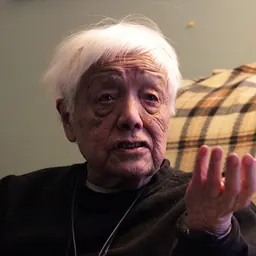
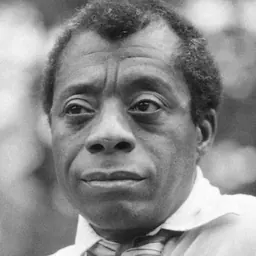
In 2014, The Social Justice Hub at The New School’s newly opened University Center was named the Baldwin Rivera Boggs Center after activists James Baldwin, Sylvia Rivera, and Grace Lee Boggs.
In 2015, a portrait of Rivera was added to the National Portrait Gallery, making Rivera the first transgender activist to be featured in the gallery.
In 2016, Rivera was inducted into the Legacy Walk.
In 2018, Happy Birthday, Marsha! a short film about Rivera and Marsha P. Johnson, set in the hours before the 1969 Stonewall riots in New York City, was released.
A large, painted mural depicting Rivera and Marsha P. Johnson went on display in Dallas, Texas, in 2019 to commemorate the 50th anniversary of the Stonewall riots. The painting of the "two pioneers of the gay rights movement" in front of a transgender flag claims to be the world's largest mural honoring the trans community.
In May 2019, it was announced that LGBT rights activists Marsha P. Johnson and Sylvia Rivera would be commemorated with a monument in New York's Greenwich Village, near the epicenter of the historic Stonewall riots. The monument was publicly announced on May 30, in honor of the 50th anniversary of Stonewall and just in time for Pride month. Unfortunately, the construction of the monument was halted in 2020 as a result of the COVID-19 pandemic, but Mayor Adams of New York City announced in 2024 that the project would be revived at a future date.
In June 2019, the Italian city of Livorno dedicated a green area to Rivera, called Parco Sylvia Rivera.
In June 2019, Rivera was one of the inaugural fifty American "pioneers, trailblazers, and heroes" inducted on the National LGBTQ Wall of Honor within the Stonewall National Monument (SNM) in New York City’s Stonewall Inn. The SNM is the first U.S. national monument dedicated to LGBTQ rights and history, and the wall's unveiling was timed to take place during the 50th anniversary of the Stonewall riots.
Don’t just read it —
keep it.
Full-length biographies made to live with: read them, listen on the way to work, watch them tonight.
- E-book
- Audio
- Video
Instant download · yours to keep · every purchase keeps this site free
Important facts
People in Sylvia Rivera's life
Named in this biography and alive at the same time





Related people
Same field, nearest in time


Contemporaries
People whose lives overlapped Sylvia Rivera's



Frequently asked questions
Who was Sylvia Rivera?
American LGBT activist, transgender rights activist, and community worker (1951–2002)
When was Sylvia Rivera born?
Sylvia Rivera was born on 2 July 1951 in New York City.
When did Sylvia Rivera die?
Sylvia Rivera died on 19 February 2002 in New York City.
What was Sylvia Rivera's occupation?
Sylvia Rivera was a lGBTQ rights activist, women's rights activist, activism, catering and drag queen.
What was Sylvia Rivera known for?
Sylvia Rivera was known for Gay liberation and Transgender.
What nationality was Sylvia Rivera?
Sylvia Rivera was American.
Sources & further reading
Cite this page
APA: Biography.guide. (2026). Sylvia Rivera. https://biography.guide/sylvia-rivera/
MLA: "Sylvia Rivera." Biography.guide, https://biography.guide/sylvia-rivera/.
Chicago: "Sylvia Rivera." Biography.guide. https://biography.guide/sylvia-rivera/.
Data last updated: 2026-09-22 · Spot an error? Report a correction.
Portrait: Wikimedia Commons · author & licence
Page generated 2026-09-27 04:59 UTC