
About Sylvestre Bangui
Lived 1934 – 1996 (aged 61–62). Sylvestre Bangui was a politician.
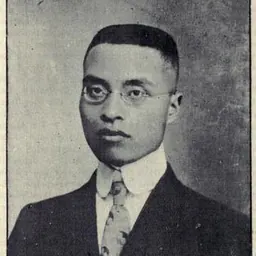
Sylvestre Bangui (15 March 1934 – 4 June 1996) was a Central African general, diplomat and politician. He rose amongst the ranks of the Central African Armed Forces to become a general, and was away for military training when Jean-Bédel Bokassa carried out his coup d'état in 1965. Bokassa appointed him as an ambassador, first to Canada and then to France. In 1979, he carried out a press conference where he denounced his government for carrying out a massacre of children, resigned and formed an opposition group. After Bokassa's deposition, he served as the Minister of Foreign Affairs in 1979 and 1980. He also served as the Minister of Economy and Finance in 1983 and 1984.
Early life and military career Of Mbaka ethnicity, Bangui was born in Mbaïki in the prefecture of Lobaye on 15 March 1934. He served in the French Army between 1957 and 1962, subsequently becoming a second lieutenant in the Central African Army. Between 1965 and 1967 he received military training in the École supérieure de l'Intendance in Paris and was thus not present in the Central African Republic (CAR) during the Saint-Sylvestre coup d'état of Jean-Bédel Bokassa in 1965. Upon his return to the CAR in 1967, he was appointed the Director General of Military Logistics . He was promoted to the position of the National Defence Commissar in 1973.
Ambassadorial career and revelations on the children's massacre Bangui was sent away from the CAR by President Bokassa, serving as the Ambassador of the CAR in Canada between 1973 and 1975. He was appointed as the Central African ambassador in Paris in 1975 (Bokassa renamed the country the Central African Empire in 1976).
Beginning in January 1979, discontent amongst high school (lycée) and university students in Bangui, the Central African capital, led to a series of demonstrations and riots. This culminated in what is known as the Bangui children's massacre: on 18–19 April 1979, Central African authorities arrested hundreds of young students from their homes at night and placed them in the Ngaragba Prison. Here, overcrowded conditions led to some suffocating to death, whilst others were tortured. The true number of deaths remains unknown, at least 18 were confirmed but estimates indicate higher figures. The massacre was first reported by Amnesty International on 14 May, leading to international pressure building up on France to withdraw support for Bokassa.
On 22 May, Sylvestre Bangui held a press conference in Paris. He stated that he had carried out a fact-finding trip to Bangui and gathered eyewitness testimonies, and could confirm that the children's massacre had taken place, and that a death toll of 100 "would not be an exaggeration". The French government of Valéry Giscard d'Estaing, who had by then resolved to depose Bokassa, did not regard Bangui as an appropriate successor, however. Bangui was known to be close to Jacques Chirac, a rival of Giscard. They were also concerned that his being M'Baka, the same ethnicity as Bokassa, would be a disadvantage, but also they saw him personally as not having "the right stuff" for the Presidency. He was dismissed from this post and was placed under house arrest, in which Le Monde reported him as being in 1985.
In October 1992, Bangui decided to put himself forward as a candidate for the upcoming presidential election, but as he did not deposit the mandatory application fee of 5 million francs, his candidacy was never registered. Jacques Serre has remarked that he would not have stood a chance of being elected in the field of candidates for that election. During this period, he also established a new political party, the National Union for the Defense of Democracy , which did not have much success.
Don’t just read it —
keep it.
Full-length biographies made to live with: read them, listen on the way to work, watch them tonight.
- E-book
- Audio
- Video
Instant download · yours to keep · every purchase keeps this site free
Important facts
Related people
Same field, nearest in time






Contemporaries
People whose lives overlapped Sylvestre Bangui's





Frequently asked questions
Who was Sylvestre Bangui?
Central African diplomat, general, and politician
When was Sylvestre Bangui born?
Sylvestre Bangui was born in 1934.
When did Sylvestre Bangui die?
Sylvestre Bangui died in 1996.
What was Sylvestre Bangui's occupation?
Sylvestre Bangui was a politician.
What nationality was Sylvestre Bangui?
Sylvestre Bangui's recorded nationality: Central African Republic.
Sources & further reading
Cite this page
APA: Biography.guide. (2026). Sylvestre Bangui. https://biography.guide/sylvestre-bangui/
MLA: "Sylvestre Bangui." Biography.guide, https://biography.guide/sylvestre-bangui/.
Chicago: "Sylvestre Bangui." Biography.guide. https://biography.guide/sylvestre-bangui/.
Data last updated: 2026-09-20 · Spot an error? Report a correction.
Page generated 2026-09-27 05:03 UTC