
About Syeda Hameed
Born 1943. Syeda Hameed is an Indian biographer, writer and orientalist.
Syeda Saiyidain Hameed (born 1943) is an Indian social and women's rights activist, educationist, writer and a former member of the Planning Commission of India. She is the president of the National Federation of Indian Women and the founder trustee of the Women's Initiative for Peace in South Asia (WIPSA) and the Centre for Dialogue and Reconciliation. She was a member of the National Commission for Women (1997–2000). Hameed received Padma Shri, the fourth highest civilian honour in 2007, for her contributions to Indian society.
She chaired the Steering Committee of the Commission on Health which reviewed the National Health Policy of 2002, till the dissolution of the body in 2015, to be replaced by NITI Aayog.
Syeda served the Maulana Azad National Urdu University (MANUU) as its chancellor, prior to the accession of Zafar Sareshwala, the incumbent chancellor of the university on 2 January 2015.
Biography
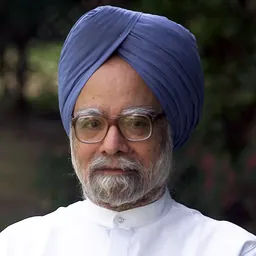
Syeda Saiyidain Hameed was born in 1943 in the Indian princely state of Jammu and Kashmir, the daughter of Khwaja Ghulam Saiyidain. Khwaja Ahmad Abbas, the filmmaker, was her uncle. her college education was at Miranda House, University of Delhi from where she passed BA (Hons) in 1963 and secured a master's degree (MA) from the University of Hawaii in 1965. Her career started as a lecturer at Lady Shri Ram College for Women, New Delhi; she worked there till 1967 and joined the University of Alberta to obtain a doctoral degree (PhD) in 1972 with the objective of giving women a voice in all matters concerning their lives. The Forum interacted with Ulemas on matters of Muslim Personal Law such as Polygamy, triple talaq and inheritance. She founded Women's Initiative for Peace in South Asia (WIPSA) with Mohini Giri and Normal Deshpande. She was a member of the WIPSA delegation who visited Pakistan in the wake of the Kargil War in 1999. Indo-Pakistani War of 1971. When South Asians for Human Rights (SAHR) was formed in July 2000, she was one of its founder members. The Centre for Dialogue and Reconciliation (CDR), an organization working for peace through dialogue and discourse, was also founded with Hameed's participation. The Prime Minister, Dr. Manmohan Singh administering the oath of office as Member Planning Commission to Dr. Syeda Hameed, in New Delhi on July 27, 2009 In July 2004, Hameed was appointed as a member of the Planning Commission of India when Manmohan Singh became the Prime Minister of India. a post she held till January 2015. a member of its jury panel for Sarojini Naidu Prize for Journalism, She was associated with Government of the National Capital Territory of Delhi as an honorary member of its Women's Empowerment Committee. She has also delivered several keynote addresses and has presented papers in many conferences; her presentation at the 1991 International Seminar on Sufism of the Indian Council for Cultural Relations, New Delhi has been published by the ICCR as a book under the title, Contemporary Relevance of Sufism.
The Al-Ameen Educational Society, a Bengaluru-based educational society, awarded Hameed their Al-Ameen All India Community Leadership Award in 2006. She is also a recipient of the third Bi Amma Award of the Maulana Muhammad Ali Jauhar Academy, for the year 2012.
Literary career
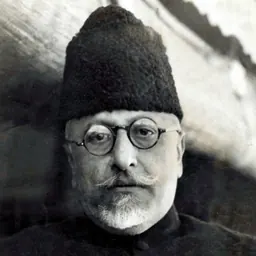
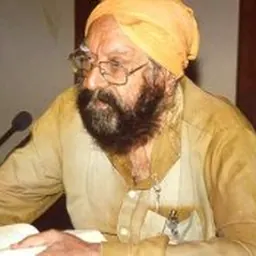
Hameed's first book, The Quilt and Other Stories, was a short story anthology by Ismat Chughtai, translated from Urdu language. Her research, after her return from Canada in 1984, on the Muslim social leaders of the Indian subcontinent as well as Sufism returned several books, all published in the 1990s. The first of the series was a 1990 book on Abul Kalam Azad, titled India's Maulana Abul Kalam Azad, a treatise on the life of the Indian freedom movement leader and the first Education Minister of the Independent India. This was followed by a translation of The Rubaiyat of Sarmad, a commentary on Muslims in India, Al Hilal and Nai Roshini: Two Attempts to Integrate Muslims Into Indian Policy, and a study on Sufism, Impact of Sufism on Indian Society. During this period, she also co-authored a book with Khushwant Singh, on her alma mater, Modern School, New Delhi, in 1995. Her next book was also on Abul Kalam Azad, Islamic Seal on India's Independence: Abul Kalam Azad-a Fresh Look, published by Oxford University Press, which preceded Dr. Zakir Husain: Teacher Who Became President, a book edited by Hameed, on the renowned educationist and the first President of India.
In the wake of the 2002 Gujarat riots, Hameed compiled the statements of several of the affected people and released a small book, How Has the Gujarat Massacre Affected Minority Women?: The Survivors Speak, which she published by herself. The next year she published her translation of Hali's Musaddas, the 1879 epic of Maulana Altaf Husain Hali, a text of Muslim thoughts consisting of 294 six-line cantos, considered by many as an important work on the national identity of Muslims. The same year, she also published another work, My Voice Shall be Heard: Muslim Women in India. Her next attempt was based on her experiences as a member of the National Commission for Women, when she came across several victims of gender abuse; She compiled the real life stories of 12 of those women and documented their lives in her 2006 work, They Hang: 12 Women in My Portrait Gallery. Beautiful Country: Stories From Another India, published in 2012, co-authored by Gunjan Veda and which had foreword by Montek Singh Ahluwalia, narrates the story of the travels of a woman and her young companion through Northern India and their encounters with various people of the land. She has written four books on Abul Kalam Azad and Maulana Azad, Islam and the Indian National Movement, a 2014 publication and the latest one among them, has received critical reviews.
Syeda Hameed's report, Voice of the Voiceless: Status of Muslim Women in India, published in 2000 in her capacity as a member of the National Commission for Women, is a document of her researches on the problems faced by minority women in India. Her activities under the aegis of the Women's Initiative for Peace in South Asia (WIPSA) carried her on two road trips for brokering peace among the Muslim women of the Indian subcontinent and her experiences are recorded in two booklets, Journey For Peace: Women's Bus of Peace from Delhi to Lahore and Shanti Parasmoni: Women's Bus of Peace from Kolkata to Dhaka, both published by WIPSA in 2000 and 2003 respectively. Letters from Prison of Mohammad Yunus and Facts Are Facts: The Untold Story Of India's Partition of Khan Abdul Wali Khan. and the Indian Express carried her column for a period. She is reported to be working on two books: Suneihri Rait, an autobiographical work and Zulfikar Ali Bhutto: Protagonist of Greek Tragedy, a book on the former Pakistan president and the founder of Pakistan Peoples Party.
Personal life Syeda Hameed was married to S. M. A. Hameed, a professor of Business Studies at the University of Alberta, whom she met during her years at the university. Hameed couple has three children, two sons followed by a daughter.
Don’t just read it —
keep it.
Full-length biographies made to live with: read them, listen on the way to work, watch them tonight.
- E-book
- Audio
- Video
Instant download · yours to keep · every purchase keeps this site free
Important facts
People in Syeda Hameed's life
Named in this biography and alive at the same time





Related people
Same field, nearest in time



Contemporaries
People whose lives overlapped Syeda Hameed's


Frequently asked questions
Who is Syeda Hameed?
Indian social and women's rights activist
When was Syeda Hameed born?
Syeda Hameed was born in 1943 in Srinagar.
What is Syeda Hameed's occupation?
Syeda Hameed is a biographer, writer and orientalist.
What nationality is Syeda Hameed?
Syeda Hameed is Indian.
Sources & further reading
Cite this page
APA: Biography.guide. (2026). Syeda Hameed. https://biography.guide/syeda-hameed/
MLA: "Syeda Hameed." Biography.guide, https://biography.guide/syeda-hameed/.
Chicago: "Syeda Hameed." Biography.guide. https://biography.guide/syeda-hameed/.
Data last updated: 2026-09-26 · Spot an error? Report a correction.
Page generated 2026-09-27 05:15 UTC