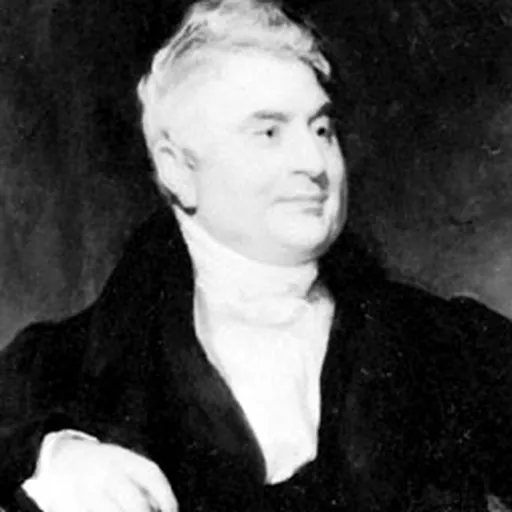
About Sydney Smith
Lived 1771 – 1845 (aged 73). Sydney Smith was a British cleric, journalist, writer and politician.
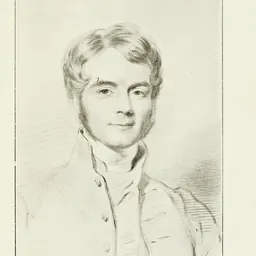
Sydney Smith (3 June 1771 – 22 February 1845) was an English writer and Anglican clergyman, mainly famous for his wit. Besides his energetic parochial work, he was known for his writing and philosophy, founding the Edinburgh Review, lecturing at the Royal Institution and his rhyming salad dressing recipe.
Early life and education Born in Woodford, Essex, England, Smith was the son of merchant Robert Smith (1739–1827) and Maria Olier (1750–1801), who suffered from epilepsy. His father, described as "a man of restless ingenuity and activity ... very clever, odd by nature, but still more odd by design", "bought, altered, spoiled and sold", at various times, 19 different estates in England. He had a farm of 300 acres (1.2 km2) to keep in order; a dilapidated rectory had to be rebuilt. All these things were attended to beside his contributions to the Edinburgh Review. "If the chances of life ever enable me to emerge," he wrote to Lady Holland, "I will show you I have not been wholly occupied by small and sordid pursuits". He continued to speak in favour of Catholic emancipation, his eloquence being specially directed against those who maintained that a Roman Catholic could not be believed on his oath. "I defy Dr Duignan", he pleaded, addressing a meeting of clergy in 1823, "in the full vigour of his incapacity, in the strongest access of that Protestant epilepsy with which he was so often convulsed, to have added a single security to the security of that oath". One of his most vigorous and effective polemics was A Letter to the Electors upon the Catholic Question (1826). There was nothing in his writings to stand in the way. He had been most sedulous as a parochial clergyman. However, his religion was of a practical nature, and his fellow-clergy were suspicious of his limited theology. His scorn for enthusiasts and dread of religious emotion were vented in his bitter attacks on Methodism as well as in ridiculing the followers of Edward Pusey. One of the first things that Charles Grey said on entering Downing Street was, "Now I shall be able to do something for Sydney Smith"; but he was not able to do more than appoint him in 1831 to a residentiary canonry at St Paul's Cathedral in exchange for the prebendal stall he held at Bristol. He was as eager a champion of parliamentary reform as he had been of Catholic emancipation, and one of his best fighting speeches was delivered at Taunton in October 1831, when he made his well-known comparison of the rejection by the House of Lords of the Great Reform Bill with an invented Mrs Partington of Sidmouth, setting out with mop and pattens to stem the Atlantic in a storm. With characteristic philosophy, when he saw that the promotion was doubtful, he made his position certain by resolving not to be a bishop and definitely forbidding his friends to intercede for him.
Low spirits Smith stated that he suffered from "low spirits" and advised others on how best to manage the condition.
Legacy
No English writer's opinions on early American literature had more impact than Smith's. He referred to himself as a "sincere friend of America," but this sentiment is both supported and denied by his many publications. and said he would "furnish a pretty good answer"
Long after his death, he was often quoted in English literary life and was remembered by homemakers in the United States through his rhyming recipe for salad dressing which starts:
Jane Austen expert Margaret C. Sullivan speculates in an essay that the character Henry Tilney, the romantic interest of the protagonist Catherine Morland in Jane Austen's Northanger Abbey (1803), may have been based on Smith.
The memory and achievements of Smith are perpetuated by the Sydney Smith Association, a registered charity which aims (among other things) to republish online as many of his writings as possible.
Don’t just read it —
keep it.
Full-length biographies made to live with: read them, listen on the way to work, watch them tonight.
- E-book
- Audio
- Video
Instant download · yours to keep · every purchase keeps this site free
Important facts
People in Sydney Smith's life
Named in this biography and alive at the same time
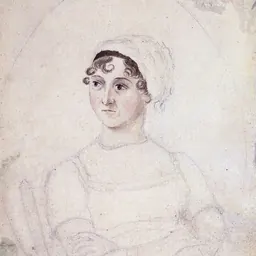


Related people
Same field, nearest in time


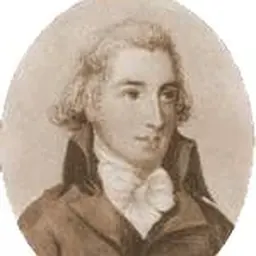
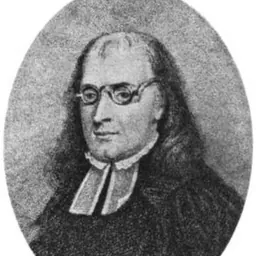
Contemporaries
People whose lives overlapped Sydney Smith's





Frequently asked questions
Who was Sydney Smith?
English wit, writer, Anglican cleric (1771-1845)
When was Sydney Smith born?
Sydney Smith was born on 3 June 1771 in Woodford.
When did Sydney Smith die?
Sydney Smith died on 22 February 1845 in London.
What was Sydney Smith's occupation?
Sydney Smith was a cleric, journalist, writer and politician.
What nationality was Sydney Smith?
Sydney Smith was British.
Sources & further reading
Cite this page
APA: Biography.guide. (2026). Sydney Smith. https://biography.guide/sydney-smith-cleric/
MLA: "Sydney Smith." Biography.guide, https://biography.guide/sydney-smith-cleric/.
Chicago: "Sydney Smith." Biography.guide. https://biography.guide/sydney-smith-cleric/.
Data last updated: 2026-09-22 · Spot an error? Report a correction.
Portrait: Wikimedia Commons · author & licence
Page generated 2026-09-27 05:02 UTC