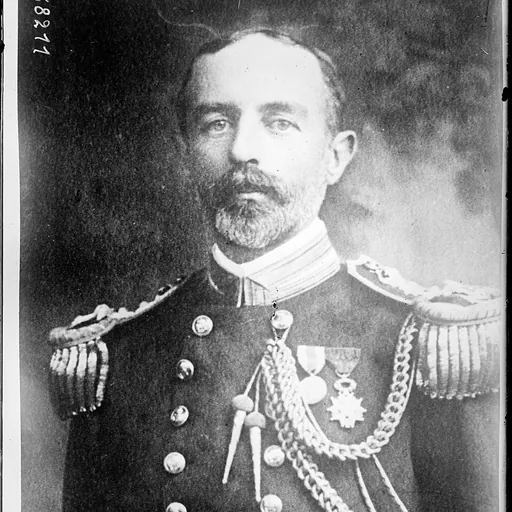
About Sydney Fremantle
Lived 1867 – 1958 (aged 90). Sydney Fremantle was a British military personnel.
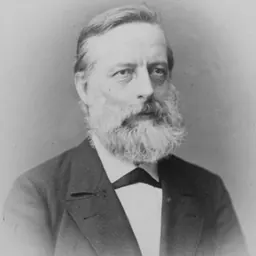
Admiral Sir Sydney Robert Fremantle, (16 November 1867 – 29 April 1958) was an officer of the Royal Navy, who served during the Victorian era and had risen to the rank of rear-admiral by the outbreak of the First World War. He played a role in developing fleet communications and signalling methods prior to the war, but was hampered in effectively implementing them due to the disruption caused by the conflict. He had an active seagoing career during the war, commanding several of the cruiser squadrons, and later taking command of the British fleet in the Aegean. Promoted to vice-admiral after the end of the war and given command of the First Battle Squadron, Fremantle oversaw the interned German High Seas Fleet at Scapa Flow, and was away on exercises when the sailors began to scuttle their ships in June 1919. He attempted to salvage what he could, later accusing the German commander, Vice-Admiral Ludwig von Reuter, of a shameful breach of honour. Fremantle rose to full admiral and commanded the naval base at Portsmouth, retiring in 1928. He wrote his memoirs, publishing them after the Second World War, and donated many of his papers to institutions before his death in 1958.
Family Sydney was born into a naval family on 1 January 1867, the eldest son of Admiral Sir Edmund Robert Fremantle and his wife Barberina Rogers Isaacs.
Prewar service Fremantle followed his father into the navy, joining up in 1881.
Fremantle joined the Admiralty in 1910 as the Head of the War Division, and by 1912, he was at Portsmouth as President of the Signal Committee. He was promoted to rear-admiral in 1913, and though his suggestion for a dedicated communications department was overtaken by the outbreak of war, a Signals Division was established at the Admiralty in 1914, with Fremantle as its head.
First World War Fremantle became second-in-command of the Third Battle Squadron in 1915, followed by commander of the Ninth Cruiser Squadron in 1916, and the Second Cruiser Squadron in early 1917. He was next appointed Rear-Admiral, Second-in-Command, Eastern Mediterranean Squadron from February to July 1916. His next appointment was Rear-Admiral Commanding, British Aegean Squadron in August 1917, and in December advocated the resumption of raids on the Turkish coast, a proposal rejected by the Admiralty on the grounds that no significant benefits were anticipated. In January the following year, Fremantle received a promotion to vice-admiral, and an appointment as Deputy Chief of the Naval Staff. Fremantle's proposals did not find favour with the American planners, who were keen to limit British naval domination. The deadline for the signing of the Treaty of Versailles was by then approaching, and concerns had begun to circulate about the possibility of the disgruntled German sailors scuttling their ships, rather than agreeing to hand them over as stipulated in the terms of the treaty. Unbeknownst to him, the German commander, Vice-Admiral Ludwig von Reuter, intended to order the scuttling of the fleet on 21 June, unaware that the deadline had been extended. As Fremantle steamed out of Scapa Flow on the morning of 21 June, Reuter was completing his preparations. The scuttling of the fleet began just before midday. When the British realised what was happening, a message was immediately despatched to Fremantle, who returned to Scapa Flow at full speed.
Fremantle had destroyers tow sinking ships ashore and beach them, while boarding parties attempted to reverse the scuttling or order the Germans aboard to do so. Those Germans who abandoned ship were picked up. Reuter was brought aboard Fremantle's flagship, , where he and Fremantle engaged in a brief argument with the aid of an interpreter. The following day, Fremantle assembled Reuter and his officers on the deck of Revenge, and through an interpreter informed them of their breaches 'of faith and honour' and accused them of recommencing hostilities by sinking their ships. The prisoners were then led into captivity.
He eventually wrote his memoirs, entitled My Naval Career: 1880-1928, and published them in 1949. He had three children by his first wife, one of whom, Edmund Seymour Denis Fremantle, also served in the Navy, receiving the Distinguished Service Order for service in the Second World War and twice being mentioned in despatches.
Admiral Sydney Fremantle died on 29 April 1958 at the age of 90. He donated most of his papers, which are held in the collections of the National Maritime Museum, and King's College London.
Don’t just read it —
keep it.
Full-length biographies made to live with: read them, listen on the way to work, watch them tonight.
- E-book
- Audio
- Video
Instant download · yours to keep · every purchase keeps this site free
Important facts
People in Sydney Fremantle's life
Named in this biography and alive at the same time
Related people
Same field, nearest in time





Contemporaries
People whose lives overlapped Sydney Fremantle's



Frequently asked questions
Who was Sydney Fremantle?
Royal Navy officer during the First World War (1867-1958)
When was Sydney Fremantle born?
Sydney Fremantle was born on 16 November 1867.
When did Sydney Fremantle die?
Sydney Fremantle died on 29 April 1958.
What was Sydney Fremantle's occupation?
Sydney Fremantle was a military personnel.
What nationality was Sydney Fremantle?
Sydney Fremantle was British.
Sources & further reading
Cite this page
APA: Biography.guide. (2026). Sydney Fremantle. https://biography.guide/sydney-fremantle/
MLA: "Sydney Fremantle." Biography.guide, https://biography.guide/sydney-fremantle/.
Chicago: "Sydney Fremantle." Biography.guide. https://biography.guide/sydney-fremantle/.
Data last updated: 2026-09-23 · Spot an error? Report a correction.
Portrait: Wikimedia Commons · author & licence
Page generated 2026-09-27 05:05 UTC