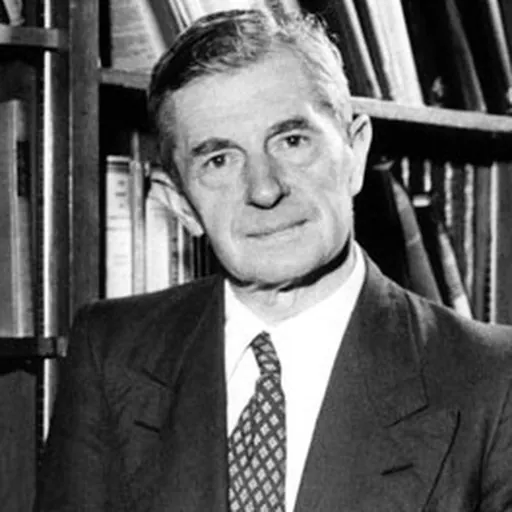
About Sydney Chapman
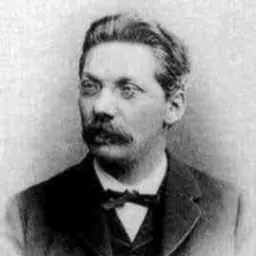
Lived 1888 – 1970 (aged 82). Sydney Chapman was a British mathematician, astronomer, physicist, university teacher, geophysicist and earth scientist, known for Chapman function, Chapman–Enskog theory and Chapman–Kolmogorov equation.
signature =
website = footnotes = spouse = children =
Sydney Chapman (29 January 1888 – 16 June 1970) His work on the kinetic theory of gases, solar-terrestrial physics, and the Earth's ozone layer has inspired a broad range of research over many decades.
Education and early life Chapman was born in Eccles, near Salford in England and began his advanced studies at a technical institute, now the University of Salford, in 1902. In 1904 at age 16, Chapman entered the University of Manchester. He competed for a scholarship to the university offered by his home county, and was the last student selected. Chapman later reflected, "I sometimes wonder what would have happened if I'd hit one place lower." He subsequently moved to Imperial College London. During the Second World War he was Deputy Scientific Advisor to the Army Council. Much of the remainder of the year he spent at the High Altitude Observatory in Boulder, Colorado.
Chapman's most noted mathematical accomplishments were in the field of stochastic processes (random processes), especially Markov processes. In his study of Markovian stochastic processes and their generalizations, Chapman and the Russian Andrey Kolmogorov independently developed the pivotal set of equations in the field, the Chapman–Kolmogorov equations. Chapman is credited with working out, in 1930, the photochemical mechanisms that give rise to the ozone layer. Chapman and his first graduate student, V. C. A. Ferraro, predicted the presence of the magnetosphere in the early 1930s. They also predicted characteristics of the magnetosphere that were confirmed 30 years later by the Explorer 12 satellite. on geomagnetism, which was to become the standard text book for the next two decades.
From 1951 to 1954, Chapman was president of the International Union of Geodesy and Geophysics (IUGG).
Honours and awards Chapman was bestowed many honours over his career, including Smith's Prize in 1913, Royal Society Bakerian lecturer in 1931, Royal Society Royal Medal in 1934, London Mathematical Society De Morgan Medal in 1944. In 1949, he was awarded the Gold Medal of the Royal Astronomical Society and was elected as a Fellow of the Royal Society of Edinburgh in 1953. In 1964, he was awarded the Copley Medal of the Royal Society and in 1965 the Symons Gold Medal of the Royal Meteorological Society. He was elected to the National Academies of Science of the United States, Norway, Sweden and Finland. The American Geophysical Union organises "Chapman Conferences," which are small, topical meetings intended to foster innovative research in key areas. The Royal Astronomical Society founded the Chapman Medal in his memory.
Personal life In 1970, Chapman died in Boulder, Colorado, at the age of 82. His wife died in 1967.
Don’t just read it —
keep it.
Full-length biographies made to live with: read them, listen on the way to work, watch them tonight.
- E-book
- Audio
- Video
Instant download · yours to keep · every purchase keeps this site free
Important facts
People in Sydney Chapman's life
Named in this biography and alive at the same time
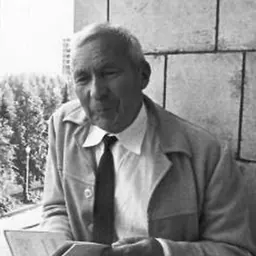

Related people
Same field, nearest in time

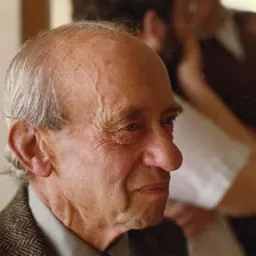
Contemporaries
People whose lives overlapped Sydney Chapman's




Frequently asked questions
Who was Sydney Chapman?
British mathematician and geophysicist (1888–1970)
When was Sydney Chapman born?
Sydney Chapman was born on 29 January 1888 in Eccles.
When did Sydney Chapman die?
Sydney Chapman died on 16 June 1970 in Boulder.
What was Sydney Chapman's occupation?
Sydney Chapman was a mathematician, astronomer, physicist, university teacher, geophysicist and earth scientist.
What was Sydney Chapman known for?
Sydney Chapman was known for Chapman function, Chapman–Enskog theory, Chapman–Kolmogorov equation and Ozone–oxygen cycle.
What nationality was Sydney Chapman?
Sydney Chapman was British.
Sources & further reading
· DBpedia: Sydney Chapman (mathematician)
Cite this page
APA: Biography.guide. (2026). Sydney Chapman. https://biography.guide/sydney-chapman/
MLA: "Sydney Chapman." Biography.guide, https://biography.guide/sydney-chapman/.
Chicago: "Sydney Chapman." Biography.guide. https://biography.guide/sydney-chapman/.
Data last updated: 2026-09-22 · Spot an error? Report a correction.
Portrait: Wikimedia Commons · author & licence
Page generated 2026-09-27 05:01 UTC