
About Swami Niranjanananda
Lived 1862 – 1904 (aged 41–42). Swami Niranjanananda was an Indian monk.
Swami Niranjanananda (Senior), born as Nitya Niranjan Ghosh, usually called by the shortened name of Niranjan, was one of the foremost monks of Ramakrishna Mission and was one of the direct monastic disciples of Ramakrishna. Niranjanananda was one of those few disciples, whom Ramakrishna termed as "Nityasiddhas" or "Ishwarakotis" – that is, souls who are ever perfect. [Niranjanananda is termed Senior since there was another swami, Niranjanananda (Junior) also known as Pandalai Maharaj, later in the Ramakrishna Mission who died in 1972].
Biography
Early life Niranjanananda was born as Nityaniranjan Ghosh and he was called by the short name of Niranjan. Little is known about his early life except that he came from a village called Rajarhat-Bishnupur in 24 Paraganas of Bengal province. He lived in Calcutta with his maternal uncle Kalikrishna Mitra. In his boyhood he became associated with a group of spiritualists and was considered as a successful medium. He was frank and open-minded, a trait which was appreciated by Ramakrishna. He had an abhorrence for married life and a relatively short temper, even though he was tender in nature.
When the master was ill and was kept in Shyampukur by his devotees, Niranajn quit his job to work as the gatekeeper of the house. There he was fooled by actress Binodini Dasi who visited an ailing Ramakrishna in the disguise of a European gentleman. Later when Ramakrishna was shifted to Cossipore garden house he continued with his role as a gatekeeper with utmost devotion and prevented at least two lay disciples of Ramakrishna from entering the premises when the master was critically ill, among them Ramachandra Dutta and Atul Ghosh, the brother of Girish Chandra Ghosh.
After the death of Ramakrishna, there was a dispute among his disciples with the ownership of the relics, which was mitigated with the help of Narendra (later Vivekananda). Niranjan, together with Shashi Maharaj (later Ramakrishnananda) preserved most of the relics in a separate urn and this they kept in the house of Balaram Bose, which was later removed to Belur Math.
Monastic life Niranjan took his monastic vow along with other brother disciples in 1887 and came to stay permanently in the Baranagar Math, the first abode of the monks of the Ramakrishna order. He was given the monastic name of Swami Niranjanananda (Niranjan – the blameless or the guileless one, and ananda – bliss), by Vivekananda. In the monastery he did laborious tasks, being physically stronger. He travelled to Puri and returned in April 1887. He made an altar for the Master in the old monastery house and also planted a Bel Tree on the same spot where Ramakrishna was cremated in Cossipore and created an altar around the tree. He went for a pilgrimage in November 1889 to Deoghar and stayed in Banshi Dutt's garden house, living on alms. He went to Prayag (Allahabad), travelled through various parts of India and went to Colombo in Sri Lanka. For some time he lived there as a preaching missionary, teaching the ideals of his Master. In 1895, he returned to the Alambazar monastery before the birthday of Ramakrishna. When Vivekananda returned to India, Niranjanananda went to Colombo to receive him in 1897. He travelled with Swami Vivekananda all over Northern and Southern India. In 1898, he went to Almora and there he initiated Shuddhananda (Sudhir Maharaj). He then went to Varanasi and lived on alms. He inspired a group of youth to follow the path of service and renunciation, who later organised the home of service. Seated on chairs Swami Shivananda, Swami Vivekananda, Swami Niranjananda and Swami Sadananda. He later went to Kankhal near Haridwar and became ill and returned to Calcutta for treatment. Upon recovery, he went back to Varanasi, met Vivekananda there. During Vivekananda's illness he arranged for Ayurvedic treatment and during the latter's last days he was his gatekeeper, preventing people from crowding and disturbing an ailing Vivekananda in his room. After Vivekananda's death, he returned to Haridwar. During his last days, he suffered from chronic dysentery. He died 9 May 1904.
With Holy Mother Niranjanananda, like his brother disciples, held the Sarada Devi in high esteem, calling her the holy mother. He took Girish Chandra Ghosh to the holy mother in her native village of Jairambati when the latter was going through a period of depression. Before his death, he came to meet her and insisted that she did everything for him, including preparing food for him and feeding him.
Character and legacy According to Ramakrishna, Niranjan was a pure soul, and it was easy for him to realise god because he was guileless. According to the memoirs of his associate Achalananda (Kedar Maharaj) and the accounts of other brother disciples, Niranjan was known for his simplicity, truthfulness, purity, fearlessness, steadiness (in any matter of principle) and renunciation. He once saved Sarada (Trigunatitananda), a brother disciple, from drowning. He took up philanthropic and charitable work at the behest of Vivekananda and later formed the Sevashrama or the Ramakrishna Mission Home of Service at Varanasi, by inspiring a group of young men to renounce the world and take up the service of the poor. Despite in need for fund, he refused donation from a rich person when the latter went back on his promise. He nursed many of his brother disciples, including Yogananda whenever they were ill. He believed in Ramakrishna as the infinite god in human form, did not put much stress on rituals, and had faith in the doctrine of service.
Don’t just read it —
keep it.
Full-length biographies made to live with: read them, listen on the way to work, watch them tonight.
- E-book
- Audio
- Video
Instant download · yours to keep · every purchase keeps this site free
Important facts
People in Swami Niranjanananda's life
Named in this biography and alive at the same time
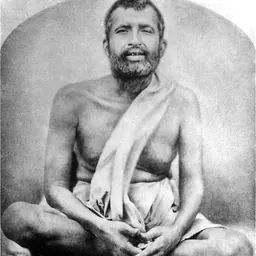
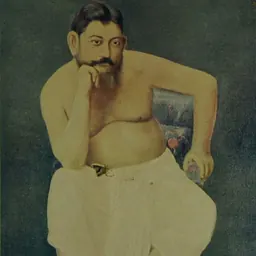

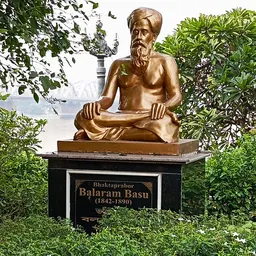


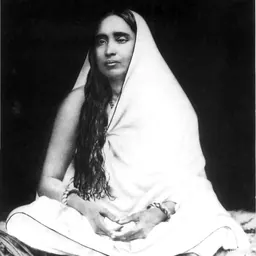
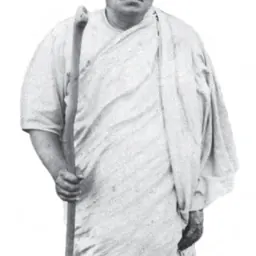
Related people
Same field, nearest in time

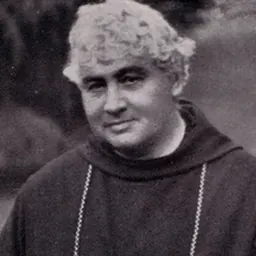


Contemporaries
People whose lives overlapped Swami Niranjanananda's
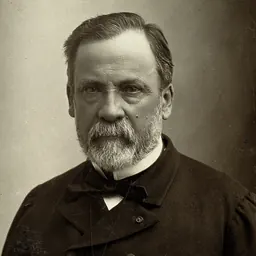




Frequently asked questions
Who was Swami Niranjanananda?
disciple of Ramakrishna Paramahamsa (1862–1904)
When was Swami Niranjanananda born?
Swami Niranjanananda was born in 1862 in Bengal Presidency, British India, Calcutta, Rajarhat Bishnupur.
When did Swami Niranjanananda die?
Swami Niranjanananda died on 9 May 1904 in Haridwar.
What was Swami Niranjanananda's occupation?
Swami Niranjanananda was a monk.
What nationality was Swami Niranjanananda?
Swami Niranjanananda was Indian.
Sources & further reading
· Wikipedia: Swami Niranjanananda
Cite this page
APA: Biography.guide. (2026). Swami Niranjanananda. https://biography.guide/swami-niranjanananda/
MLA: "Swami Niranjanananda." Biography.guide, https://biography.guide/swami-niranjanananda/.
Chicago: "Swami Niranjanananda." Biography.guide. https://biography.guide/swami-niranjanananda/.
Data last updated: 2026-09-20 · Spot an error? Report a correction.
Page generated 2026-09-27 05:28 UTC