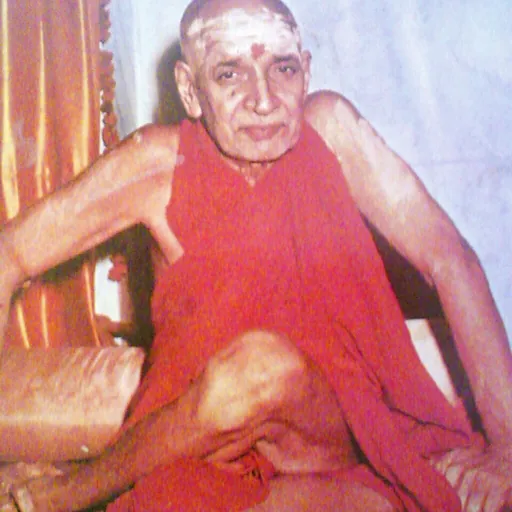
About Swami Karpatri
Lived 1907 – 1982 (aged 74). Swami Karpatri was an Indian philosopher and swami.
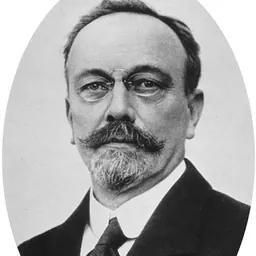
Swami Karpatri (11 August 1907 – 7 February 1982), born Har Narayan Ojha, was a Hindu ascetic and political leader who founded the Akhil Bharatiya Ram Rajya Parishad. He authored numerous texts and led several pro-Hindu movements, including the cow protection movement. A sannyasi of the Dashanami Sampradaya, he belonged to the Smārta tradition of Hinduism.
Biography Early life and monastic training He was born on 11 August 1907 (Shravana Shukla Dvitiya) into a Saryuparin Brahmin family in Bhatni, a small village in Pratapgarh, United Provinces of Agra and Oudh, British India (modern-day Uttar Pradesh). Showing little interest in worldly affairs during his youth, he was married to Mahadevi in 1916 at the age of nine. He expressed a desire to renounce worldly life to attain Sannyasa, but his father insisted he have a child before departing. Following the birth of his daughter, he left home at the age of 19.
After leaving home, he took the vow of brahmacharya (celibacy) under Swami Brahmananda Saraswati. Upon initiation, he was given the name Harihar Chaitanya and moved to a gurukul in Narwar, Bulandshahr, to continue his education.
He remained at the gurukul for two years, studying Vyakarana, Vedanta, and the six Darshanas (schools of Hindu philosophy). In 1927, he left the gurukul and traveled along the Ganges to Uttarakhand, where he spent the next three years practicing solitary meditation.
Upon returning to his gurukul, he was regarded by his peers as a paramahamsa. It was during this period that he acquired the name "Karpatri" because he received food alms directly in his cupped hands (from kar meaning hands, and patra meaning bowl).
Religious activism and political career On the festival of Vijayadashami in 1940, Karpatri established the Dharm Sangh. He traveled across India to establish various branches of the organization. Its primary slogan was:
Under Karpatri's leadership, the Dharm Sangh assisted victims of the 1946 Noakhali riots by providing land, food, and financial aid. He also participated in the reconversion of Hindus who had been forcefully converted to Islam, initiating them using the Rama-Nama mantra.
On 28 April 1947, Swami Karpatri and his many followers were arrested while protesting in front of the Council House in New Delhi. The following day, an Additional District Magistrate sentenced him to one month of imprisonment. On 1 May 1947, he was transferred from Delhi District Jail to Lahore District Jail by train forcefully, contrary to his religious practice of avoiding train travel. During this period, his followers conducted non-violent satyagraha protests outside the residences of Jawaharlal Nehru, Vallabhbhai Patel, interim government offices, and the Viceroy's residence. They presented a charter of five primary demands: An immediate ban on cattle slaughter in India, beginning in Mathura. Maintenance of the territorial integrity of India, opposing the partition and provincial grouping plans. The repeal of proposed and enacted legislation perceived as interfering in Hindu religious, social, and personal laws. Protection of traditional, scriptural practices of Idolatry and religious institutions. Representation of traditionalist (Sanatani) Hindus in the Constituent Assembly of India, with governance laws based on traditional shastric principles framed in consultation with orthodox scholars.
Karpatri was detained in Delhi and Lahore for protests opposing partition (April–May 1947); arrested repeatedly in Delhi during anti-cow slaughter and religious autonomy protests (July 1947); and imprisoned in Mathura and Agra during the anti-cow slaughter campaign (August–November 1947). a traditionalist Hindu political party headquartered in Jaipur. On 18 April 1948, he founded the newspaper Sanmarg, which promoted traditional Sanatana Dharma, opposed the Hindu Code Bill, and advocated against cow slaughter. The RRP subsequently won three Lok Sabha seats in the 1952 Lok Sabha elections and two seats in 1962.
He led campaigns against the passage of the Hindu Code Bill. In correspondence with Prime Minister Jawaharlal Nehru, he described the bill as a "constitutional outrage" and threatened non-violent direct action if it was not withdrawn. He was jailed in Delhi during the Jammu and Kashmir agitation in January 1953. In the mid-1950s, he established the Sumerpeetha (or Sumermath) in Varanasi, asserting it was one of the original monastic seats founded by Adi Shankara. He was imprisoned in Varanasi during protests concerning traditions at the Kashi Vishwanath Temple following the Uttar Pradesh Removal of Social Disabilities Act in February 1955 and December 1956.
Karpatri advocated for strict adherence to traditional Hindu laws and the Shastras. Among his followers, he was popularly known as "Dharmasamrat" (Emperor of Dharma). In 1964, Karpatri participated in a public debate between traditional Sanatani scholars and members of the Arya Samaj, engaging directly with Arya Samaj scholar Yudhisthir Mimansak. In 1965, he engaged in a two-day debate with Vidyamanya Tirtha, a monk of the Madhva Sampradaya who had challenged scholars to defend the doctrine of Advaita Vedanta. According to accounts from Karpatri's followers, he successfully defended the Advaita position using logical interpretations of Vedanta, and was considered the victor after Vidyamanya Tirtha allegedly deviated from his own tradition's philosophical framework during the exchange.
Karpatri was a prominent figure in the 1966 anti-cow slaughter agitation. As a result of his participation, he was jailed in Delhi, Agra, and Varanasi between November 1966 and January 1967. He spent the majority of his later life in Varanasi. Swami Nishchalananda Saraswati, the 145th Shankaracharya of the Govardhan Peeth in Puri, Odisha, is one of Karpatri's prominent disciples. He also initiated the French historian Alain Daniélou into Shaivite Hinduism, giving him the monastic name Shiv Sharan.
He was honoured with the degree of D.Litt in 1978 by Sampurnanand Sanskrit Vishwavidyalaya. A Commemorative Postage Stamp of 500 paise was also issued in his name by India Post.
Karpatri died on 7 February 1982 (Magha Shukla Chaturdashi) at Kedar Ghat in Varanasi. According to ashram accounts, he spent his final moments listening to the "Ayodhya Tyaga" episode of the Ramayana, recited the Sri Sukta, and passed away with an idol of Krishna on his chest while chanting the name of Shiva.
Selected works Marxwad Aur Ramrajya: A critique of modern ideologies, including Marxism, socialism, utilitarianism, liberalism, progressivism, and feminism. Vichar Piyush: A summary of Karpatri's philosophical thoughts. Bhakti Sudha: An anthology of articles on the importance of Bhakti. Bhagwat Sudha: An explanation of the Bhagavata Purana. Sri Radha Sudha: A compilation of his discourses on the Radha Sudha Nidhi. Bhakti Rasarnava: A treatise on Bhakti. Pibata Bhagvata Rasamalaya: A book discussing the concept of Rasa in the Bhagavata Purana. Kaal Mimansa: A work analyzing chronology in the context of Puranic and Hindu epic literature. Kya Sambhog se Samadhi: A philosophical rebuttal to Rajneesh's (Osho) interpretation of Samadhi. Capitalism, Socialism and Ramrajya: A critique of Rajneesh's views on capitalism and socialism. Ramayana Mimansa: An analysis of the Hindu epic, the Ramayana. Ved Ka Swaroop Aur Pramanya: A text on the epistemological significance and structure of the Vedas. Veda Pramanya Mimansa: A work asserting the epistemological authority of the Vedas. VedaSwarupVimarsh: A text defining the nature of the Vedas, featuring critiques of social reformers such as Dayananda Saraswati. Samanvaya Samrajya Samrakshanam: A work focused on the philosophical reconciliation of various Hindu schools of thought. Ahamartha aur Parmartha Sara: A commentary on Patanjali's Paramarthasara, which includes a critique of the Vishishtadvaita philosophy. Nastika-Astika Vaad: A philosophical defense of Astika (orthodox) schools against Nastika (heterodox) arguments. Videsh Yatra Shastriya Paksha: An examination of Hindu scriptural views on foreign travel. Sankirtan Mimansa evam Varnashrama Dharma: A text on the practice of sankirtan and the maintenance of the varnashrama system. Rss aur Hindu Dharma: A structural critique of the ideology of the Rashtriya Swayamsevak Sangh (RSS) from a traditionalist perspective. Gau - Ek Samagra Chintan: A book on the significance of the cow in Hinduism. Vedartha Parijata: A commentary discussing the philosophical essence of the Vedas. Kumbha Tithyadi Nirnaya: An astrological treatise determining the dates (tithis) for the Kumbh Mela. Yajurveda Commentary: An eight-part commentary (bhashya) on the Shukla Yajurveda.
Don’t just read it —
keep it.
Full-length biographies made to live with: read them, listen on the way to work, watch them tonight.
- E-book
- Audio
- Video
Instant download · yours to keep · every purchase keeps this site free
Important facts
People in Swami Karpatri's life
Named in this biography and alive at the same time



Related people
Same field, nearest in time


Contemporaries
People whose lives overlapped Swami Karpatri's



Frequently asked questions
Who was Swami Karpatri?
Hindu philosopher (1907–1982)
When was Swami Karpatri born?
Swami Karpatri was born on 1 May 1907 in Uttar Pradesh.
When did Swami Karpatri die?
Swami Karpatri died on 7 February 1982 in Varanasi.
What was Swami Karpatri's occupation?
Swami Karpatri was a philosopher and swami.
What nationality was Swami Karpatri?
Swami Karpatri was Indian.
Sources & further reading
Cite this page
APA: Biography.guide. (2026). Swami Karpatri. https://biography.guide/swami-karpatri/
MLA: "Swami Karpatri." Biography.guide, https://biography.guide/swami-karpatri/.
Chicago: "Swami Karpatri." Biography.guide. https://biography.guide/swami-karpatri/.
Data last updated: 2026-09-21 · Spot an error? Report a correction.
Portrait: Wikimedia Commons · author & licence
Page generated 2026-09-27 04:59 UTC