
About Sverre Riisnæs
Lived 1897 – 1988 (aged 90–91). Sverre Riisnæs was a Norwegian jurist and politician.
Sverre Parelius Riisnæs (6 November 1897 – 21 June 1988) was a Norwegian lawyer and public prosecutor. A member of Nasjonal Samling, he was Minister of Justice in the collaborationist government of Vidkun Quisling in occupied Norway during World War II, and a Standartenführer (Colonel) in the Schutzstaffel.
Pre-war career
Riisnæs grew up in a nationalist and pro-German household in Sogn. He received a degree in law from the University of Kristiania in 1919, then worked for three years as a junior prosecutor in Sunnmøre and Sogn, followed by twelve years as a junior police prosecutor, initially in Kristiansund, and from 1925 in Oslo. From 1934 he worked as a district prosecutor in Buskerud and Oppland.
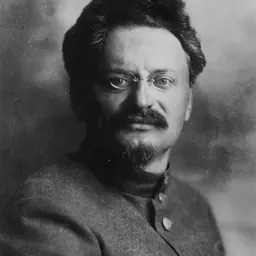
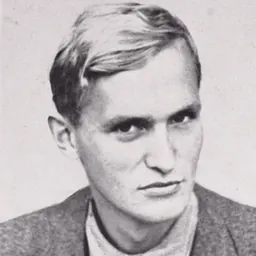
Riisnæs, who held contacts in the international policing community, is credited with introducing new investigative techniques, such as the use of police dogs, to Norway. In 1936, Riisnæs was prosecutor in the case against Per Imerslund and other Norwegian Nazis who had broken into the home where Leon Trotsky had been staying in exile, which resulted in Trotsky's deportation from Norway to Mexico. Riisnæs was a driving force in the deportations of Norwegian Jews, which primarily took place in the fall of 1942. While his earlier writings primarily consisted of legal and forensic texts, he produced a number of books and articles expressing his Nazi convictions during the war,
Riisnæs was a strong proponent of the Germanic SS in Norway, and himself served as a Standartenführer in the SS for some time. He supported Norwegian volunteer participation on the Eastern Front; in January 1944, he proposed mobilizing 75 000 Norwegian men to fight against the Soviet Army in the Continuation War in Finland, but this did not materialize. Following the assassination of Karl Marthinsen, head of Statspolitiet, by the resistance group Milorg in February 1945, Riisnæs advocated for harsh reprisals, and is mentioned as personally having participated in the subsequent executions.
Riisnæs was charged with treason in 1947, but his trial was put on hold based on the defence that he was mentally ill, and finally statute-barred in 1973. From 1948 to 1960, Riisnæs was hospitalized in Reitgjerdet Psychiatric Hospital in Trondheim. To this day, there are questions whether he feigned mental weakness. In 1974 he emigrated to Sicily, Italy, and later to Vienna, but returned to Oslo in 1985, where he lived for three years in a nursing home until his death. Shortly before his death Riisnæs agreed to an interview by the NRK, where he continued to express admiration for Quisling.
Literature N.J. Ringdal, Gal mann til rett tid: NS-minister Sverre Riisnæs, en psykobiografi (Oslo: Aschehoug, 1989)
References and notes
Don’t just read it —
keep it.
Full-length biographies made to live with: read them, listen on the way to work, watch them tonight.
- E-book
- Audio
- Video
Instant download · yours to keep · every purchase keeps this site free
Important facts
People in Sverre Riisnæs's life
Named in this biography and alive at the same time
Related people
Same field, nearest in time


Contemporaries
People whose lives overlapped Sverre Riisnæs's


Frequently asked questions
Who was Sverre Riisnæs?
Norwegian politician (1897-1988)
When was Sverre Riisnæs born?
Sverre Riisnæs was born in 1897 in Vik Municipality.
When did Sverre Riisnæs die?
Sverre Riisnæs died in 1988 in Oslo.
What was Sverre Riisnæs's occupation?
Sverre Riisnæs was a jurist and politician.
What nationality was Sverre Riisnæs?
Sverre Riisnæs was Norwegian.
Sources & further reading
Cite this page
APA: Biography.guide. (2026). Sverre Riisnæs. https://biography.guide/sverre-riisnaes/
MLA: "Sverre Riisnæs." Biography.guide, https://biography.guide/sverre-riisnaes/.
Chicago: "Sverre Riisnæs." Biography.guide. https://biography.guide/sverre-riisnaes/.
Data last updated: 2026-09-20 · Spot an error? Report a correction.
Page generated 2026-09-27 05:28 UTC