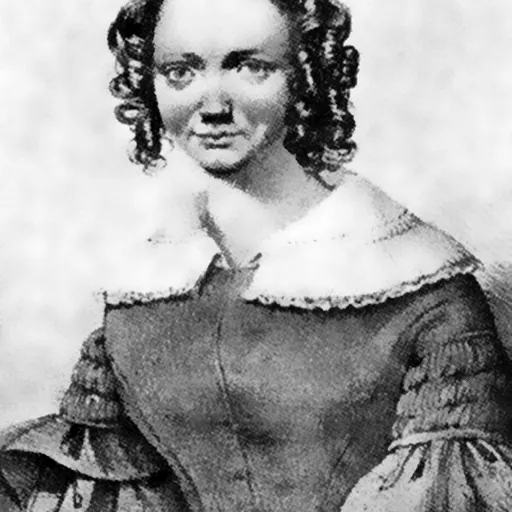
About Suzanne Voilquin
Lived 1801 – 1876 (aged 74–75). Suzanne Voilquin was a French journalist and editor.
Suzanne Monnier Voilquin (1801 – December 1876 or January 1877) was a French feminist, journalist, midwife, traveller and author, best known as editor of Tribune des femmes (fr), the first working-class feminist periodical, and her memoirs, Souvenirs d’une fille du peuple: ou, La saint-simonienne en Égypt.
Biography
Early life
Voilquin was born in Paris in 1801 to a working-class family. Her father worked in the hat making trade. She received some convent education, but spent most of her youth nursing her dying mother, raising her little sister and working as an embroiderer.
Marriage and Saint-Simonism
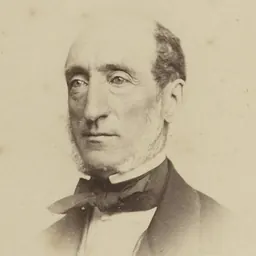
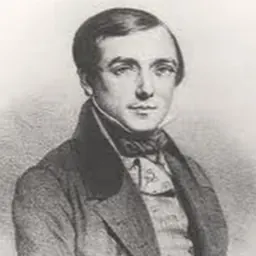
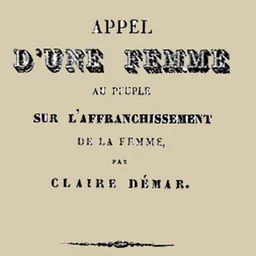
Voilquin met and married Eugène Voilquin, an architect, in 1825. The couple became supporters of Saint-Simonism, a Utopian Socialist movement that adhered to the philosophy of Comte de Saint-Simon. Its leaders included Barthélemy Prosper Enfantin and Saint-Amand Bazard. Voilquin was particularly attracted to the Movement's call to women and workers, “the poorest and most numerous class.” The Saint-Simonian's popularity and their belief in the liberation of women brought the group into trouble with the French authorities. After a spectacular trial, Enfantin, Charles Duveyrier and Michel Chevalier were jailed in 1832 and the movement dispersed. During this period, Voilquin suffered three miscarriages and her husband confessed to having had syphilis. He had also fell in love with another woman. In 1834, Voilquin also published Ma loi d’Avenir by fellow Saint-Simonian Claire Démar after she and her lover, Perret Desessarts, died by suicide.
With Enfantin's release from jail in 1834, Voilquin accepted the Saint-Simonian call to spread the word of the movement throughout the world. She announced in April, 1834 that she would join other Saint-Simonian women such as Clorinde Roge and travel to Egypt to work with the French medical doctors, scientists and engineers, including Ferdinand de Lesseps. Voilquin pledged herself to a “Life of Active Propaganda,” whereby she would support herself in an effort to show other women that they too could be independent.
Travels and a life of “Active Propaganda”
Work was scarce in Egypt where many people were quarantined due to the plague. Voilquin began assisting a French doctor who taught her medicine in exchange for her tutoring his Egyptian children. She studied Arabic and learned medicine in his clinic and the harems, often wearing Arab male clothing. Voilquin caught the plague, and, although she survived, many of her friends, including the doctor and his family died. After the plans for a woman's hospital fell through, Voilquin returned to France.
In France, Voilquin became certified as a midwife, studied homeopathy, and continued to work on behalf of women, with an unsuccessful attempt to form a Maternal Association to Aid Young Mothers in 1838. Work was again scarce, and, needing to support herself, her ailing father and her brother who was a political prisoner, Voilquin left for Russia in 1839. Life was difficult for her in St. Petersburg, where she found little employment, and the winter's cold affected her health. She returned to France in 1846.
Women's rights again surfaced with the French Revolution of 1848. Voilquin joined other feminists and Saint-Simonian women including Eugénie Niboyet, Pauline Roland, Jeanne Deroin, Desirée Gay and Elisa Lemonnier to organize on behalf of women's employment and education issues and to write for La Voix des Femmes. Voilquin organized wet nurses and founded a Society of United Midwives. With the failure of the Republic, lack of funding, and hostile government action, Voilquin once again left France—this time to Louisiana in 1848. There is little historical record of Voilquin's activities in New Orleans. She joined her sister there, who died in 1849. Voilquin returned to France in 1860. She published her memoirs Souvenirs d’une fille du people: ou la Saint-simonienne en Égypt in 1866.
Voilquin died in Paris in December 1876 or January 1877.
Writings
Mémoires d’une saints-simonienne en Russie (1839–1846). Edited by Maïté Albistur and Daniel Armogathe. Paris: Éditions des femmes, 1977. Souvenirs d’une fille du peuple ou Saint-simonienne en Égypte. Paris: Chez E. Sauzet, 1866. Souvenirs d’une fille du peuple ou Saint-simonienne en Égypte. Introduction by Lydia Elhadad. Paris: François Maspero, 1978. Tribune des femmes (Paris), 1832–1834, contributor and editor.
Don’t just read it —
keep it.
Full-length biographies made to live with: read them, listen on the way to work, watch them tonight.
- E-book
- Audio
- Video
Instant download · yours to keep · every purchase keeps this site free
Important facts
People in Suzanne Voilquin's life
Named in this biography and alive at the same time


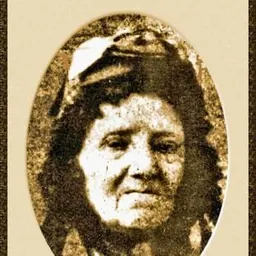


Related people
Same field, nearest in time

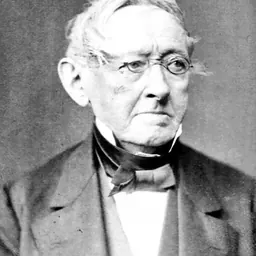
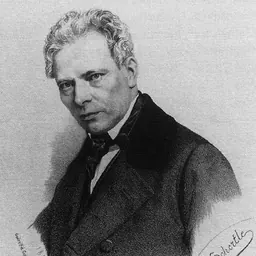
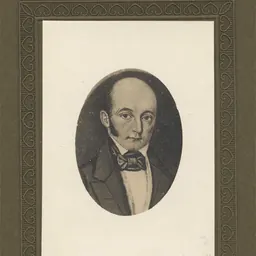
Contemporaries
People whose lives overlapped Suzanne Voilquin's





Frequently asked questions
Who was Suzanne Voilquin?
French writer, editor (1801–1876)
When was Suzanne Voilquin born?
Suzanne Voilquin was born in 1801 in Paris.
When did Suzanne Voilquin die?
Suzanne Voilquin died on 24 October 1876 in Saint-Mandé.
What was Suzanne Voilquin's occupation?
Suzanne Voilquin was a journalist and editor.
What nationality was Suzanne Voilquin?
Suzanne Voilquin was French.
Sources & further reading
Cite this page
APA: Biography.guide. (2026). Suzanne Voilquin. https://biography.guide/suzanne-voilquin/
MLA: "Suzanne Voilquin." Biography.guide, https://biography.guide/suzanne-voilquin/.
Chicago: "Suzanne Voilquin." Biography.guide. https://biography.guide/suzanne-voilquin/.
Data last updated: 2026-09-24 · Spot an error? Report a correction.
Portrait: Wikimedia Commons · author & licence
Page generated 2026-09-27 05:08 UTC