
Suzanne Ferrière
Swiss humanitarian activist, pioneering member of the International Committee of the Red Cross (ICRC)
About Suzanne Ferrière
Lived 1886 – 1970 (aged 83). Suzanne Ferrière was a Swiss humanitarian.
Anne Suzanne "Lili" Ferrière (22 March 1886, Geneva – 13 March 1970, Geneva) was a Swiss dance teacher of Dalcroze eurhythmics and a humanitarian activist from a prominent Genevan family. As only the third female member of the governing body of the International Committee of the Red Cross (ICRC), she helped to pave the way towards gender equality in the organisation.
Ferrière also contributed to establishing the Save the Children International Union, the International Social Service for migrants, and the International Union for Child Welfare. During the Second World War she became an outspoken advocate inside the ICRC leadership to publicly denounce Nazi Germany's system of extermination and concentration camps.
Life
Family background and early years
The Ferrière family reportedly originated from the Normandy and moved to Besançon in Eastern France, close to the Jura Mountains and the border with Switzerland, around 1700. From there they arrived in the republic of Geneva some forty years later. Since they were a family of Protestant pastors, it seems plausible that they escaped repressions which arose after Louis XIV in 1685 revoked the 1598 Edict of Nantes, which had restored some civil rights to the Huguenots. In 1781, the family obtained Genevan citizenship. and her older sister Adolphine was married to his younger brother Frederic. Suzanne was the second-oldest child of five. She had two brothers and two sisters: Jean Auguste (1884–1968), Louis Emmanuel (1887–1963), Marguerite Louise Hedwige (1890–1984), and Juliette Jeanne Adolphine (1895–1970). Anne Suzanne was apparently named after her great-aunts Anna (1803–1890) and Suzanne Ferrière (1806–1883), who were teachers. She grew up and lived all of her life in the Florissant part of Geneva's Champel quarter, In 1904, she finished school at Geneva's Ecole secondaire et supérieure des jeunes filles.
In subsequent years, Suzanne Ferrière became a student of the Swiss composer Émile Jaques-Dalcroze, who was Professor of Harmony at the Conservatoire de Musique de Genève since 1892. In his solfège courses he tested many of his pedagogical ideas. In 1910, he left and established his own academy in Hellerau, near Dresden. Suzanne Ferrière was one of the 46 students from Geneva who joined Jaques-Dalcroze. In July 1913 she obtained her diploma in rhythmic and plastic gymnastic with a special mention. She immediately started teaching and developed in her class her own variant of eurhythmics, which was inspired by dancing elements and became known as exercices de plastique animée.
In May 1914, Ferrière co-directed a eurythmic performance in the great vestibule of Geneva's Musée d’art et d’histoire (MAH) to celebrate the cenentiary of the city's and canton's admission to the Swiss Confederation at the Vienna Congress.
First World War
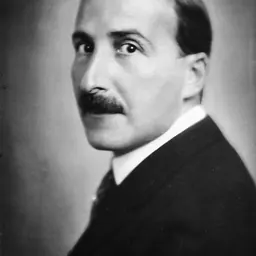
Shortly after the outbreak of the First World War in 1914, the ICRC under its president Gustave Ador established the International Prisoners-of-War Agency (IPWA) to trace POWs and to re-establish communications with their respective families. The Austrian writer and pacifist Stefan Zweig described the situation in 1914 at the Geneva headquarters of the ICRC as follows:«Hardly had the first blows been struck when cries of anguish from all lands began to be heard in Switzerland. Thousands who were without news of fathers, husbands, and sons in the battlefields, stretched despairing arms into the void. By hundreds, by thousands, by tens of thousands, letters and telegrams poured into the little House of the Red Cross in Geneva, the only international rallying point that still remained. Isolated, like stormy petrels, came the first inquiries for missing relatives; then these inquiries themselves became a storm. The letters arrived in sackfuls. Nothing had been prepared for dealing with such an inundation of misery. The Red Cross had no space, no organization, no system, and above all no helpers.» By the end of the same year, the Agency had some 1,200 volunteers who worked in the Musée Rath of Geneva, amongst them the French writer and pacifist Romain Rolland. When he was awarded the Nobel Prize for Literature for 1915, he donated half of the prize money to the Agency. Most of the staff were women. Some of them came from the Patrician class of Geneva and joined the IPWA because of male relatives in high ICRC positions, which was all-male for more than half century. This group included female pioneers like Marguerite Cramer, Marguerite van Berchem, and Suzanne Ferrière.
The IPWA mandate was based on resolution VI of the 9th Red Cross movement conference of Washington in 1912 and hence limited to military personnel. However, Ferrière's uncle, the committee member and medical doctor Frédéric Ferrière, founded a civilian section against the advice of other committee members. Ferrière worked in the IPWA under the supervision of her uncle until 1915.
Between the World Wars
After her return to Switzerland in 1918 Ferrière volunteered in the ICRC relief section and thus came to know with Eglantyne Jebb (1876–1928). Jebb, a British social reformer, had founded the Save the Children Fund (SCF) organisation at the end of the war to relieve the effects of famine in Austria-Hungary and Germany.
In addition, Ferrière worked with Jebb to found the International Union for Child Welfare (IUCW), of which she became the assistant secretary-general.
Travels abroad
In her capacities as a leading representative for the ICRC, the IUCW, and the IMS, Ferrière conducted a number of missions to foreign countries during the 1920s. In January and February 1921, she went to Scandinavia in her capacity as assistant secretary-general of the IUCW. In January and February 1922, she likewise travelled to Moscow and Saratov in Russia to assess the situation in the famine-stricken region. From September until December of that year, she explored the conditions in Ukraine as well. In April 1923, she visited the French-occupied Ruhr area of Germany. In May 1929, Ferrière visited the French colonies of Lebanon and Syria to evaluate the situation with regard to the many Armenian genocide survivors who newly arrived from Turkey.
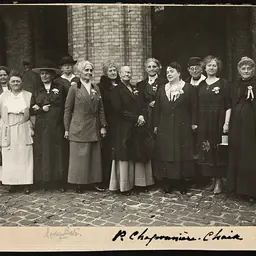
In August 1925, Ferrière was elected a member of the ICRC as successor to her uncle Frédéric Ferrière, who had died in the year before. She was only the third woman ever to join the governing body of the organisation after Marguerite Cramer had been elected in 1919. When Frick-Cramer had moved to Germany after her marriage and therefore stepped down in late 1922, the nurse, feminist and suffragette Pauline Chaponnière-Chaix (1850-1934) succeeded her as the second ever female ICRC member. Motta headed the Swiss Federal Department of Foreign Affairs during those two decades. She was its first female member and served as its expert on social and humanitarian issues.
When Adolf Hitler and his Nazi Party came to power in Germany in January 1933, the ICRC was faced with the question how to deal with the repressive system. Ferrière belonged to the faction within the ICRC leadership that pushed for interventions in favour of political detainees. Her brother Louis had inspected the conditions in a Vienna prison in 1934 on behalf of the ICRC and thus created a precedent, to which she pointed during a meeting of the ICRC members in February 1935. One month later, the committee transformed its working group for civilians into one for political detainees. Both Ferrière and Frick-Cramer, who was still an honorary member of the ICRC, were members of that team.
In September 1935, during a meeting of the ICRC leadership in which the upcoming visit of an ICRC delegation to Nazi Germany was discussed,«the two women in the meeting, Suzanne Ferrière and Renée-Marguerite Frick-Cramer, stated that the ICRC should at least do everything to give news to the families of the inmates.» In late 1938, Ferrière started an initiative in aid of Jewish refugees in various countries, but faced internal opposition. In February 1939, she visited Czechoslovakia in her capacity as secretary-general of the IMS and upon her return doubled down on her pledges to support refugees in their quest for safe havens. However, the ICRC's top leaders once more opposed her recommendations. However, Ferrière's standing inside the organisation became diminished: when the executive committee established a department for special assistance to civilian detainees in early 1944, Ferrière as well as her fellow experts Frick-Cramer and Odier were left out of it. In 1955, she also resigned as deputy-director of the IMS/ISS, but remained an adviser of the organisation.
Don’t just read it —
keep it.
Full-length biographies made to live with: read them, listen on the way to work, watch them tonight.
- E-book
- Audio
- Video
Instant download · yours to keep · every purchase keeps this site free
Important facts
People in Suzanne Ferrière's life
Named in this biography and alive at the same time



Related people
Same field, nearest in time


Contemporaries
People whose lives overlapped Suzanne Ferrière's


Frequently asked questions
Who was Suzanne Ferrière?
Swiss humanitarian activist, pioneering member of the International Committee of the Red Cross (ICRC)
When was Suzanne Ferrière born?
Suzanne Ferrière was born on 22 March 1886 in Geneva.
When did Suzanne Ferrière die?
Suzanne Ferrière died on 13 March 1970 in Geneva.
What was Suzanne Ferrière's occupation?
Suzanne Ferrière was a humanitarian.
What nationality was Suzanne Ferrière?
Suzanne Ferrière was Swiss.
Sources & further reading
Cite this page
APA: Biography.guide. (2026). Suzanne Ferrière. https://biography.guide/suzanne-ferriere/
MLA: "Suzanne Ferrière." Biography.guide, https://biography.guide/suzanne-ferriere/.
Chicago: "Suzanne Ferrière." Biography.guide. https://biography.guide/suzanne-ferriere/.
Data last updated: 2026-09-20 · Spot an error? Report a correction.
Page generated 2026-09-27 05:32 UTC