
About Susie Taylor
Lived 1848 – 1912 (aged 64). Susie Taylor was an American nurse, writer and teacher.
Susie King Taylor (August 6, 1848 – October 6, 1912) was an American nurse, educator, and memoirist. Born into slavery in coastal Georgia, she is known for being the first African-American nurse during the American Civil War. Beyond her aptitude in nursing the wounded of the 1st South Carolina Colored Infantry Regiment, Taylor was the first Black woman to self-publish her memoirs. She was the author of Reminiscences of My Life in Camp with the 33rd United States Colored Troops, Late 1st S.C. Volunteers. She was also an educator to formerly bonded Black people in the Reconstruction-era South when she opened various Freedmen's schools for them in and near the city of Savannah, Georgia. In her later years as a resident of Boston, Taylor became a main organizer of Corps 67 of the Massachusetts Woman's Relief Corps (1886).
Biography
Childhood Susie Taylor, born Susan Ann Baker on August 8, 1848, was the eldest of the nine children of Raymond and Hagar Ann Reed Baker. She was born into slavery on a plantation owned by Valentine Grest on the Isle of Wight in Liberty County, Georgia.
Susie Baker's grandmother Dolly Reed was allowed by Grest to take seven-year-old Susie to live with her in Savannah, then Georgia's largest city and a major seaport located some 38 miles (61 km) north of the plantation.
Susie King Taylor's early education would prove paramount. After two weeks, the family members were transferred to St. Simon's Island. While aboard the Union gunboat during the transfer, Susie was questioned by its commander, Captain Whitmore, who inquired where she was from. Susie informed him that she was from Savannah. He then asked her if she could read and write. When he learned that she could, he handed her a notebook and asked her to write her name and where she was from. After being on St. Simon's Island for about three days, Commodore Goldsborough visited her at Gaston Bluff where they were located. It was at this meeting she was asked to take charge and create a school for the children on the island. She agreed to do so, provided she be given the necessary books for study. She received the books and testaments from the North and began her first school.
At the age of fourteen, Susie Baker founded the first free African-American school for children, and also became the first African-American woman to teach a free school in Georgia. During the day, Taylor educated more than forty children. Adults attended classes in her night school.
Formation of the 33rd Regiment Colored Troops In late August 1862, Captain Charles T. Trowbridge came to St. Simon's Island by order of General David Hunter, a noted abolitionist. Under his orders all of the able men on the island were to be organized into his regiment. General Hunter was aware of the many skirmish events the men on the island had bravely fought and recruited them to join the 1st S. C. Volunteers, which would later be known as the 33rd U.S. Colored Troops. During October 1862, they received orders to evacuate the new troops to Beaufort, South Carolina. All of the enlisted men were housed at Camp Saxton, and Susie was enrolled with the army as a laundress. During this time she married Edward King, a non-commissioned officer in the Company E regiment. Captain Trowbridge was promoted to lieutenant-colonel in 1864 and remained with the 33rd Regiment until they mustered out on February 6, 1866. Although Susie King's occupational title was laundress, while on Morris Island she spent little time doing these duties. Rather, she packed haversacks and cartridge packs for the soldiers to use in combat and carried out orders for the commanders. She is also believed to have been entrusted with rifled muskets by the regiment's officers and rumored to be a dead shot. She was even trusted to engage in active picket line duty, contributing more to the war than education and nursing services. However, strong prejudices against the newly freed African Americans prevented Edward from securing a job despite being a skilled carpenter. Her history as an educator also fueled her activism as she challenged the United Daughters of the Confederacy in their campaign to rid all mention of slavery from U.S. school history curriculums.
Taylor would travel once again to Boston in 1874 and entered into service for the Thomas Smith family in the Boston Highlands. After the death of Mrs. Smith, Taylor next served Mrs. Gorham Gray, of Beacon Street. Taylor remained with Mrs. Gray until her marriage to Russell L. Taylor in 1879.
Resting place Taylor was buried in 1912 at Boston's Mount Hope Cemetery in the same plot as her husband, Russell L. Taylor (1854–1901).
Legacy
Calhoun Square, located at Abercorn Street and East Wayne Street in Savannah, was renamed Taylor Square during a regular meeting of the Savannah City Council on August 24, 2023. The square had carried the name of John C. Calhoun, a pro-slavery former vice-president of the United States, since 1851.
In 2018, Taylor was elected posthumously to the Georgia Women of Achievement Hall of Fame (HOF) for her contributions to education, freedom, and humanity during her lifetime. Aside from being the first Black army nurse, Taylor was considered to be the first Black woman to teach in a school solely dedicated to educating former slaves. Between 1866 and 1868, she opened and taught in at least three schools in coastal Georgia.
In 2015, the Susie King Taylor Community School, a K–8 charter school that is part of the Savannah-Chatham County Public School System, was dedicated in Savannah's historic downtown. In Midway, a coastal Georgia city near Taylor's Isle of Wight birthplace and 32 miles south of Savannah, stands the first historic marker to honor Taylor. Erected in 2019 near the Midway First Presbyterian Church by the Georgia Historical Society, the official state marker commemorates Taylor's lifelong contributions to formal education, literature, and medicine.
The Susie King Taylor Women's Institute and Ecology Center was established in 2015 in Midway by historian Hermina Glass-Hill.
In Savannah, one of the four Savannah Belles ferry boats is named for Taylor.
Don’t just read it —
keep it.
Full-length biographies made to live with: read them, listen on the way to work, watch them tonight.
- E-book
- Audio
- Video
Instant download · yours to keep · every purchase keeps this site free
Important facts
People in Susie Taylor's life
Named in this biography and alive at the same time


Related people
Same field, nearest in time

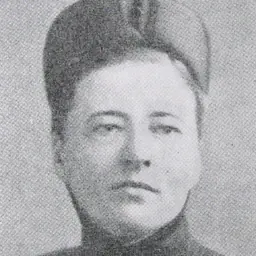
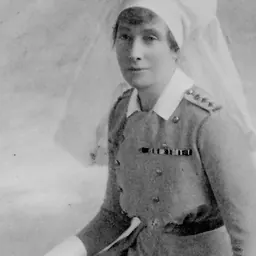

Contemporaries
People whose lives overlapped Susie Taylor's

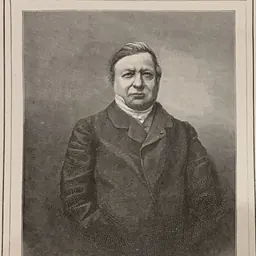
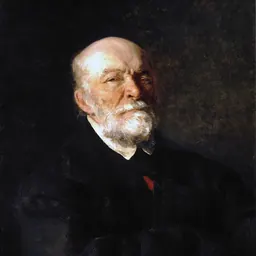



Frequently asked questions
Who was Susie Taylor?
African American nurse & writer (1848-1912)
When was Susie Taylor born?
Susie Taylor was born on 6 August 1848 in Liberty County.
When did Susie Taylor die?
Susie Taylor died on 6 October 1912 in Boston.
What was Susie Taylor's occupation?
Susie Taylor was a nurse, writer and teacher.
What nationality was Susie Taylor?
Susie Taylor was American.
Sources & further reading
Cite this page
APA: Biography.guide. (2026). Susie Taylor. https://biography.guide/susie-taylor/
MLA: "Susie Taylor." Biography.guide, https://biography.guide/susie-taylor/.
Chicago: "Susie Taylor." Biography.guide. https://biography.guide/susie-taylor/.
Data last updated: 2026-09-25 · Spot an error? Report a correction.
Page generated 2026-09-27 05:13 UTC