
About Susan Brigden
Born 1951. Susan Brigden is a British historian.
Susan Elizabeth Brigden (born 26 June 1951) is a British historian and academic specialising in the English Renaissance and Reformation. She was Reader in Early Modern History at the University of Oxford and a Fellow of Lincoln College, before retiring at the end of 2016.
Academic career Brigden was educated at the University of Manchester (BA) and Clare College, Cambridge, where she graduated with a PhD in 1979. Her doctoral supervisor was the eminent Tudor historian Geoffrey Elton, and her thesis was titled 'The early Reformation in London, 1520–1547: the conflict in the parishes'.
Brigden has stated that her interest in Tudor history was "rather accidental". She missed out on her first choice special subject at the University of Manchester and was instead allocated to a paper on the Reformation taught by Christopher Haigh. Her interest in the period grew from there and she wrote her undergraduate thesis on the Pilgrimage of Grace.
In 1980, Brigden was elected the first Darby Fellow in History at Lincoln College. In 1985 she became the first woman to be elected to a Tutorial Fellowship at the college. In 1984 she became a university lecturer in the Faculty of History, University of Oxford. She later became Reader in Early Modern History.
In addition to her teaching duties at Lincoln College, Brigden held a variety of college offices, including Garden Master, Tutor for Women, Fellow for Alumni Relations, Welfare Dean and Sub-Rector.
Prior to arriving at Lincoln Brigden taught at Newcastle University and Durham University. Peter Marshall, a fellow winner of the Wolfson History Prize; and Lucy Wooding, who succeeded Brigden as Lincoln College's early modern history tutor in 2016.
Publications Brigden's first monograph, London and the Reformation, was published in 1989 by Oxford University Press's Clarendon imprint. It was based on her doctoral thesis, completed ten years earlier, and built upon A. G. Dickens and Jack Scarisbrick's interpretations of the English Reformation. One reviewer classed Brigden's book as the culmination of a generation of research into the localised impact of the Reformation throughout England. These previous studies emphasised the slow progress of the Reformation in rural counties and parishes, resulting in an assumption that London's embracing of the Reformation was comparatively quick. Brigden's book shattered this hypothesis, concluding that the Reformation in London was "but half-finished by the accession of Elizabeth in 1558, when this study ends."
Brigden's second monograph, published by Penguin Books in 2000, was a more generalist study of Tudor Britain entitled New Worlds, Lost Worlds. It was the fifth volume in the Penguin History of Britain series. The book shares its parameters with Stanley Bindoff's 1950 work Tudor England, also published by Penguin for its Pelican History of England series. Brigden's book embraces what one reviewer calls the "historiographical revolution" effected by Tudor scholars since Bindoff was writing, and thus Brigden presents a more complex narrative of sixteenth-century Britain. Unsurprisingly, for Brigden is, "first and foremost, a historian of English religion in the sixteenth century", the new and lost worlds of her title account principally for religious change and the loss of old certainties and traditional values. The book was warmly received in the press. Jane Dunn wrote in Literary Review that it "deserves to become a classic". Patrick Collinson in the London Review of Books stated that historians "shall not have to hesitate any longer when asked, as we sometimes are, to recommend just one book on the history of our own country in the 16th century." and another co-authored article on Wyatt alone in 2005. Brigden unearthed much previously unknown archival material in constructing her portrait of Wyatt, enabling her to provide corrections for several long-standing misprisions about his life and career. Acknowledging the difficulties of reconstructing much of Wyatt's life due to lack of evidence, Brigden foregrounds his diplomatic activities, for which significant source material exists. The book was much lauded in the press, being named "the richest and most exhaustive study on Wyatt to date" in The Guardian and included in their list of the best biographies published in 2012. Katherine Rundell in the London Review of Books stated that Brigden's "will be the standard biography for years to come". The book won the 2013 Wolfson History Prize: according to the judges' summary, "above all, this new biography is attuned to Wyatt’s voice, the paradox within him of inwardness and the will to 'make plain' his heart, which make him exceptionally difficult to know – and fascinating to explore."
Media work Brigden was a member of the panel of judges for the 2018 Baillie Gifford Prize for Non-Fiction, which was won by Serhii Plokhy for his account of the Chernobyl disaster. Joining Brigden on the panel were journalist Stephen Bush, computer scientist Anne-Marie Imafidon, philosopher Nigel Warburton and journalist and panel chair Fiammetta Rocco.
In May 2024, Brigden appeared on the BBC Radio 4 programme In Our Time discussing the life of Thomas Wyatt alongside Laura Ashe and Brian Cummings.
Honours Brigden won the Wolfson History Prize in 2013 for her book Thomas Wyatt: The Heart's Forest. In 2014 she was elected a Fellow of the British Academy (FBA), the United Kingdom's national academy for the humanities and social sciences. She is also an elected Fellow of the Royal Historical Society (FRHistS).
Personal life Brigden is married to Jeremy Wormell.
Don’t just read it —
keep it.
Full-length biographies made to live with: read them, listen on the way to work, watch them tonight.
- E-book
- Audio
- Video
Instant download · yours to keep · every purchase keeps this site free
Important facts
People in Susan Brigden's life
Named in this biography and alive at the same time
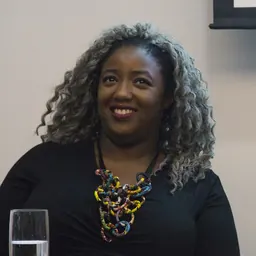

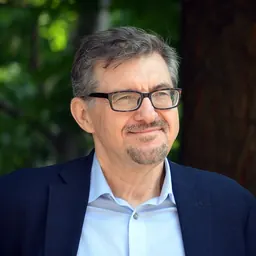



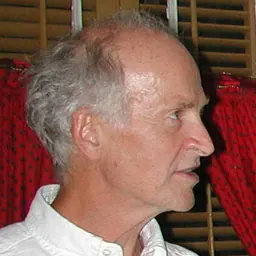

Related people
Same field, nearest in time
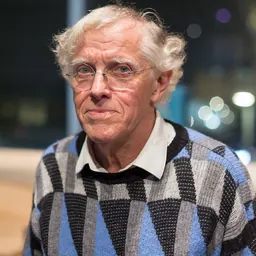

Contemporaries
People whose lives overlapped Susan Brigden's

Frequently asked questions
Who is Susan Brigden?
historian
When was Susan Brigden born?
Susan Brigden was born on 26 June 1951.
What is Susan Brigden's occupation?
Susan Brigden is a historian.
What nationality is Susan Brigden?
Susan Brigden is British.
Sources & further reading
Cite this page
APA: Biography.guide. (2026). Susan Brigden. https://biography.guide/susan-brigden/
MLA: "Susan Brigden." Biography.guide, https://biography.guide/susan-brigden/.
Chicago: "Susan Brigden." Biography.guide. https://biography.guide/susan-brigden/.
Data last updated: 2026-09-20 · Spot an error? Report a correction.
Page generated 2026-09-27 05:31 UTC