
About Surendra
Lived 1910 – 1987 (aged 76). Surendra was an Indian actor.
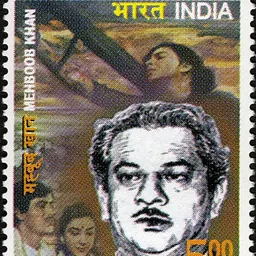
Surendra (11 November 1910 – 11 September 1987; Surendra Nath Sharma) was an Indian singer-actor of Hindi films. Known by his mononym, Surendra was born and educated in Punjab to be a lawyer by profession. He came to Bombay to become a singer on the recommendation of a Delhi distributor and his friends. He was "picked" by Mehboob Khan whom he met at Sagar Movietone, to sing and act in films as an alternative to the then Calcutta-based singer-actor, K. L. Saigal. Surendra started his career with his debut starring role in Deccan Queen, directed by Mehboob Khan. He soon became a part of Sagar Movietone when his song "Birha Ki Aag Lagi More Man Mein" from the film became an "instant hit".
Early life Surendra was born on 11 November 1910, in Batala, Gurdaspur District, Punjab British India. His father's name was Ralia Ram Sharma. While in school, Surendranath, as he was then called, took part in concerts and earned the "reputation" of a singer. He was "spotted" by the then leading distributor from Delhi, Lala Alopi Prashad who encouraged the young Surendra to join films. On the instigation of his friends who wanted him to try his luck in films as a singer, he left Punjab and came to Bombay, where he met Mehboob Khan.
Surendra's parents were against the idea of his joining films, but on being persuaded they agreed, stipulating that Surendra's name in the credit roll of the films should appear as "Surendra Nath B.A., LL.B", a condition agreed to by Mehboob Khan.
Career
1930s
Mehboob Khan, who had made a commercially successful film Al Hilal in 1935, is credited for bringing Surendra into films. He offered him the leading role in Deccan Queen (1936), which was produced by Sagar Movietone. Khan also chose the singular name Surendra, which was to stay as his screen name. Deccan Queen, with music by Anil Biswas, was a story about a police inspector played by Surendra, who has twin sisters fall in love with him. A song sung by Surendra "Birha Ki Aag Lagi", which according to author Ashok Raj, was a "rehash" of K. L. Saigal's song from Devdas (1935), "Baalam Aaye Baso", became extremely popular.
In 1936, Khan wanted to make a film in Bombay, that would rival Calcutta's Devdas. Manmohan (1936), directed by Khan had Surendra once again in the lead. Zia Sarhadi wrote the story, script and dialogues for the film. Though referred to as the "poor man's Devdas" the film went on to become a big hit. The third film in 1936 was Sagar's Grama Kanya, directed by Sarvottam Badami. The film had Surendra starring opposite Sabita Devi and Aruna Devi. The music of the film, composed by the famous bhajan singer Shankarrao Khatu became popular with the public.
In 1938, while working for Gramophone Singer Surendra met with a car accident and had to be hospitalised. The film's shooting was halted for a few days. Gramophone Singer was Ramachandra Thakur's debut directorial venture, which he co-directed with V. C. Desai. The film had music composed by Anil Biswas. It was cited as a "music-dominated" love triangle starring Surendra with Bibbo and Prabha, who played the role of his wife. Following the release of the film, Surendra and Bibbo became a popular pair and worked together in several films together. Surendra's song "Ek Chhota Sa Mandir Banaya Hua Hai" went on to become popular.
1940s
In 1940, Mehboob Khan produced Aurat under the banner of his National Studios. Mehboob was to later remake Aurat as Mother India in 1957. In Aurat, he cast Surendra as the older brother, a role to be played by Rajendra Kumar in Mother India. Yakub was cast as the younger brother Birju, with Sardar Akhtar playing the mother's role. The song "Utth Sajni Khol Kiware, Tere Sajan Aye Duware", sung by Surendra and Jyoti went on to become a "big hit", with Baburao Patel, editor of the cine-magazine Filmindia claiming that "Surendra had never sung better" in the June 1940 issue.
Ali Baba (1940) had Surendra starring in the title role, with Sardar Akhtar and Waheedan Bai. The film was a bilingual, made both in Hindi and Punjabi, with Surendra playing the double role of Alibaba and his son. The popular song from this film was "Hum Aur Tum Aur Ye Khushi Ye Kehkahe Ye Dillagi", sung by Surendra and Waheedan.
In 1940, it was reported by Baburao Patel, editor of Filmindia in the June 1940 issue that Surendra had fallen off a horse while riding at the Bombay Turf Club lawns. He was hospitalised for several months. Rumours surfaced at that time that Surendra had retired from acting. However, quashing the report in the news, Surendra returned after almost ten months to complete his films. He was left with a limp that remained for the rest of his life. The role was written with Surendra in mind, and in an interview with journalist-author Bunny Reuben, for his book Mehboob, India's Demille: The First Biography Surendra stated that a frustrated Mehboob, unable to find the right man to enact the role told Faredoon Irani, his cinematographer, "it's really Surendra who should be doing this role". Faredoon Irani asked Mehboob to pick up the phone and patch-up with Surendra, which he did. Surendra's "pathos-ridden" "Kyun Yaad Aa Rahein Hain" has "stood the test of time". Surendra's other solo "Ab Kaun Hai Mera", and a duet with Noor Jehan "Awaaz De Kahan Hai" also became "big hits", with the music composition cited as Naushad's "crowning glory" of the 1940s. Two other films of 1946 were Mohan Sinha's 1857 opposite Suraiya, and Panihari directed by V. M. Gunjal.
Elaan made in 1947, was a Mehboob Khan Productions, directed by Mehboob Khan. The film, a Muslim social, followed the fortunes of two step-brothers, one evil, called Sajjad, played by Himalayawala, the other good, called Javed, acted by Surendra, who is mistreated by Sajjad and his mother played by Zebunissa. Both brothers are in love with the same girl, Munawwar Sultana. Claimed to be a "stylised Muslim social", it had music by Naushad. Elaan was in trouble with the censors and banned for a time. When the censors cleared the film for viewing it was "rejected" by audiences and did not fare well at the box office though Surendra's acting was acclaimed as the "simple-hearted" stepbrother. Suendra went on to act in a couple of films directed by Mohan Sinha, Mere Bhagwan and Chittor Vijay, which turned out to unsuccessful commercially. A third film made by Sinha in 1949 Imtihan also flopped. According to Surendra, in an interview with Krishna, he stated the films were "very badly made and released without any build-up" and "very poor in content". The films faring poorly brought his acting career in a lead role to a near halt. Produced by the Documentary Unit of India, it was directed by Paul Zils. The film also featured Prithviraj Kapoor, Dev Anand, Durga Khote and P. Jairaj.
1n 1952, while going through a rough patch as far as film roles were concerned, he was offered to enact Tansen in Vijay Bhatt's film Baiju Bawra. The film starring Meena Kumari and Bharat Bhushan in the lead roles, went on to become a big success commercially, with its music composed by Naushad becoming popular. One of the highlights of the film was the music-singing competition between the court musician Tansen and the folk popular Baiju. However, instead of singing for himself in the film, Surendra had to lip-sync to Ustad Amir Khan for the song "Ghanana Ghanana Kar Barso Re" in raga Malhar, while the song sequence between Tansen and Baiju played by Bharat Bhushan had Ustad Amir Khan and D. V. Paluskar providing playback singing for them.
In 1954, Surendra's version of the song from Gawaiya "Teri Yaad Ka Deepak Jalta Hai Din Raat" was claimed to be a "super-hit".
Personal life and family Surendra was married to Satya Rishi, in Lahore on 3 March 1945. Satya Rishi was the sister of author Tilak Rishi. His younger son Kailash Surendranath is an advertisement film-maker and founder of Kailash Picture Company. He is married to actress Aarti Gupta.
Surendra died on 11 September 1987 at the age of 76 years, in Mumbai, Maharashtra, India.
Filmography List of films:
Don’t just read it —
keep it.
Full-length biographies made to live with: read them, listen on the way to work, watch them tonight.
- E-book
- Audio
- Video
Instant download · yours to keep · every purchase keeps this site free
Important facts
People in Surendra's life
Named in this biography and alive at the same time




Related people
Same field, nearest in time

Contemporaries
People whose lives overlapped Surendra's





Frequently asked questions
Who was Surendra?
Indian actor
When was Surendra born?
Surendra was born on 11 November 1910 in Batala.
When did Surendra die?
Surendra died on 11 September 1987 in Mumbai.
What was Surendra's occupation?
Surendra was an actor.
What nationality was Surendra?
Surendra was Indian.
Sources & further reading
Cite this page
APA: Biography.guide. (2026). Surendra. https://biography.guide/surendra/
MLA: "Surendra." Biography.guide, https://biography.guide/surendra/.
Chicago: "Surendra." Biography.guide. https://biography.guide/surendra/.
Data last updated: 2026-09-22 · Spot an error? Report a correction.
Page generated 2026-09-27 05:20 UTC