
About Sunil Dutt
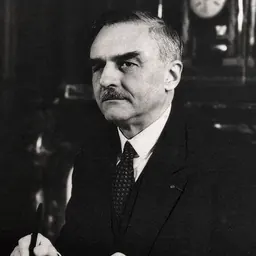
Lived 1929 – 2005 (aged 75). Sunil Dutt was an Indian film actor, film director, film producer, politician and actor.
Early life Sunil Dutt was born on 6 June 1929, in Nakka Khurd in the Jhelum District of the Punjab Province of British India (now in Punjab, Pakistan) into a Punjabi Hindu family. His birth name was Balraj Dutt, and he was born to father Diwan Raghunath Dutt and mother Kulwanti Devi Dutt.
Dutt belonged to a Hussaini Brahmin landlord family. Dutt's father died when he was five years old. Dutt was 18, when the Partition of India took place, and it began inciting Hindu-Muslim violence across the country. A Muslim friend of Dutt's father named Yakub saved their entire family, and helped them safely relocate to India. The family resettled in the small village of Mandauli on the bank of the river Yamuna, located in the Yamunanagar District of East Punjab (now in Haryana).
Dutt later moved to the Aminabad Bazaar neighbourhood in Lucknow, United Provinces (now Uttar Pradesh) with his mother for some time before college. He then moved to Bombay, where he attended Jai Hind College of the University of Bombay and took up a job at the BEST Transportation Engineering division. He graduated with a Bachelor of Arts degree in History (Hons.) in 1954.
Film career
Early career and rise to stardom (1955–1957)
Director Ramesh Saigal played a key role in introducing Dutt, who was hosting the radio show Lipton Ki Mehfil on Radio Ceylon, to the film industry by casting him in Railway Platform (1955). Saigal met Dutt in 1953, while Dutt was reporting on the film Shikast. Impressed by Dutt's voice and personality, Saigal offered him a role in an upcoming project. Dutt declined the offer as he had promised his mother that he would first complete his education. After graduating, he acted in Saigal's film. To avoid confusion with the established actor Balraj Sahni, Saigal suggested that he adopt a new screen name and gave him the name "Sunil Dutt".
He shot to stardom with B. R. Chopra's family drama Ek Hi Raasta (1956) opposite Meena Kumari and Mehboob Khan's epic drama Mother India (1957) opposite Nargis. While Ek Hi Raasta was a major commercial success, Mother India emerged as a blockbuster and became the highest-grossing film of 1957. Although Dutt was relatively new to the industry at the time, he took on the challenging role of Birju, the rebellious son of Radha (Nargis). His performance earned widespread critical recognition, and the character has been considered Bollywood's first anti-hero. While reviewing Mother India, Shaikh Ayaz of The Indian Express found him "rogue and devilish". Mother India was also dubbed in several European languages, including Spanish, French and Russian. It went on to win several accolades and was featured in the book 1001 Movies You Must See Before You Die.
Widespread success, setback and resurgence (1958–1979)
Dutt once again collaborated with B. R. Chopra in Sadhna (1958). The film was a major box office success and went on to become a superhit. The following year, he starred in Bimal Roy's Sujata and Shakti Samanta's Insān Jaag Utha. While the former was a huge commercial success, Insaan Jaag Utha did moderately well. Sujata also won the National Film Award for Third Best Feature Film (Hindi). From 1960 to 1962, he starred in moderately successful films, such as Hum Hindustani in 1960, Chhaya in 1961 and Main Chup Rahungi in 1962. The year 1963 brought him into the big league with the superhits Gumrah and Mujhe Jeene Do. Along with their commercial success, both films received positive reviews from critics. In the same year, he made his debut as a producer with a legal drama Yeh Rastey Hain Pyar Ke, based on the infamous Nanavati case and later produced Mujhe Jeene Do. For his portrayal of a notorious bandit in Mujhe Jeene Do, Dutt won his first Filmfare Award for Best Actor. Madhavi Pothukuchi of ThePrint opined, "Sunil Dutt did what many other leading actors wouldn’t have done taken up a negative role at the peak of his career, and turned it into one of his best without getting stereotyped. He also chose to highlight an issue that nobody seemed to want to talk about and with that, he won the Indian audience all over again." In 1964, he directed, produced and starred in Yaadein, an experimental film with him as the sole actor. It did not performed well at the box office, but received critical praise and won National Film Award for Second Best Feature Film (Hindi) as well as an entry in Guinness Book of World Records in the category Fewest actors in a narrative film.
Dutt reached the peak of his success during the mid-1960s. It opened to an excellent response from the audience and proved to be a major blockbuster as well as the highest-grossing film of the year. It is widely regarded as a cult classic. His next release was A. Bhimsingh's family drama Khandan, which became a superhit. Dutt was praised for his portrayal of a paralyzed, dedicated family man and earned his second Filmfare Award for Best Actor. In 1966, he starred in Raj Khosla's thriller film Mera Saaya opposite Sadhana and Lekh Tandon's historical drama Amrapali opposite Vyjayanthimala. While Mera Saaya was a blockbuster, Amrapali failed commercially but was critically praised. The soundtrack of Mera Saaya composed by Madan Mohan was highly successful and one of the best-selling Hindi film albums of the 1960s. Its songs, such as "Jhumka Gira Re", "Mera Saaya Saath Hoga" and "Aap Ke Pehaloon Mein", remain popular. For his performance in Mera Saaya, Dinesh Raheja commented that Dutt made an "endearing" husband and suffused his romantic scenes with warmth. In 1967, Dutt consolidated his stardom with three major commercial successes. A remake of Telugu hit Mooga Manasulu (1964), Milan was successful at the box office with its songs "Sawan Ka Mahina", "Main Toh Deewana", "Bol Gori Bol Tera Kaun Piya" and "Ram Kare Aisa Ho Jaye" topping the music charts that year. For portraying an innocent boatman in the film, Dutt was nominated for the Filmfare Award for Best Actor category and won his first BFJA Award for Best Actor (Hindi). Mehrban was also a commercially successful. Hindustan Times commended Dutt for "beautifully playing a guilt-ridden husband".
In 1968, he delivered another superhit in Jyoti Swaroop's musical comedy film Padosan, where he played a buffoonish lover named Bhola. Indiatimes ranked the film among the "Top 25 Must See Bollywood Films". His portrayal of Bhola, which differed from his earlier rugged roles, was lauded by critics as an "endearing" character and his comedic performance showcased his versatility. Eastern Eye reported that Padosan is widely regarded as one of Bollywood’s funniest and most entertaining films, and Dutt received appreciation for breaking his traditional heroic image by portraying "a simpleton with innocence".
The year 1969 saw the rise of Rajesh Khanna, who gained nationwide popularity with films Aradhana and Do Raaste. With his emergence, several established stars, including Dutt, faced challenges in maintaining their earlier momentum. Nevertheless, between 1969 to 1972, Dutt continued to deliver a few successful films, including Raj Khosla's Chirag (1969) and Raja Nawathe's Bhai-Bhai (1970). In the latter, he played a dual role as twins. His other films such as Reshma Aur Shera (which he also directed), Jwala, Zindagi Zindagi and Zameen Aasmaan were not commercially successful.
The year 1973 marked Dutt's return to the big league with Sultan Ahmed's dacoit drama Heera, which was a huge hit. The success of Heera was followed by other superhits, Pran Jaye Per Vachan Na Jaye (1974), Geeta Mera Naam (1974), Zakhmee (1975) and Umar Qaid (1975), cementing his position as a leading star of the era. By this period, Dutt had adopted a new screen persona, shifting to action-oriented and occasional negative roles. Nagin which featured an ensemble cast, including Reena Roy, Feroz Khan, Sanjay Khan and Rekha went on to become a blockbuster at the box office. On the other hand, Nehle Pe Dehla, co-starring Saira Banu and Vinod Khanna, was also a major commercial success. In 1978, Dutt donned the director's hat for Daaku Aur Jawan, co-starring Vinod Khanna, Reena Roy and Leena Chandavarkar. The film opened to positive response from critics and emerged as a superhit at the box office. In the same year, he also appeared in Ram Kasam opposite Rekha and Bindiya Goswami, where he once again played dual role as twins and Kaala Aadmi opposite Saira Banu. While Ram Kasam was a commercially successful, Kaala Aadmi failed to do well. Dutt collaborated with Kohli again in the same year for Muqabla. The film featured the chartbuster song "Govinda Govinda", a duet by Mohammed Rafi and Kishore Kumar and was a hit at the box office. The film received positive reviews from critics, but ended up as a moderately successful venture due to its high costs. In 1981, he launched his son Sanjay Dutt's career with Rocky, which became a hit at the box office. Shortly before the film's release, his wife Nargis died of pancreatic cancer. Dutt founded the Nargis Dutt Foundation in her memory for the care of cancer patients. In 1982, he appeared alongside Dharmendra and Jeetendra in Rajkumar Kohli's action thriller Badle Ki Aag, which was a box office success. The following year, he directed, produced and starred in the drama film Dard Ka Rishta, alongside Ashok Kumar, Reena Roy, Smita Patil and Khushbu Sundar. Dard Ka Rishta received positive reviews from critics and was a hit at the box office. This was followed by a setback, with only Raaj Tilak performing well commercially, while the other films such as Laila, Yaadon Ki Zanjeer and Faasle failed both critically and commercially. This changed in the late-1980s with the hit films Kala Dhanda Goray Log (1986) and Watan Ke Rakhwale (1987).
After appearing in Dharamyudh (1988), Dutt took a brief hiatus and returned to big screen in 1991 with a dowry-themed film Yeh Aag Kab Bujhegi, which marked his last directorial venture. That same year, he also starred in Kurbaan and Pratigyabadh. While Pratigyabadh and Yeh Aag Kab Bujhegi were moderate success at the box office, Kurbaan emerged as a major commercial success. Before retiring from films and choosing to focus entirely on politics, he appeared in Kshatriya, Parampara and Phool, all of which released in 1993. Munna Bhai M.B.B.S. opened to highly positive reviews from critics. It won several awards and was declared a blockbuster at the box office and achieved silver jubilee status (25 week run), making it one of only eight films to have achieved this status since the year 2000. Hindustan Times wrote that Dutt’s portrayal as the "loving yet strict" father of Munna Bhai contributed to the film’s humor. It marked Sunil Dutt's last film appearance; he died two years after its release. Rediff.com described his presence as "the most appropriate screen goodbye".
Political career
In 1982, Dutt was appointed as the Sheriff of Bombay, an apolitical titular position bestowed on him by the Government of Maharashtra for a year. He was elected as a Member of Parliament from North West Mumbai for five times (1984, 1989, 1991 [resigned in 1993 in protest over religious violence], 1999, and 2004). He worked actively for the welfare of slum dwellers, refugees and displaced people.
In 1987, when Punjab was facing heightened militancy, Dutt, accompanied by his daughter Priya, undertook a 2,000 km, 76-day-long Mahashanti Padyatra (journey on foot) from Bombay to Amritsar (Golden Temple) to promote communal harmony and brotherhood. During the padyatra, he attended more than 500 roadside meetings and suffered a bout of jaundice and blistered feet, but recovered soon. He always stressed that violence would not help any cause. Dutt later undertook a similar march while protesting against the proliferation of nuclear weapons, walking from Hiroshima to Nagasaki to demand a global ban on nuclear arms.
After his son's release, Dutt contested in 1999 election from the same constituency and won. He was re-elected in 2004 and became Cabinet Minister for Youth Affairs and Sports in Manmohan Singh's government. He won several national awards for his contributions to peace and communal harmony which includes the Maulana Abul Kalam Azad Award for National Integration and Communal Harmony (1997), the Khan Abdul Ghaffar Khan Award for International Peace, Communal Harmony, Unity and National Integration (1997), and the Rajiv Gandhi National Sadbhavana Award (1998).
Dutt was among the first Bollywood actors to build a successful career in politics. He earned his reputation through persistent efforts, including one of his earliest public acts—a nearly month-long peace march in Punjab during the early 1980s. At a time when the region was experiencing violent unrest due to the Sikh separatist movement, his march stood out for its courage and dedication to promoting communal harmony.
Personal life Dutt married actress Nargis, a Muslim, on 11 March 1958 in a Hindu temple. Reportedly, Dutt saved her life from a fire on the sets of Mother India. They had three children: Sanjay Dutt, Namrata Dutt, and Priya Dutt. Sanjay went on to become a successful film actor. Namrata married actor Kumar Gaurav, son of veteran actor Rajendra Kumar, who had appeared alongside Dutt and Nargis in Mother India. Priya became a politician and a Member of Parliament (Lok Sabha).
Dutt launched his younger brother, Som Dutt, who had worked as a production assistant, in his production Man Ka Meet (1969), which also marked the debut of Vinod Khanna and Leena Chandavarkar. But Som failed to create on-screen magic and went on to act in 22 films. Eventually, he decided to move away from the film industry.
Nargis died on 3 May 1981 due to pancreatic cancer. Dutt buried her body instead of cremated as she had made it clear to him before her death that she wanted to be buried next to her late mother. One year after her death, the Nargis Dutt Memorial Cancer Foundation was established by Dutt in her memory. Later years, he worked as a tireless campaigner and raising money for the help of poor cancer patients through charities and fundraisers all across the world.
In 2001, Dutt survived an air crash. He sustained a dislocated shoulder and a fractured leg and was admitted to Breach Candy Hospital for treatment. According to reports, the small aircraft he was travelling in developed a technical issue. Dutt helped his co-passengers exit the plane to safety before escaping himself.
Death Dutt died of a heart attack in his sleep on 25 May 2005 at his residence in Bandra, West Mumbai, at age 75. He was the Minister for Youth Affairs and Sports in the Union Government led by Manmohan Singh and was the Member of Parliament from North-West Mumbai until his death. He was succeeded as Minister by Mani Shankar Aiyar. He was cremated with full state honours at the Santa Cruz Crematorium in Mumbai. His body was draped in the Indian tri-colour and carried by the military.
After his death, his seat in the Parliament was contested by his daughter, Priya Dutt, who won it and was a Member of Parliament until May 2014. In 2005, Dutt was posthumously honoured with the Phalke Ratna Award by the Dadasaheb Phalke Academy.
Following his demise, numerous figures expressed their condolences. President APJ Abdul Kalam called Dutt "a gem of a human being". Former Prime Minister Manmohan Singh said, "A colorful and charismatic personality and a celebrity in the world of cinema, Sunil Dutt touched the millions in our country through many of his purposeful and socially relevant roles in numerous films." Actress Shabana Azmi stated, "It comes as such a deep shock that Dutt Sahab is not with us. He was not only great just to those who work in the industry but also to the people of country." Rajeev Shukla said, "He was a wonderful human being. A gentleman in politics. In his death, the polity has lost a valuable leader."
Artistry and legacy
Throughout his film career, Dutt acted in a variety of genres, from romance and action thrillers to social dramas and comedies. In addition to acting, he also worked as a producer and director. His performances established him as one of the greatest actors in the industry, and he has been cited as the most handsome leading man. Rediff.com called him "Hindi Cinema’s man of solid character", adding that "his earnest sincerity reflected entirely in all his roles, be it Birju in Mother India or Bhola in Padosan. Besides acting, he successfully made the rare transition from film to politics". Filmfare summarized his filmography as "remarkable, full of cinematic gems". Times Now placed him 2nd in its list of the "Most Good Looking Actors on Indian Screen". Dutt appeared in Box Office India'''s "Top Actors" list in 1966 and 1967.
Dinesh Raheja of Rediff.com noted that Sunil Dutt capitalised his ability to jump genres and expand his oeuvre at different stages of his career. His willingness to experiment with cinema led him to star in offbeat films like Padosan, Amrapali, the villain in Geeta Mera Naam and bankroll films like Yaadein (starring just one man --himself), Mujhe Jeene Do (a reformist saga) and the stark desert epic Reshma Aur Shera. The Guardian noticed that Dutt maintained an "unpretentious style" and retained his natural accent throughout his career. Surendra Miglani from The Tribune characterised Dutt's acting style as "speaking with his eyes" and "playing every role with aplomb". He also mentioned that Dutt consciously avoided blinking while performing intense scenes, as it would dilute the ferocity of his expressions.
His films Mother India, Padosan and Munna Bhai M.B.B.S were voted among the greatest films ever made in polls conducted by News18. His directorial films received international recognition, Yaadein was selected in the Guinness Book of World Records in the category Fewest actors in a narrative film and Reshma Aur Shera was nominated for the Golden Berlin Bear at the Berlin International Film Festival. In 2022, critic Sukanya Verma included his performances in Mother India and Mujhe Jeene Do in her list of "25 Deadliest Bollywood Dacoits", noting that "he was usually mild-mannered but could display great intensity in his performances". Mid-day has described Dutt as a stalwart of Indian cinema who graced the silver screen with his remarkable talent, charisma and versatility.
Dutt was also credited with giving major breaks to then-struggling actors such as Amitabh Bachchan, Vinod Khanna, Ranjeet, Shakti Kapoor and Johnny Lever through his home productions Reshma Aur Shera, Rocky and Dard Ka Rishta respectively.
Shaikh Ayaz of The Indian Express called Dutt "a screen legend" and wrote, "His goodwill has inspired the film industry, showing what a good husband and father he was, and a man who always led from the front." Director Yash Chopra said, "Whatever he did in films, it was with great dedication and from the heart; no one can reproach his sincerity. He was always ready, even for a guest role. I have never seen such a decent human being." Journalist Rauf Ahmed revealed that Dutt was always willing to help others and described him as "the man whose stardom wouldn’t dare to change, who believed in moving forward and carried no baggage from the things that did not work out in life". Reader’s Digest described Dutt as a "rare individual" who balanced stardom with selfless public service, highlighting his humanitarian values and political integrity. Actor Akshay Kumar's hairstyle in Action Replayy (2010) was inspired by Dutt's long-haired look in Zakhmee (1975). Actor Paresh Rawal portrayed Dutt in the 2018 film Sanju and said, "I may have done some good deeds in my past life that I got to play a noble person like Mr Sunil Dutt."
Accolades
1964 – Filmfare Award for Best Actor for Mujhe Jeene Do 1964 – National Film Award for Best Feature Film in Hindi for Yaadein 1966 – Filmfare Award for Best Actor for Khandan 1968 – BFJA Award for Best Actor (Hindi) for Milan 1968 – Padma Shri 1999 – Screen Lifetime Achievement Award 2000 – Anandalok Awards Lifetime Achievement Award 2001 – Zee Cine Award for Lifetime Achievement 2005 – Glory of India Award by IIFS, London 2005 – Phalke Ratna Award by Dadasaheb Phalke Academy (posthumously) However, his autograph has been preserved at Bollywood Walk of Fame at Bandra Bandstand. In 2005, an event was organised at a film festival to honour Dutt's life and contributions. In 2010, a commemorative postage stamp of Dutt was issued by Indian Motion Picture Producers Association (IMPPA).
Paying tribute to him, his co-actresses such as Vyjayanthimala said, "He was a true gentleman, a progressive man and a rational artiste." Asha Parekh said, "Dutt Saab was God’s child. He was a saint in the truest sense of the word. We did Chirag together where I had played a blind girl. He was so supportive and gentle." Singer Mahendra Kapoor, who had sung several songs for Dutt's films, particularly Gumrah, Waqt and Hamraaz, said, "He was always very happy, full of good spirits and always forward-looking. His spirit was so strong that it carried him and all of us along with him."
In 2019, Nivedita Mishra of Hindustan Times described Dutt as "a gentleman actor with Gandhian values". She also highlighted his humility, simplicity and commitment to public service. In 2022, ShemarooMe gave tribute to Dutt through the shows Screen Legends and The Thorough Gentleman. In 2023, CNN-News18 referred to Dutt as a "dazzling actor" and highlighted his "most memorable movie roles". On his 95th birth anniversary, Radio City published a tribute article, stating, "With a career spanning five decades, Sunil Dutt left an indelible mark on Bollywood with his powerful performances and enduring charm. He explored various genres, showcasing his versatility as an actor. But his life story goes beyond the glitz and glamour, revealing a man who battled personal struggles and emerged stronger, solidifying his position as a true legend."
In popular culture In 2007, Dutt's daughters Priya and Namrata published a book about the lives of their parents, titled, Mr. and Mrs. Dutt: Memories of our Parents. Also that year, Darlingji: The True Love Story of Nargis and Sunil Dutt was released by Kishwar Desai. In 2012, Sanjay Dutt recreated his father's look from Mujhe Jeene Do (1963) for the film Son of Sardaar. In 2018, Paresh Rawal played Sunil Dutt, in his son's biopic Sanju. The film is ranked as one of the highest grossing Indian films of 2018.
Filmography Year Film Role Notes 1955 Railway Platform RamDebut film Kundan Amrit Rai 1956 Ek-Hi-Raasta Amar Rajdhani Dilip Singh Kismet Ka Khel Prakash Verma 1957 Payal Mohan Mother India Birju 1958 Sadhna Professor Mohan Post Box 999 Vikas 1959 Sujata Adhir Insaan Jaag Utha Ranjeet Didi Gopal 1960 Usne Kaha Tha Nandu Hum Hindustani Surendra Nath Ek Phool Char Kaante Sanjeev Duniya Jhukti Hai Mohan / Bankelal 1961 Chhaya Arun / Poet Rahi 1962 Main Chup Rahungi Kamal Kumar Jhoola Dr. Arun 1963 Gumraah Rajendra Aaj Aur Kal Dr. Sanjay Yeh Rastey Hain Pyar Ke Anil Sahni also producer Nartakee Professor Nirmal Kumar Mujhe Jeene Do Thakur Jarnail Singh also producer, Won - Filmfare Award for Best Actor 1964 Yaadein Anil also director and producer Gazal Ejaaz Beti Bete Ramu / Krishna 1965 Waqt Bablu / Advocate Ravi Khanna Khandan Govind Shankar Lal Won - Filmfare Award for Best Actor 1966 Mera Saaya Thakur Rakesh Singh Gaban Ramnath Amrapali Magadh Samrat Ajatashatru Maitighar Himself Guest appearance 1967 Milan Gopinath (Gopi) Won - BFJA Award for Best Actor (Hindi) Nominated - Filmfare Award for Best Actor Hamraaz Kumar / S. N. Sinha Mehrban Kanhaiya 1968 Padosan Bhola Sadhu Aur Shaitaan Catholic Priest D'souza Cameo (Uncredited) Gauri Sunil Kumar 1969 Pyasi Sham Raja Bhai Bahen Surendra Pratap Chirag Ajay Singh Meri Bhabhi Raju 1970 Darpan Balraj Dutt Bhai-Bhai Deep / Ashok (Sangram) Double role 1971 Reshma Aur Shera Shera also director and producer Jwala Ajit 1972 Zindagi Zindagi Dr. Sunil Zameen Aasmaan Ravi Jai Jwala Major Anand Special appearance 1973 Man Jeete Jag Jeet Baghel Singh / Bagga Daku Punjabi film Heera Heera 1974 Kora Badan Unnamed Dacoit Cameo Geeta Mera Naam Suraj / Johnny Pran Jaye Par Vachan Na Jaye Raja Thakur Dukh Bhanjan Tera Naam Sadhu Punjabi film; Cameo 36 Ghante Himmat Singh 1975 Zakhmee Anand Umar Qaid Raja Neelima Unnamed Advocate Cameo Himalay Se Ooncha Vijay 1976 Nagin Vijay Nehle Pe Dehla Sunil / Ram also producer 1977 Darinda Krishna / Yogidutt Paapi Raj Kumar Sat Sri Akal Pilot Sardar Hari Singh Punjabi film Charandas Advocate Tandon Cameo Aakhri Goli Vikram Singh / Sher Singh1978 Ram Kasam Bhola / Shankar Double role Kaala Aadmi Birju Daaku Aur Jawan Birju also director 1979 Muqabla Vinod / Vikram (Vicky) Jaani Dushman Lakhan Ahinsa Birju Salaam Memsaab Naresh Sarit Cameo 1980 Lahu Pukarega Satyajit / Jitu Shaan DSP Shiv Kumar Special appearance Yari Dushmani Shankar Ganga Aur Suraj Inspector Ganga / Birju / Sangram Ek Gunah Aur Sahi Shankar Ramdas 1981 Rocky Shankar Cameo, also director Meena Kumari Ki Amar Kahani Himself Documentary 1982 Badle Ki Aag Lakhan Dard Ka Rishta Dr. Ravi Kant Sharma also director and producer 1983 Film Hi Film Himself Documentary 1984 Raaj Tilak Jai Singh Laila Dharamraj Singh / Thakur Prithviraj Singh Double role Yaadon Ki Zanjeer Ravi Kumar Delayed release 1985 Faasle Vikram 1986 Kala Dhanda Goray Log Gauri Shankar / Michael Mangal Dada Mangal Dada Delayed release 1987 Watan Ke Rakhwale Jailor Suraj Prakash Raj Kapoor Himself Documentary 1988 Dharamyudh Thakur Vikram Singh 1991 Yeh Aag Kab Bujhegi Professor Krishnanand also director and producer Kurbaan Prithvi Singh Pratigyabadh Pascal Hai Meri Jaan Telegram Wala Cameo 1992 Virodhi Police Commissioner Jagdish Kapoor 1993 Kshatriya Maharaj Bhavani Singh Special appearance Parampara Thakur Bhavani Singh Phool Balram Choudhary 2003 Munna Bhai M.B.B.S. Hari Prasad Sharma Final film 2007 Om Shanti Om Magadh Samrat Ajatashatru Recreated via CGI in the song "Dhoom Tana", (archive footage)
Don’t just read it —
keep it.
Full-length biographies made to live with: read them, listen on the way to work, watch them tonight.
- E-book
- Audio
- Video
Instant download · yours to keep · every purchase keeps this site free
Important facts
Family & relationships
People in Sunil Dutt's life
Named in this biography and alive at the same time


Related people
Same field, nearest in time



Contemporaries
People whose lives overlapped Sunil Dutt's

Frequently asked questions
Who was Sunil Dutt?
Hindi film actor and politician (1929–2005)
When was Sunil Dutt born?
Sunil Dutt was born on 6 June 1929 in Jhelum.
When did Sunil Dutt die?
Sunil Dutt died on 25 May 2005 in Mumbai.
What was Sunil Dutt's occupation?
Sunil Dutt was a film actor, film director, film producer, politician and actor.
What nationality was Sunil Dutt?
Sunil Dutt was Indian.
Sources & further reading
Cite this page
APA: Biography.guide. (2026). Sunil Dutt. https://biography.guide/sunil-dutt-film-actor/
MLA: "Sunil Dutt." Biography.guide, https://biography.guide/sunil-dutt-film-actor/.
Chicago: "Sunil Dutt." Biography.guide. https://biography.guide/sunil-dutt-film-actor/.
Data last updated: 2026-09-20 · Spot an error? Report a correction.
Page generated 2026-09-27 05:22 UTC