
About Sun Yuanhua
Lived 1582 – 1632 (aged 49–50). Sun Yuanhua was a Chinese mathematician and politician.
Sun Yuanhua (1581 or 1582– 7September 1632), also known as IgnatiusSun, was a Chinese mandarin under the late Ming. A Catholic convert, he was a protégé of Paul Xu (né Xu Guangqi). Like his mentor, he advocated repelling the Manchu invasion by modernizing Chinese weaponry and wrote treatises on geometry and military science influenced by the Jesuits' European knowledge. From 1630 to 1632, he served as governor of Denglai, a Ming district around Dengzhou and Laizhou in northern Shandong. He was deposed by the mutiny of Kong Youde and Geng Zhongming, after which he was arrested and executed by the Ming for having failed to crush their rebellion with sufficient severity.
Names Sun Yuanhua initially went by the courtesy name Chuyang. Upon his conversion, he adopted the baptismal name Ignatius in honor of StIgnatius, the founder of the Jesuit order. He then adopted the courtesy name Huodong, which loosely translates it.
Life
Sun was born in Jiading in the province of Southern Zhili (now within Shanghai) in 1581 or 1582 during the late Ming. He passed Southern Zhili's provincial exam and became a juren in 1612. Converting to Roman Catholicism under the influence of the Chinese Jesuit mission, he became a protégé of Paul Xu, who instructed him in western mathematics and use of firearms. Most such military memorials were composed by mandarins unfamiliar with war and consisted of general platitudes and historical anecdotes, often dating back to the Zhou or earlier. Despite a general sense of cultural superiority and desire for self-sufficiency—evident in modern artillery becoming generally known as "red-barbarian cannon"—and although Sun failed Beijing's imperial examination for 1622, his memorials attracted important attention at the War Ministry because of the strength of his arguments and the great and familiar detail he included concerning the construction and use of modern cannon and fortifications. Though subdued, official interest continued: Yuan Chonghuan began supporting Sun's policies in 1626.
An important meeting was held at Sun's Jiading estate around 1627, where Andrea Palmeiro, Xu, Sun, Yang, and eleven Jesuit missionaries planned the future of Christian expansion in China, including the status of Chinese rites and which Chinese name should be used for the Christian God.
Following Xu and Li's 1629 memorials, the Portuguese captain Gonçalo Teixeira Corrêa was permitted to bring ten artillery pieces and four "excellent bombards" across China to begin the training of Ming troops in European-style cannon. Further reinforcements were turned back at Nanchang in Jiangxi, owing to an outpouring of official complaints when a sudden illness removed the threat of a Manchu assault on Beijing. The merchants in Guangzhou were anxious lest their special monopolies on Portuguese trade be curtailed but a memorials of Lu Zhaolong singled Sun Yuanhua out for particular condemnation because of his overly fond treatment of the foreigners.
In 1630, Sun received the title of Shandong's Assistant Surveillance Commissioner for "having penetrated deep into the camp of the enemy". Liang Tingdong, the minister of war, offered him the post of governor of Denglai Dēnglái) in northern Shandong, but Sun was hesitant. the Korean diplomat Jeong Duwon visited Dengzhou while traveling to Beijing by sea, war having blocked the usual overland route from Seoul. Sun introduced him to Rodrigues, whose interviews and gifts on the occasion have been credited with the introduction of western religion, science, geography, firearms, and jurisprudence to Korea.
On 19 January 1632, Governor Sun's subordinates Kong Youde and Geng Zhongming mutinied. Both had previously served together under Mao Wenlong, a Ming general executed for using his post overseeing the Yellow Sea to support and conduct smuggling throughout northern China. Rather than immediately attacking Kong and Geng, Sun attempted to negotiate a peaceful resolution of their differences. This proved futile and, on 11 February, their forces besieged Dengzhou. When the city fell a little over a week later, Captain Corrêa and 11 other Portuguese were killed in battle, 15 escaped only with serious injury, and Rodrigues survived only by jumping from the high city wall into the sea. Sun was spared by Kong and Geng for his earlier leniency but, for the same reason, he was then condemned and arrested by the Ming government. Xu, despite now holding some of the highest posts in China for his work reforming the calendar, was unable to secure clemency through memorials absolving Sun for Kong and Geng's actions. Sun's court martial condemned him to death and he was executed shortly thereafter on 7September 1632.
Works
Sun assisted his mentor Paul Xu with the editing of his trigonometry textbook Principles of Right Triangles Gōugǔ Yì). Like Xu, Sun also wrote his own treatises on military science and geometry, incorporating the European knowledge being introduced by their Jesuit instructors.
The mathematical works included the Miscellanea on Western Learning (Xixue Zazhu), How to Do Geometry Jǐhé Yòngfǎ), and Western Calculation Tàixī Suànyāo).
One military work was his Jingwu Quanbian. His 1632 Western-style Masterpieces Xīfǎ Shénjī) became famous, advocating for the use of modernized fortifications as well as firearms. Sun was particularly impressed by the angled bastions ruìjiǎo) of Renaissance Europe's star forts, writing that, "with the angled bastion, the enemy is kept out beyond the walls and, when subjected to our attack, there is nowhere our guns cannot reach and the enemy has no way to approach." His efforts to construct them in the 1620s were apparently neutralized by factional feuds within the Ming government and turnover of the responsible officials, however, and they did not become widely employed in China.
Legacy Kong and Geng, after considering their options, threw in their lot with Manchuria and rose to prominence under the Qing Empire it established. The Manchu welcomed their captured artillery: Despite continuing to call them hongyipao, they adjusted one of the name's characters to make them "red-coated cannon".
The Xu and Sun families remained close. Sun Yuanhua's niece Ms Wang later married Xu's grandson Erdou. A detailed Biography of Vice-Censor-in-Chief Sun was composed by Gui Zhuang (1613–1673). Gui knew Sun Yuanhua's grandson Sun Zhimi and wrote the preface for his 1671 Jiangxing Zashi.
Sun is the tragic protagonist of Ling Li's 1996 novel Qingcheng Qingguo.
Don’t just read it —
keep it.
Full-length biographies made to live with: read them, listen on the way to work, watch them tonight.
- E-book
- Audio
- Video
Instant download · yours to keep · every purchase keeps this site free
Important facts
People in Sun Yuanhua's life
Named in this biography and alive at the same time



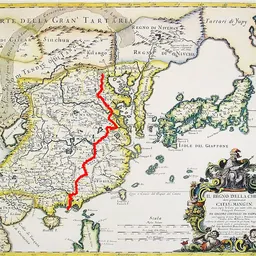


Related people
Same field, nearest in time


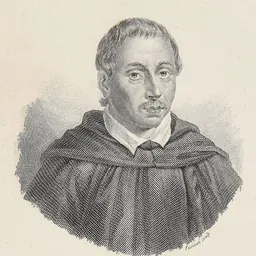


Contemporaries
People whose lives overlapped Sun Yuanhua's

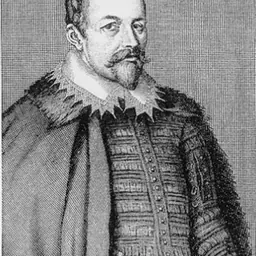

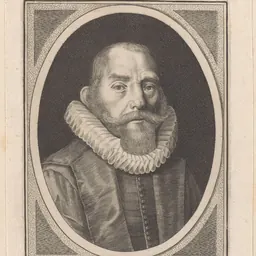
Frequently asked questions
Who was Sun Yuanhua?
Ming dynasty politician
When was Sun Yuanhua born?
Sun Yuanhua was born in 1582 in Jiading.
When did Sun Yuanhua die?
Sun Yuanhua died on 7 September 1632 in Beijing.
What was Sun Yuanhua's occupation?
Sun Yuanhua was a mathematician and politician.
What nationality was Sun Yuanhua?
Sun Yuanhua was Chinese.
Sources & further reading
Cite this page
APA: Biography.guide. (2026). Sun Yuanhua. https://biography.guide/sun-yuanhua/
MLA: "Sun Yuanhua." Biography.guide, https://biography.guide/sun-yuanhua/.
Chicago: "Sun Yuanhua." Biography.guide. https://biography.guide/sun-yuanhua/.
Data last updated: 2026-09-20 · Spot an error? Report a correction.
Page generated 2026-09-27 05:26 UTC