
Xu Guangqi
Late-Ming-dynasty Chinese politician, Scholar, Lay Catholic leader and Servant of God (*1562 – †1633)
About Xu Guangqi
Lived 1562 – 1633 (aged 71). Xu Guangqi was a Chinese mathematician, astronomer, translator, politician, writer and scholar.
Name Xu Guangqi is the pinyin romanization of the Mandarin Chinese pronunciation of Xu's Chinese name. His name is written using the Wade–Giles system. His courtesy name was Zixian and his penname was Xuanhu. In the Jesuits' records, it is the last which is used as his Chinese name, in the form
At his conversion, he adopted the baptismal name Paul . In Chinese, its transcription is employed as a kind of courtesy name (i.e., Xu Baolu) and the Jesuits sometimes referred to him as
Early life Xu Guangqi was born in Shanghai in Southern Zhili's Songjiang Prefecture on April 24, 1562, under China's Ming dynasty. At the time, Shanghai was merely a small walled county seat in the old quarter around the present city's Yu Garden. His family, including an older and younger sister, lived in the Taiqing Quarter at the south end of the town. Guangqi's branch of the Xu clan were not related to those who had passed the imperial examinations and joined Shanghai's local gentry. About half of this would have been used to feed the family, with the rest used to supplement his income from small-scale trading. By the time Guangqi was 6, the family had saved enough to send him to a local school, where a later hagiographer records him piously upbraiding his classmates when they spoke of wanting to use their education for wealth or mystical power.
Guangqi supposedly advised, "None of these things is worth doing. If you want to talk about the sort of person you want to become, then it should be to establish yourself and to follow the Way. Bring order to the state and the people. Revere the orthodox and expose the heterodox. Don't waste the chance to be someone who matters in this world." The next year, he traveled to Beijing in the spring and passed its provincial exam, becoming a juren. An earlier demonstration in 1623 had gone disastrously, with an exploding cannon killing one Portuguese artillerist and three Chinese observers, but on this occasion the pieces were accepted and directed to Dengzhou (now Penglai) in Shandong. The Christian convert Ignatius Sun, a protégé of Xu's, was governor there and had also been a strong advocate of modernizing China's military. Together with CaptainTeixeira and his translator João Rodrigues, Sun used the pieces to train his troops to oppose the ongoing Manchu invasion. However, Sun's lenient treatment of a 1632 mutiny under Kong Youde and Geng Zhongming permitted them to successfully capture Dengzhou, seize the artillery, and establish an independent power base that eventually joined the Manchus. Xu's memorials for clemency were unsuccessful and Sun was court-martialed and executed. Most Chinese treatments of his life and legacy, however, focus upon his desire for scientific, technological, and political progress and its effect upon Chinese development, whereas Western treatments nearly universally attach great importance to his Christian conversion and identity. He frequently cited the Xunzi and Guanzi, and made use of rewards and punishments along the lines of the Legalists, at least in relief activities.
Xu Guangqi put forward the concept of a "Rich Country and Strong Army" (富國強兵), which would be adopted by Japan for its modernization in the end of the 19th century, under the name Fukoku Kyohei.
Mathematics In 1607, Xu and Ricci translated the first parts of Euclid's Elements (a treatise on mathematics, geometry, and logic) into Chinese. Some Chinese scholars credit Xu as having "started China's enlightenment".
Astronomy
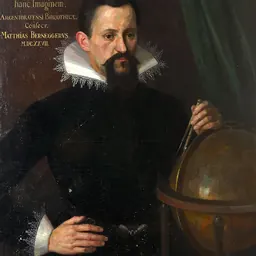
After followers of Xu and Ricci publicly predicted a solar eclipse in 1629, Xu was appointed by the Chongzhen Emperor as the leader of an effort to reform the Chinese calendar. The reform, which constituted the first major collaboration between scientists from Europe and from the Far East, was completed after his death and became known as the Chongzhen calendar. It's notable for systematically introducing the concepts and development of European mathematics and astronomy to China for the first time, including extensive translations and references to Euclid's Elements and the works of Nicolaus Copernicus, Johannes Kepler, Galileo Galilei, and Tycho Brahe, whose Tychonic system was used as its main theoretical basis.
Agriculture Xu Guangqi's work on military matters Mr Xu's Amateur ObservationsXu Guangqi wrote the Complete Treatise on Agriculture, an outstanding agricultural treatise that followed in the tradition of those such as Wang Zhen (wrote the Wang Zhen Nong Shu of 1313 AD) and Jia Sixie (wrote the Chi Min Yao Shu of 535 AD). Like Wang Zhen, Xu lived in troubled times, and was devoted as a patriot to aiding the rural farmers of China. His main interests were in irrigation, fertilizers, famine relief, economic crops, and empirical observation with early notions of chemistry. It was an enormous written work, some 700,000 written Chinese characters, making it 7 times as large as the work of both Jia Sixie and Wang Zhen. Although its final draft was unfinished by Xu Guangqi by the time of his death in 1633, the famous Jiangnan scholar Chen Zilong assembled a group of scholars to edit the draft, publishing it in 1639.
The topics covered by his book are as follows: The Fundamentals of Agriculture (Nong Ben): quotations from the classics on the importance of encouraging agriculture Field System (Tian Zhi): land distribution, field management Agricultural Tasks (Nong Shi): clearing land, tilling; also a detailed exposition on settlement schemes Water Control (Shui Li): various methods of irrigation, types of irrigation equipment, and the last two chapters devoted to new Western-style irrigation equipment Illustrated Treatise on Agricultural Implements (Nong Chi Tu Pu): based largely on Wang Zhen's book of 1313 AD Horticulture (Shi Yi): vegetables and fruit Sericulture (Can Sang): silk production Further Textile Crops (Can Sang Guang Lei): cotton, hemp, etc. Silviculture (Chong Chi): forestry preservation Animal Husbandry (Mu Yang) Culinary Preparations (Zhi Zao) Famine Control (Huang Zheng): administrative measures, famine flora
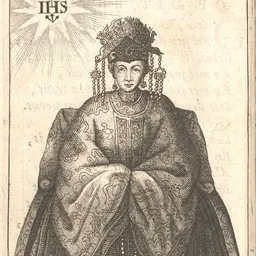
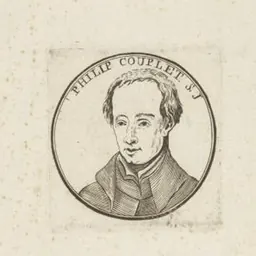
Family Xu's only son was John Xu Xú Jì), whose daughter was Candida Xu (, Xú Gāndìdà; 1607–1680). A devout Christian, she was recognized as an important patron of Christianity in Jiangnan during the early Qing era. The Jesuit Philippe Couplet, who worked closely with her, composed her biography in Latin. This was published in French translation as A History of the Christian Lady of China, Candide Hiu in 1688. Her son was Basil Xu, who served as an official under the Qing.
Gallery
Don’t just read it —
keep it.
Full-length biographies made to live with: read them, listen on the way to work, watch them tonight.
- E-book
- Audio
- Video
Instant download · yours to keep · every purchase keeps this site free
Important facts
Family & relationships
People in Xu Guangqi's life
Named in this biography and alive at the same time




Related people
Same field, nearest in time



Contemporaries
People whose lives overlapped Xu Guangqi's

Frequently asked questions
Who was Xu Guangqi?
late-Ming-dynasty Chinese politician, Scholar, Lay Catholic leader and Servant of God (*1562 – †1633)
When was Xu Guangqi born?
Xu Guangqi was born on 4 May 1562 in Shanghai.
When did Xu Guangqi die?
Xu Guangqi died on 8 November 1633 in Shuntian Fu.
What was Xu Guangqi's occupation?
Xu Guangqi was a mathematician, astronomer, translator, politician, writer and scholar.
What nationality was Xu Guangqi?
Xu Guangqi was Chinese.
Sources & further reading
Cite this page
APA: Biography.guide. (2026). Xu Guangqi. https://biography.guide/xu-guangqi/
MLA: "Xu Guangqi." Biography.guide, https://biography.guide/xu-guangqi/.
Chicago: "Xu Guangqi." Biography.guide. https://biography.guide/xu-guangqi/.
Data last updated: 2026-09-20 · Spot an error? Report a correction.
Page generated 2026-09-27 05:28 UTC