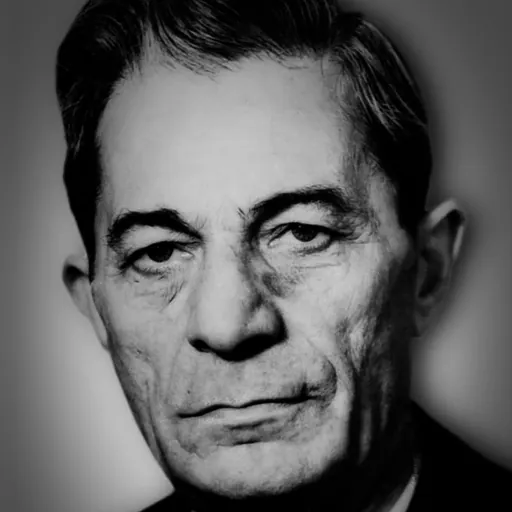
About Sulayman Hayyim
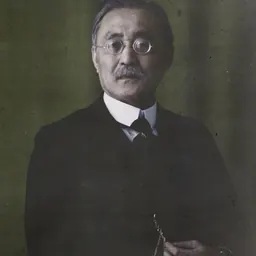
Lived 1887 – 1970 (aged 82–83). Sulayman Hayyim was an Iranian lexicographer, linguist, translator, writer, poet and playwright.
Soleiman Hayyim (; – 14 February 1970), was an Iranian lexicographer, translator, playwright and essayist, often called "Iran's Father of the bilingual dictionary".
Biography Hayyim was born into an Iranian Jewish family. His father, Hayyim Eshāq, was a quilter. Both of his parents were Kalimis (Iranian Jews) of Shirazi origin who had migrated to Tehran. Hayyim began his education in a "Maktabkhaneh" (traditional type of elementary school) called Noor, which belonged to Christian missionaries in Tehran. He learned the Hebrew language and religious matters from the well-known Hakham Hayyim Moreh and became his pupil and assistant when Moreh became blind.
He continued his studies in Ettehad secondary school, where he learned French and Hebrew. He was 19 when he entered the American High School (later renamed American College, and yet later Alborz High School), which was run by a group of American missionaries under the supervision of the legendary Samuel M. Jordan. At the college, young Sulayman excelled in English, Persian literature, and music.
Career Sulayman Hayyim started teaching English in 1915 at the American College. Soon after, he began working on the first series of bilingual dictionaries printed in Persian, a task that earned him the honorary name "Word Master". Later, he switched to translation. He is known to have worked for the Iranian Ministry of Finance for several years as a translator to Dr. Arthur Millspaugh, an American adviser to the Iranian government on fiscal matters.
He then moved on to the Anglo-Iranian Oil Company, where he headed the translation bureau until his retirement in the 1950s. His first published work (1928) is a play, Yusof va Zoleikha, based on the story of Joseph and Potiphar’s wife Zuleikha, from the Old Testament. Haim wrote this play to be performed by the students of Alliance School. His first reference work, the New English–Persian Dictionary, in two volumes, was published in 1929–31. This was later replaced by the Larger English–Persian Dictionary, and never reprinted.
He knew French, Hebrew, English, and Persian, and produced bilingual dictionaries in French and Hebrew as well as English. He also wrote a compilation of Persian proverbs and their English equivalents with the name "A Book of Collected Poems". Besides Yusof va Zoleikha, he wrote the plays "Esther and Mordecai" and "Ruth and Naomi". Besides writing these plays and composing their music, Haim also directed and performed in them. Moreover, he translated and contributed to articles in the Persian Encyclopedia that dealt with matters relating to the Jewish faith.
Works/Publications
Hayyim's English–Persian and Persian–English dictionaries Below is a list of Hayyim’s English–Persian and Persian–English dictionaries:
Larger English–Persian Dictionary, first published 1933, revised 1945, reissued in one volume and two volumes subsequently, rejuvenated and freshly typeset 1997. (It is his largest work, with 55,000 entries and 25,000 phrases.) One-Volume Persian–English Dictionary, first published in 1952 and reprinted many times subsequently, freshly typeset and reformatted in 1995. One-Volume English–Persian Dictionary, first published in 1954 and reprinted many times subsequently. Shorter English–Persian Dictionary, first published 1956, revised 1962, reprinted several times subsequently, revised again 1994 Shorter Persian–English Dictionary, first published in 1957 and reprinted several times subsequently, freshly typeset and reformatted in 1996.
Works as Translator Analyzing the Symbols and Myths of the Novel, Tarigh Besmel Shodan, by Mahmoud Dovlatabadi
Death
Soleyman Haim died in 1970 at the age of 82, with many projects left incomplete. Dariush Haim, Davood Adhami, Jahanguir Banayan, and Manouchehr Amiri have each written about their memories of Hayyim.
Hayyim was fond of Persian history and literature, and the divans of Sa'di and Hafez were his favourite books. He was also an amateur poet.
Don’t just read it —
keep it.
Full-length biographies made to live with: read them, listen on the way to work, watch them tonight.
- E-book
- Audio
- Video
Instant download · yours to keep · every purchase keeps this site free
Important facts
People in Sulayman Hayyim's life
Named in this biography and alive at the same time
Related people
Same field, nearest in time



Contemporaries
People whose lives overlapped Sulayman Hayyim's




Frequently asked questions
Who was Sulayman Hayyim?
Iranian lexicographer and author
When was Sulayman Hayyim born?
Sulayman Hayyim was born in 1887 in Tehran.
When did Sulayman Hayyim die?
Sulayman Hayyim died on 14 February 1970 in Tehran.
What was Sulayman Hayyim's occupation?
Sulayman Hayyim was a lexicographer, linguist, translator, writer, poet and playwright.
What nationality was Sulayman Hayyim?
Sulayman Hayyim was Iranian.
Sources & further reading
Cite this page
APA: Biography.guide. (2026). Sulayman Hayyim. https://biography.guide/sulayman-hayyim/
MLA: "Sulayman Hayyim." Biography.guide, https://biography.guide/sulayman-hayyim/.
Chicago: "Sulayman Hayyim." Biography.guide. https://biography.guide/sulayman-hayyim/.
Data last updated: 2026-09-20 · Spot an error? Report a correction.
Portrait: Wikimedia Commons · author & licence
Page generated 2026-09-27 04:57 UTC