
About Subhrajit Mitra
Born 1970. Subhrajit Mitra is an Indian film director.
Subhrajit Mitra (born 18 January 1976) is a filmmaker from Kolkata, India. He is known for his work in the Bengali film industry. His films are noted for their literary adaptations, historical subjects, and documentary-based approach to storytelling. He has directed feature films, documentaries and television productions, with his work often exploring themes of history, culture and literature.
Mitra received national recognition for directing Avijatrik (2021), a sequel to the Apu narrative created by filmmaker Satyajit Ray from the literary works of Bibhutibhushan Bandyopadhyay. The film won the Silver Lotus for Best Bengali Feature Film at the 68th National Film Awards, while its cinematographer, Supratim Bhol, received the Silver Lotus for Best Cinematography. Avijatrik was also screened at numerous international film festivals and received several awards and nominations in India and abroad.
In 2025, Mitra directed the historical period drama Devi Chowdhurani, based on Bankim Chandra Chattopadhyay's novel of the same name.
Apart from filmmaking, Mitra served as a member of the Central Jury for the 70th National Film Awards.
Early life and family Subhrajit Mitra was born on 18 January 1976 in Kolkata, India. According to published biographical accounts, members of his paternal family included the freedom fighters Santosh Mitra and Shrish Chandra Mitra, while his maternal lineage traces to Surendranath Banerjee, one of the early leaders of the Indian nationalist movement.
Education Mitra studied Computer Science and Engineering before pursuing postgraduate studies in Software Engineering. He also undertook studies in Ancient Classical Literature at Harvard University. He received an honorary Doctor of Literature degree from Mother Teresa University, Bengaluru, in recognition of his contribution to Indian and Bengali cinema. He later completed a Graduate Diploma in Film Direction from the National Institute of Film and Fine Arts in association with the National Archives of India.
Early career Mitra began his career at the age of eighteen as a documentary filmmaker with Doordarshan, India's public service broadcaster. During his early years, he worked on documentaries and factual television programming centred on history, culture and social issues.
Before entering mainstream feature filmmaking, he directed several documentaries for Doordarshan and a fifty-two-episode documentary television series produced in collaboration with the Indian Space Research Organisation (ISRO). He also made commissioned documentary films for institutions including the B.M.Birla Heart Research Centre, Oil and Natural Gas Corporation (ONGC), and the Forest Department of the Government of West Bengal.
Mitra's feature film directorial debut came with Mon Amour: Shesher Kobita Revisited (2008), inspired by Rabindranath Tagore's Shesher Kobita. He subsequently directed films across multiple genres, including literary adaptations, historical dramas, adventure films and thrillers.
His early fiction work Vorai, a 52-minute featurette, received awards at international film festivals and marked one of his first internationally recognised productions.
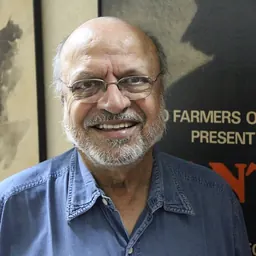
Professional associations During his formative years as a filmmaker, Mitra worked under and received guidance from Indian filmmakers Asit Sen, Rituparno Ghosh and Shyam Benegal. Their influence is reflected in his interest in literary cinema, historical narratives and socially engaged filmmaking.
Features Mitra has directed feature films in a variety of genres, including literary adaptations, historical dramas, adventure films and thrillers. His work is characterised by adaptations of Bengali literature, period settings and historical narratives. His films include Mon Amour: Shesher Kobita Revisited, Aagun Pakhi, adaptations based on Sunil Gangopadhyay's Kakababu stories, Chorabali, and Avijatrik.
Avijatrik Mitra gained wider recognition with Avijatrik (2021), a sequel to the Apu narrative originally created by Satyajit Ray from the works of Bibhutibhushan Bandyopadhyay. The film follows the adult life of Apu after the events depicted in Apur Sansar.
The film received the National Film Award (Silver Lotus) for Best Bengali Feature Film at the 68th National Film Awards, while cinematographer Supratim Bhol received the Silver Lotus for Best Cinematography.
Avijatrik was officially selected for numerous international film festivals and was screened across Asia, Europe and North America, including the International Film Festival of India, Shanghai International Film Festival, London Indian Film Festival, Birmingham Indian Film Festival, Manchester Indian Film Festival and Kolkata International Film Festival.
The film received awards and nominations from international festivals including the Seattle Film Festival, Montreal Independent Film Festival, Istanbul Film Awards, European Cinematography Awards and Caleidoscope Indian Film Festival of Boston, and nominations at the Filmfare Awards Bangla and the West Bengal Film Journalists' Association Awards.
Devi Chowdhurani In 2025, Mitra directed Devi Chowdhurani, a historical drama based on Bankim Chandra Chattopadhyay's novel of the same name, depicting the life of Devi Chowdhurani, a character associated with the late eighteenth-century Sannyasi Rebellion in Bengal. Released on 26 September 2025 during the Durga Puja season, the film starred Prosenjit Chatterjee and Srabanti Chatterjee and was a co-production between India, the United Kingdom and the United States.
According to production notes, the project was conceived to coincide with the 150th anniversary of "Vande Mataram".
Upcoming projects Mitra has announced several feature films centred on Indian history and literature. These include , inspired by the works of Rabindranath Tagore and set during the Indian independence movement; Rayabaghini Bhabashankari , based on the life of the historical queen Bhabashankari; Vikramaditya , inspired by the legendary emperor of the same name; and Kalbela , a socio-political drama based on the Marichjhapi massacre.
Documentaries Alongside his work in feature films, Mitra has directed documentaries and factual television programmes on subjects including history, indigenous cultures, environmental conservation and contemporary social issues. His documentary work has been commissioned by government agencies, public institutions and broadcasters.
Among his early works is Wangala
Another documentary, The Unknown Stories of the Messiah Documentary 2005 The Unknown Stories of the Messiah Documentary Corporate Documentaries: for ONGC & Wildlife Department, West Bengal Documentary 2010 Vorai Short film 2012 Flickering Angels Short film 2017 The Men Who Saved Killipara Short film
Don’t just read it —
keep it.
Full-length biographies made to live with: read them, listen on the way to work, watch them tonight.
- E-book
- Audio
- Video
Instant download · yours to keep · every purchase keeps this site free
Important facts
People in Subhrajit Mitra's life
Named in this biography and alive at the same time





Related people
Same field, nearest in time




Contemporaries
People whose lives overlapped Subhrajit Mitra's

Frequently asked questions
Who is Subhrajit Mitra?
Indian film director
When was Subhrajit Mitra born?
Subhrajit Mitra was born in 1970 in Kolkata.
What is Subhrajit Mitra's occupation?
Subhrajit Mitra is a film director.
What nationality is Subhrajit Mitra?
Subhrajit Mitra is Indian.
Sources & further reading
Cite this page
APA: Biography.guide. (2026). Subhrajit Mitra. https://biography.guide/subhrajit-mitra/
MLA: "Subhrajit Mitra." Biography.guide, https://biography.guide/subhrajit-mitra/.
Chicago: "Subhrajit Mitra." Biography.guide. https://biography.guide/subhrajit-mitra/.
Data last updated: 2026-09-22 · Spot an error? Report a correction.
Page generated 2026-09-27 05:21 UTC