
Stuart Milner-Barry
British codebreaker, civil servant, and chess player
About Stuart Milner-Barry
Lived 1906 – 1995 (aged 88). Stuart Milner-Barry was a British stockbroker, mathematician, chess player, civil servant and cryptanalysis.
Sir Philip Stuart Milner-Barry (20 September 1906 – 25 March 1995) was a British chess player, chess writer, World War II cryptologist, and civil servant. He represented England in chess before and after World War II.
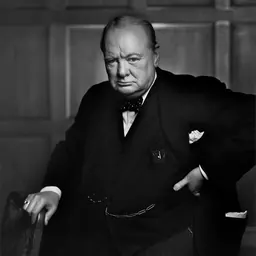
During World War II he worked at Bletchley Park, from autumn 1943 heading "Hut 6", the section responsible for decrypting German Army and Air Force messages which had been enciphered on the Enigma machine. He was one of four leading cryptologists at Bletchley Park to petition then-Prime Minister Winston Churchill for more resources for their work.
After the war he worked in the Treasury, and later administered the British honours system. In chess, he represented England in international tournaments, and lent his name to four opening variations.
Early life and education Born in Hendon, London, Philip Stuart was the second of six children to a Professor of German and Teutonic Philology at the University College of North Wales, Edward Leopold Milner-Barry, who died from heart failure in 1917, and his wife, Edith Mary. His grandfather was William Besant, a mathematical fellow of St John's College, Cambridge. His older sister, Alda Milner-Barry, worked for MI1b during World War One and went on to be Professor of German at University College Galway and vice-principal of Newnham College, Cambridge.
A talented chess player, Milner-Barry won the first British Boys' Championship in 1923. He was a pupil at Cheltenham College, and won a scholarship to Trinity College, Cambridge, where he obtained firsts in classics and moral sciences. Between 1929 and 1938 he was a city stockbroker, although he was unhappy with the work. From 1938, he was the chess correspondent for The Times, succeeded in 1945 by Harry Golombek. This places him at a solid Grandmaster standard, although he never received this title. He reached as high as No. 65 in the world between June and August 1941, according to Chessmetrics, which ranks historical chess performances retrospectively, using modern algorithms.
He represented England in chess, and played in the international Chess Olympiads of 1937 and 1939. The latter tournament, held in Buenos Aires, Argentina, coincided with Britain's declaration of war on Germany in September 1939. Milner-Barry, with teammates who included Hugh Alexander (at that time the British chess champion) and Harry Golombek, abandoned the tournament unfinished, and returned to Britain. His full Olympiad results are listed later in the article.
Bletchley Park The original Hut 6 building (photographed in 2004). Milner-Barry joined Hut 6 in early 1940, and worked in the section throughout World War II. He became head of Hut 6 in Autumn 1943. Upon their return, all three soon joined the Government Code and Cypher School at Bletchley Park. Milner-Barry was recruited by mathematician Gordon Welchman, who had been his contemporary at Trinity College; Arriving in early 1940, he joined Welchman's "Hut 6" section, whose task was to solve the Enigma cipher machine as used by the German Army and Air Force. Nonetheless, with his knowledge of the German language, he made a study of the decrypts and found that they contained stereotyped patterns and forms of address that could be exploited as "cribs" – reliable guesses for the plain language message that matched a given piece of encrypted text. Finding reliable cribs was a critical task for Hut 6, as Enigma was broken primarily with the aid of "bombes", large electromechanical machines which automatically searched for parts of the correct settings. Bombes were reliant on a suitable crib in order to succeed. In autumn 1940, Milner-Barry was put in charge of the "Crib Room".
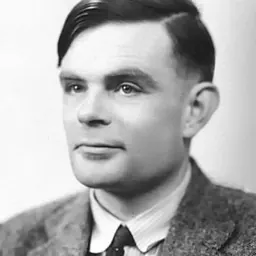
He was billeted with Alexander, who was working in Hut 8, the counterpart to Hut 6 working on German Naval Enigma. Their close friendship let them easily resolve the competing needs of their sections for the limited available bombe time. By October 1941, he was deputy head of Hut 6 under Welchman. At this time, Bletchley Park was experiencing a shortage of clerical staff which was delaying the work on Enigma, and the management of GCCS appeared unable to obtain the resources needed. This affected both Hut 6 and Hut 8, which was run by mathematician Alan Turing with Hugh Alexander as his deputy. Together, Welchman, Milner-Barry, Turing and Alexander bypassed the chain of command and wrote a memorandum directly to the Prime Minister, Winston Churchill, outlining their difficulties. Within a month their needs were being met. He remained in charge until the end of the war, presiding over a number of technical challenges presented by the introduction of extra security devices to the German Enigma, including the Enigma Uhr and a rewireable "reflector" rotor.
After World War II Milner-Barry joined the Treasury in 1945 with the grade of Principal. In 1947, he married Thelma Tennant Wells, with whom he had a son and two daughters. Milner-Barry eventually retired in 1977.
He was president of the British Chess Federation between 1970 and 1973, competed in the British Championship as late as 1978, His name is associated with four chess opening variations:
Final years In 1985, Milner-Barry fiercely defended the reputation of Gordon Welchman, who had come under posthumous criticism for publishing details about the wartime work of Hut 6.
He died on 25 March 1995 in Lewisham Hospital, London.
Don’t just read it —
keep it.
Full-length biographies made to live with: read them, listen on the way to work, watch them tonight.
- E-book
- Audio
- Video
Instant download · yours to keep · every purchase keeps this site free
Important facts
People in Stuart Milner-Barry's life
Named in this biography and alive at the same time



Related people
Same field, nearest in time


Contemporaries
People whose lives overlapped Stuart Milner-Barry's


Frequently asked questions
Who was Stuart Milner-Barry?
British codebreaker, civil servant, and chess player (1906–1995)
When was Stuart Milner-Barry born?
Stuart Milner-Barry was born on 20 September 1906 in London.
When did Stuart Milner-Barry die?
Stuart Milner-Barry died on 25 March 1995 in London.
What was Stuart Milner-Barry's occupation?
Stuart Milner-Barry was a stockbroker, mathematician, chess player, civil servant and cryptanalysis.
What nationality was Stuart Milner-Barry?
Stuart Milner-Barry was British.
Sources & further reading
· Wikipedia: Stuart Milner-Barry
· DBpedia: Stuart Milner-Barry
Cite this page
APA: Biography.guide. (2026). Stuart Milner-Barry. https://biography.guide/stuart-milner-barry/
MLA: "Stuart Milner-Barry." Biography.guide, https://biography.guide/stuart-milner-barry/.
Chicago: "Stuart Milner-Barry." Biography.guide. https://biography.guide/stuart-milner-barry/.
Data last updated: 2026-09-22 · Spot an error? Report a correction.
Page generated 2026-09-27 05:02 UTC