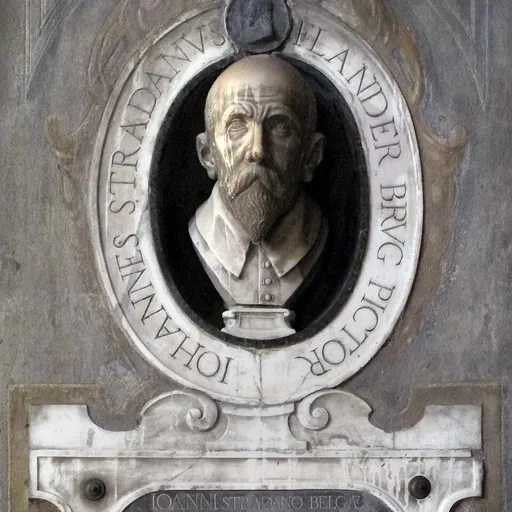
Stradanus
Flemish painter, draughtsman and tapestry designer
About Stradanus
Lived 1523 – 1605 (aged 81–82). Stradanus was a Belgian painter, draftsperson, printmaker and graphic artist.
Johannes Stradanus (Dutch Jan van der Straet or Italian Giovanni Stradano; 1523 – 2 November 1605) was a Flemish artist active mainly in 16th-century Florence, Italy. He was a wide-ranging talent who worked as an easel and fresco painter, designer of tapestries, draughtsman, designer of prints and pottery decorator. His subject range was varied and included history subjects, mythological scenes, allegories, landscapes, genre scenes, portraits, architectural scenes and animals. Stradanus also produced large altarpieces for the most important churches in Florence.
He was a prolific designer of prints which were circulated widely throughout Europe for many centuries. He was one of the earliest members of the prominent Accademia e Compagnia delle Arti del Disegno established in Florence in 1563. Stradanus also worked on various commissions in Rome, and resided in Naples from 1576 until about 1580. Thereafter he returned to Florence, dying there in 1605.
Life
Born in Bruges, he began his training in the shop of his father. He subsequently continued his training in the workshop of the otherwise unknown Bruges master Maximiliaen Francken (from 1535 to 1537). He later moved to Antwerp, where he studied from 1537 to 1540 in the workshop of Pieter Aertsen, a Dutch genre painter active in that city. There he mastered the visual language of the Renaissance and the ability to depict complex compositions. In 1545 he was registered under the name Hans vander Straten as a master painter in the Antwerp guild of Saint Luke.
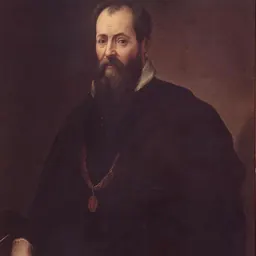
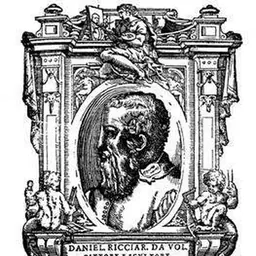
As was common at the time, Stradanus left his home country to complete his studies in Italy. In Venice he met the Flemish carpet weaver Jan Rost who headed up the newly established Arazzeria Medicea, the personal weaving workshop in Florence of the Grand Duke of Tuscany Cosimo I de' Medici. Rost encouraged Stradanus to travel to Florence for work. He followed the advice and reached Florence in 1550, where he entered in the service of the Medici Grand Dukes. He became one of the principal assistants of Giorgio Vasari, a painter, architect and the principal advisor of the Medici on art issues. Stradanus carried out his first commissions as a designer of tapestries in the Arazzeria Medicea. Here he assisted Francesco Salviati and also worked with Daniele da Volterra on the decoration of the Vatican Belvedere. Stradanus became financially successful and he was able to acquire a house and other possessions as well as donate substantial sums to religious institutions. One of these was the Sant'Agata Monastery, where his daughter Lucrezia became a nun in 1569. Stradanus also worked on various ephemeral works created for important public events in Florence. In 1565, he was a member of the team of painters and sculptors who executed the large-scale decorations at the occasion of the entry into Florence of Joanna of Austria, Grand Duchess of Tuscany on the occasion of her wedding with Francesco I de' Medici, Grand Duke of Tuscany. The overall direction of the project was in the hands of Giorgio Vasari. Representations of the four elements (earth, air, fire and water) covered each wall. Stradanus contributed two paintings to the decoration of the Studiolo: The Alchemist's Studio and Circe transforms the companions of Ulysses.
In the early 1570s Stradanus seems to have become independent of the court and Vasari. By this time the relationship between Stradanus and Vasari had soured and Vasari even tried to prevent Stradanus from gaining certain commissions. During this period he created a number of easel paintings. He had started to gain on his own commissions for large altarpieces for the most important churches of Florence, starting with Santa Croce in 1569, which was followed by Santissima Annunziata, Santo Spirito, Santa Maria Novella and other churches. He was also gradually working more outside Florence in places such as Pisa, Prato, Arezzo and Forli. Stradanus collaborated with printmakers Hieronymus Cock and the Galle family in Antwerp to produce hundreds of prints on a variety of subjects, most of which were repeatedly reproduced and often bound into volumes. In his use of wash to outline the figures Stradanus distinguished himself from his Flemish masters who preferred the use of a pen for such work. In his style and technique Stradanus combined his Flemish training with Italian techniques. He emphasized the pictorial qualities in his drawings.
Paintings Stradanus produced large altarpieces for the most important Florentine churches. His monumental religious panels still hang in the Santa Croce, Santissima Annunziata, Santa Maria Novelia and Santo Spirito. Stradanus' talent as a fresco painter is visible in the murals he created in the Palazzo Vecchio. This ducal palace, which was designed under the direction of Giorgio Vasari, was given a complete decoration with frescoes according to an extensive and complex iconographic program developed by Vasari. Stradanus made a fundamental contribution to the detailed designs of the fresco's, which were then executed by him and workshop assistants. In recognition of his important contribution his portrait was placed alongside that of Vasari on the ceiling of the Salone dei Cinquecento, the majestic reception room of the Palazzo.
Cosimo wanted to decorate his outdoor villa in Poggio a Caiano with tapestries. Stradanus developed a decorative project with hunting scenes divided in three categories: hunts for four-legged animals, animals in the air and animals in the water. The designs were inspired by contemporary sources, the classical literature of Pliny, Homer and Herodotus, as well as the hunting practices at the Florentine court. The designs were received with great acclaim. Stradanus completed 28 cartoons for the series, which was woven between 1566 and 1577. He also designed a series depicting the Horses of the Stable of John of Austria and the Illustrious acts of Roman women.
In yet another genre of print designs, aimed at a wider audience, Stradanus referred back to the subjects which he had elaborated as a court artist to the Medici court in his designs of tapestries and frescoes in the Palazzo Vecchio: a series that recounts the history and production of silk, an extensive series on the military triumphs of the Medici and a series depicting hunts of various animals published under the title Venationes Ferarum, Avium, Piscium. While some of the hunts in the last series are depicted in a relatively realistic manner, such as the dramatic rendering of horsemen with lances trying to kill a lion that fiercely resists, other hunts seem rather unrealistic such as the print showing leopards being caught with the help of mirrors. One of his most famous loose prints was the Allegory of the arts engraved by Cornelis Cort in 1578.
Don’t just read it —
keep it.
Full-length biographies made to live with: read them, listen on the way to work, watch them tonight.
- E-book
- Audio
- Video
Instant download · yours to keep · every purchase keeps this site free
Important facts
more
Jan Stradan, Johannes Stradano, Giovanni Stradanus, Jean Stradan, Strabon, Johannes Straet, Giovanni Stratensis, Giovanni Stradano Straet, Jan van der Straat, Joannes Stradius, Jan van der Straet, Joannes Stradanus, Jan Stradano, Johannes della Strada, Ioannis Stradanus, Jan van der Straet the younger, Jan van der Straat Stradanus, Jan van der Straet StraPeople in Stradanus's life
Named in this biography and alive at the same time


Related people
Same field, nearest in time

Contemporaries
People whose lives overlapped Stradanus's






Frequently asked questions
Who was Stradanus?
Flemish painter, draughtsman and tapestry designer (1523–1605)
When was Stradanus born?
Stradanus was born in 1523 in Bruges.
When did Stradanus die?
Stradanus died on 2 November 1605 in Florence.
What was Stradanus's occupation?
Stradanus was a painter, draftsperson, printmaker and graphic artist.
What nationality was Stradanus?
Stradanus was Belgian.
Sources & further reading
Cite this page
APA: Biography.guide. (2026). Stradanus. https://biography.guide/stradanus/
MLA: "Stradanus." Biography.guide, https://biography.guide/stradanus/.
Chicago: "Stradanus." Biography.guide. https://biography.guide/stradanus/.
Data last updated: 2026-09-20 · Spot an error? Report a correction.
Portrait: Wikimedia Commons · author & licence
Page generated 2026-09-27 04:58 UTC