
About Stillman Drake
Lived 1910 – 1993 (aged 82). Stillman Drake was a Canadian writer and historian of science.
Stillman Drake (December 24, 1910 – October 6, 1993) was an American-born Canadian historian of science best known for his work on Galileo Galilei. He was born and educated in Berkeley, California and then worked in municipal finance in the US and Puerto Rico until moving to the University of Toronto in 1967. Including his translations, Drake wrote 16 books on Galileo and contributed to 15 others. He was a winner of the Galileo Galilei Prize and the George Sarton Medal (1988).
Early life and education Drake was born on December 24, 1910 in Berkeley, California. He attended Marin Junior College 1928–1930, then earned a bachelor's degree from the University of California, Berkeley in philosophy 1930–1932, where he met lifelong friend and historian of mathematics Kenneth O. May. He then earned a certificate in mathematical instruction in 1934, but left academia to work in financial administration of US Great Depression programs.
In 1938, he came across the banker-philosopher Alexander Bryan Johnson's A Treatise on Language (1828), which inspired him to pursue his own unusual career as a book collector and autodidact outside of academia. During his time in finance he began his studies of the works of Galileo and he translated Galileo's Dialogue Concerning the Two Chief World Systems (1953), parts of four of Galileo's works in Discoveries and Opinions of Galileo (1957), and Galileo's The Assayer in The Controversy of Comets (1960), co-authored with C. D. O'Malley. the offer was arranged by his friend Kenneth O. May and historian of technology and organizer of the IHPST John Abrams. Possibly his most significant contribution to the history of science was his defense of Galileo's experiments as documented in his translation of Two New Sciences, chiefly in his footnotes. Drake showed how the complex interaction of experimental measurement, such as the famous Leaning Tower of Pisa experiment, and mathematical analysis led Galileo to his law of falling bodies. His footnotes to Two New Sciences refuted Alexandre Koyré's claim that experiment played no significant part in Galileo's thought by demonstration, for example in his models of Galileo's experiments which are described in his footnotes. In 1984 Drake was awarded the Galileo Galilei Prize for the Italian History of Science by the Italian Rotary Clubs and the University of Pisa.
In 1988 Drake was awarded the Sarton Medal by the History of Science Society. of the Royal Society of Canada, and of the International Academy of the History of Science; he also won two Guggenheim fellowships (1971, 1976).
Drake was reputedly "one of the greatest collectors of books and manuscripts of the twentieth century" while he worked in finance, and the books that he brought with him to Toronto were housed at the university in what later became the Thomas Fisher Rare Book Library. University of Toronto librarian Richard Landon wrote that "at a single stroke" his donation "transformed the strength and emphasis of the University Library and provided the basis for what has become one of the richest collections of early scientific works, from many countries and in many languages, in North America." He is best known for his collection of scientific works, but he also collected work related to James Joyce, Sherlock Holmes, and Alexander Bryan Johnson.
He died on October 6, 1993.
Selected works (1949) Book of Anglo-Saxon Verse. (1953) Dialogue Concerning the Two Chief World Systems. Berkeley: University of California Press. (1957) Discoveries and Opinions of Galileo. New York: Doubleday & Company. (1960) On Motion and On Mechanics: Comprising De Motu (ca. 1590) and Le Meccaniche (ca. 1600). Madison, WI: University of Wisconsin Press. (1973) "Galileo's Discovery of the Law of Free Fall," Scientific American 228(5): 84–92. (1974) Two New Sciences. University of Wisconsin Press. . A new translation including sections on centers of gravity and the force of percussion. (1978) Galileo At Work. Chicago: University of Chicago Press. (1982) Forming Book Collections. Toronto: The Amtmann Circle. (1990) Galileo: Pioneer Scientist. Toronto: University of Toronto Press. . . (1999) Essays on Galileo and the History and Philosophy of Science (3 vols.). Toronto: University of Toronto Press.
Don’t just read it —
keep it.
Full-length biographies made to live with: read them, listen on the way to work, watch them tonight.
- E-book
- Audio
- Video
Instant download · yours to keep · every purchase keeps this site free
Important facts
People in Stillman Drake's life
Named in this biography and alive at the same time

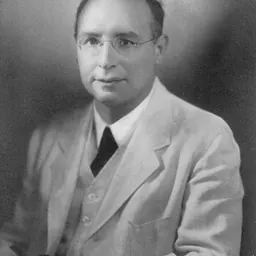

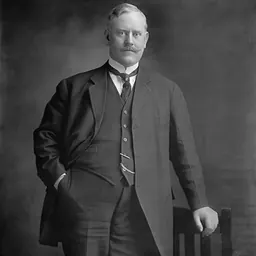



Related people
Same field, nearest in time


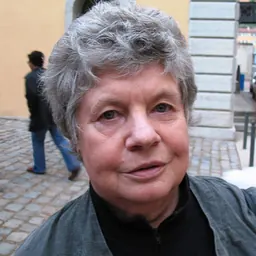
Contemporaries
People whose lives overlapped Stillman Drake's






Frequently asked questions
Who was Stillman Drake?
Canadian academic (1910–1993)
When was Stillman Drake born?
Stillman Drake was born on 24 December 1910 in Berkeley.
When did Stillman Drake die?
Stillman Drake died on 6 October 1993 in Toronto.
What was Stillman Drake's occupation?
Stillman Drake was a writer and historian of science.
What nationality was Stillman Drake?
Stillman Drake was Canadian.
Sources & further reading
Cite this page
APA: Biography.guide. (2026). Stillman Drake. https://biography.guide/stillman-drake/
MLA: "Stillman Drake." Biography.guide, https://biography.guide/stillman-drake/.
Chicago: "Stillman Drake." Biography.guide. https://biography.guide/stillman-drake/.
Data last updated: 2026-09-20 · Spot an error? Report a correction.
Page generated 2026-09-27 05:32 UTC