
About Steven Runciman
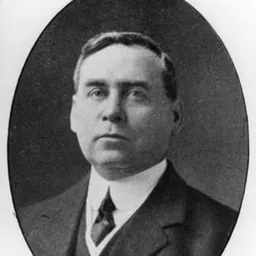
Lived 1903 – 2000 (aged 97). Steven Runciman was a British medievalist, historian and byzantinist, known for A History of the Crusades.
Sir James Cochran Stevenson Runciman (7 July 1903 – 1 November 2000), known as Steven Runciman, was an English historian best known for his three-volume A History of the Crusades (1951–1954). His works had a profound impact on the popular conception of the Crusades within the Western world, although Runciman considered himself "not a historian, but a writer of literature", and British historian Christopher Tyerman considers Runciman's History to be the "last chronicle of the crusades". Runciman summarized the Crusades as "nothing more than a long act of intolerance in the name of God, which is a sin against the Holy Ghost."
Biography Born in Northumberland, he was the second son of Walter and Hilda Runciman. His parents were members of the Liberal Party and the first married couple to sit simultaneously in Parliament. His father was created Viscount Runciman of Doxford in 1937. His paternal grandfather, Walter Runciman, 1st Baron Runciman, was a shipping magnate. Later he came to be able to make use of sources in other languages as well: Arabic, Turkish, Persian, Hebrew, Syriac, Armenian and Georgian. A King's Scholar at Eton College, he was an exact contemporary and close friend of George Orwell. was told by Runciman during an on-camera interview that he [Runciman] considered himself "not a historian, but a writer of literature." According to Christopher Tyerman, Professor of the History of the Crusades at Hertford College, Oxford, Runciman created a work that "across the Anglophone world continues as a base reference for popular attitudes, evident in print, film, television and on the internet."
Occult In his personal life, Runciman was an old-fashioned English eccentric, known as an æsthete, raconteur, and enthusiast of the occult. According to Andrew Robinson, a history teacher at Eton, "he played piano duets with the last Emperor of China, told tarot cards for King Fuad of Egypt, narrowly missed being blown up by the Germans in the Pera Palace Hotel in Istanbul and twice hit the jackpot on slot machines in Las Vegas". A story from his time at Eton of an incident with a then-friend, Eric Blair, who later became famous writing as George Orwell, is told in Gordon Bowker's biography of Orwell: "Drawing from new correspondence with Steven Runciman, one of Orwell's friends at Eton (which he attended from 1917 to 1921), Bowker reveals the (perhaps surprising) fascination of Blair with the occult. A senior boy, Phillip Yorke, had attracted the disfavour of both Blair and Runciman so they planned a revenge. As Runciman recalled, they fashioned an image of Yorke from candle wax and broke off a leg. To their horror, shortly afterwards, Yorke not only broke his leg but in July died of leukaemia. The story of what happened soon spread and, in somewhat garbled form, became legend. Blair and Runciman suddenly found themselves regarded as distinctly odd, and to be treated warily".
Homosexuality Runciman was homosexual. There is little evidence of a long-term lover, but Runciman boasted of a number of casual sexual encounters, and told a friend in later life: "I have the temperament of a harlot, and so am free of emotional complications." Nevertheless, Runciman was discreet about his homosexuality, partly perhaps because of religious feelings that homosexuality was "an inarguable offence against God". Runciman also felt that his sexuality had potentially held back his career. Max Mallowan related a conversation in which Runciman told him "that he felt his life had been a failure because of his gayness".
Death He died in Radway, Warwickshire, while visiting relatives, aged 97. He never married.
Assessment Edward Peters (2011) says Runciman's three-volume narrative history of the Crusades "instantly became the most widely known and respected single-author survey of the subject in English".
John M. Riddle (2008) says that for the greater part of the twentieth century Runciman was the "greatest historian of the Crusades". He reports that "Prior to Runciman, in the early part of the century, historians related the Crusades as an idealistic attempt of Christendom to push Islam back." Runciman regarded the Crusades "as a barbarian invasion of a superior civilization, not that of the Muslims but of the Byzantines".
Thomas F. Madden (2005) stresses the impact of Runciman's style and viewpoint: It is no exaggeration to say that Runciman single-handedly crafted the current popular concept of the crusades. The reasons for this are twofold. First, he was a learned man with a solid grasp of the chronicle sources. Second, and perhaps more important, he wrote beautifully. The picture of the crusades that Runciman painted owed much to current scholarship yet much more to Sir Walter Scott. Throughout his history Runciman portrayed the crusaders as simpletons or barbarians seeking salvation through the destruction of the sophisticated cultures of the east. In his famous "summing-up" of the crusades he concluded that "the Holy War in itself was nothing more than a long act of intolerance in the name of God, which is a sin against the Holy Ghost. Tyerman himself has said: "It would be folly and hubris to pretend to compete, to match, as it were, my clunking computer keyboard with his [Runciman's] pen, at once a rapier and a paintbrush; to pit one volume, however substantial, with the breadth, scope and elegance of his three."
Honours Runciman was knighted in the 1958 New Year Honours List and appointed a Member of the Order of the Companions of Honour in 1984. He was elected a Fellow of the British Academy in 1957 Streets in Mystras, Greece, and Sofia, Bulgaria, were named in his honour.
In 1991, the Czech painter and philhellene Nicholas Egon established the annual Runciman Lectures at King's College London in honour of Runciman.
Works Published works of Runciman include the following. The Emperor Romanus Lecapenus and His Reign: A Study of Tenth-Century Byzantium (1929)
Byzantine Civilization (1933) The Medieval Manichee: A Study of the Christian Dualist Heresy (1947) A History of the Crusades, Volume One: The First Crusade and the Foundation of the Kingdom of Jerusalem (1951) A History of the Crusades, Volume Two: The Kingdom of Jerusalem and the Frankish East, 1100-1187 (1952) A History of the Crusades, Volume Three: The Kingdom of Acre and the Later Crusades (1954) The Eastern Schism: A Study of the Papacy and the Eastern Churches during the XIth and XIIth Centuries (1955) The Sicilian Vespers: A History of the Mediterranean World in the Later Thirteenth Century (1958) The White Rajahs: A History of Sarawak from 1841 to 1946 (1960) The Fall of Constantinople 1453 (1965) The Great Church in Captivity: A Study of the Patriarchate of Constantinople from the Eve of the Turkish Conquest to the Greek War of Independence (1968) The Last Byzantine Renaissance (1970) The Orthodox Churches and the Secular State (1971) Byzantine Style and Civilization (1975) The Byzantine Theocracy: The Weil Lectures, Cincinnati (1977) Mistra: Byzantine Capital of the Peloponnese (1980) The First Crusade (1980) A Traveller's Alphabet: Partial Memoirs (1991)
Selected papers
Don’t just read it —
keep it.
Full-length biographies made to live with: read them, listen on the way to work, watch them tonight.
- E-book
- Audio
- Video
Instant download · yours to keep · every purchase keeps this site free
Important facts
Family & relationships
People in Steven Runciman's life
Named in this biography and alive at the same time





Related people
Same field, nearest in time
Contemporaries
People whose lives overlapped Steven Runciman's
Frequently asked questions
Who was Steven Runciman?
British historian of the Middle Ages (1903–2000)
When was Steven Runciman born?
Steven Runciman was born on 7 July 1903 in Northumberland, Glasgow.
When did Steven Runciman die?
Steven Runciman died on 1 November 2000 in Warwickshire, Radway.
What was Steven Runciman's occupation?
Steven Runciman was a medievalist, historian and byzantinist.
What was Steven Runciman known for?
Steven Runciman was known for A History of the Crusades.
What nationality was Steven Runciman?
Steven Runciman was British.
Sources & further reading
Cite this page
APA: Biography.guide. (2026). Steven Runciman. https://biography.guide/steven-runciman/
MLA: "Steven Runciman." Biography.guide, https://biography.guide/steven-runciman/.
Chicago: "Steven Runciman." Biography.guide. https://biography.guide/steven-runciman/.
Data last updated: 2026-09-22 · Spot an error? Report a correction.
Page generated 2026-09-27 05:12 UTC