About Claude Cahen
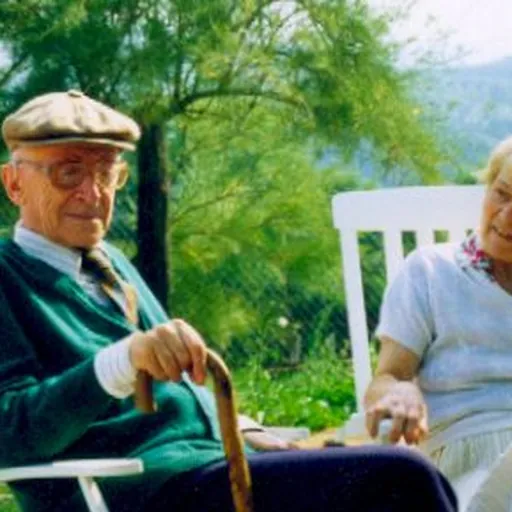
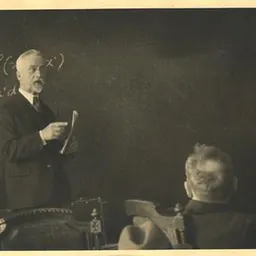
Lived 1909 – 1991 (aged 82). Claude Cahen was a French medievalist, historian, translator, university teacher and orientalist.
Claude Cahen (26 February 1909 – 18 November 1991) was a French Marxist orientalist and historian. He specialized in the studies of the Islamic Middle Ages, Muslim sources about the Crusades, and social history of the medieval Islamic society (works on Futuwa orders).
Claude Cahen was born in Paris to a French Jewish family. After studying at the École Normale Supérieure on the rue d'Ulm, he attended the Institut national des langues et civilisations orientales, receiving a doctorate in 1940. He was a professor at the University of Strasbourg from 1945 to 1959 and then at the Sorbonne; in 1967 he was invited to teach at the University of Michigan, and in 1973, he was elected to the Académie des Inscriptions et Belles-Lettres. He was later elected to the American Philosophical Society in 1983.
Cahen was married and had six children, including the historian Michel Cahen, who wrote a biography of his father. Cahen was a member of the French Communist Party from the 1930s until 1960, and remained an active Marxist afterwards. Despite his origins, he neither self-identified as Jewish nor supported the State of Israel. Cahen has been called "the doyen of Islamic social history and one of the most influential Islamic historians of [his] century," and "the best historian of the Middle East in the twentieth century." Mark Cohen describes him as a distinguished Islamic historian. He was a prisoner of war in World War II. and an issue of the journal Arabica (43/1 (1996)) was dedicated to him. That issue also includes a nearly complete bibliography of his works.
Works Le régime féodal de l'Italie Normande, 145 pages, thèse complémentaire de l'Université de Paris, éditions P. Geuthner (1940). LCCN 42034209 « L'histoire économique et sociale de l'Orient musulman médiéval », in Studia Islamica, Paris (1955). « Les facteurs économiques et sociaux dans l'ankylose culturelle de l'Islam », in Classicisme et déclin culturel dans l'histoire de l'Islam, Symposium de Bordeaux (juin 1956), 396 pages, éditions Besson et Chantemerle (1957). « Mouvements populaires et autonomismes urbains dans l'Asie musulmane du Moyen Âge », in Arabica, Brill Academic Publishers (1958–1959). Tiré à part de 91 pages (Part I, Arabica V, (p. 225–250), Part II, Arabica VI, (p. 25–56), Part III, Arabica VI, (p. 233–265) LC DS223 C24 1959 « La changeante portée sociale de quelques doctrines religieuses », in L'élaboration de l'Islam, compte rendu du Colloque de Strasbourg sur l'Islam (juin 1959), 127 pages éditions PUF (1961). « Points de vue sur la Révolution abbaside », dans Revue historique (1963). Douanes et commerce dans les ports méditerranéens de l'Égypte médiévale (d'après al-Makhzumi. Minhaj), 314 pages, éditions E.J. Brill, Leiden, 1964. Pre-Ottoman Turkey, 458 pages, éditions Sidg. & J, 1968. traduction française augmentée : La Turquie pré-ottomane, 409 pages, Institut français d'études anatoliennes, éditions Varia Turcica (1988). « Baba Ishaq, Baba Ilyas, Hadjdji Bektash et quelques autres », in Turcica, 1 (1969), (p. 53–64). Turco-Byzantina et Oriens Christianus, Londres, Variorum Reprints, 1974. Makhzûmiyyât : Études sur l'histoire économique et financière de l'Égypte médiévale (1977), 225 pages, Brill Academic Publishers (1 August 1997). Introduction à l'histoire du monde musulman médiéval : VIIe–XVe, 216 pages, éditions Maisonneuve (nouv. éd, 1983). « djaych » (armée) et « hisba » (police des mœurs et des marchés), contributions à l'Encyclopédie de l'Islam, E.I.2, Brill Academic Publishers, respectivement : volume II (1986), (p. 517–524) et volume III (1991), (p. 503–510). Orient et Occident au temps des croisades, 302 pages (1983) (restitue les croisades dans le contexte d'une histoire méditerranéenne), éditions Aubier Montaigne (24 septembre 1992). L'Islam, des origines au début de l'Empire ottoman, poche, 413 pages (réédition mise à jour ), éditions Hachette Littérature (17 September 1997).
Références :
« Claude Cahen : histoire et engagement politique. Entretien avec Maxime Rodinson » (propos recueillis par D. Gazagnadou et F. Micheau, bibliographie exhaustive des ouvrages, articles et comptes-rendus de Claude Cahen), Arabica (Brill éditeur), vol. 43, n°1 (1996), (p. 7–27). Revue Arabica
Don’t just read it —
keep it.
Full-length biographies made to live with: read them, listen on the way to work, watch them tonight.
- E-book
- Audio
- Video
Instant download · yours to keep · every purchase keeps this site free
Important facts
People in Claude Cahen's life
Named in this biography and alive at the same time

Related people
Same field, nearest in time

Contemporaries
People whose lives overlapped Claude Cahen's




Frequently asked questions
Who was Claude Cahen?
French Marxist Orientalist and historian (1909–1991)
When was Claude Cahen born?
Claude Cahen was born on 26 February 1909 in 6th arrondissement of Paris.
When did Claude Cahen die?
Claude Cahen died on 18 November 1991 in Savigny-sur-Orge.
What was Claude Cahen's occupation?
Claude Cahen was a medievalist, historian, translator, university teacher and orientalist.
What nationality was Claude Cahen?
Claude Cahen was French.
Sources & further reading
Cite this page
APA: Biography.guide. (2026). Claude Cahen. https://biography.guide/claude-cahen/
MLA: "Claude Cahen." Biography.guide, https://biography.guide/claude-cahen/.
Chicago: "Claude Cahen." Biography.guide. https://biography.guide/claude-cahen/.
Data last updated: 2026-09-22 · Spot an error? Report a correction.
Portrait: Wikimedia Commons · author & licence
Page generated 2026-09-27 05:02 UTC