
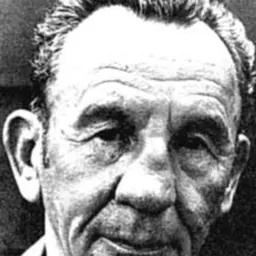
Steven Krilis
Australian immunologist and academic
About Steven Krilis
Born 1947. Steven Krilis is an Australian.
Steven Antony Krilis (born 26 November 1947) is a Greek-born Australian physician-scientist, clinical immunologist and academic. He is a conjoint professor in the School of Clinical Medicine at the University of New South Wales (UNSW) and has served as head of the Department of Infectious Disease, Immunology and Sexual Health at St George Hospital, Sydney. His research has addressed antiphospholipid syndrome (APS), beta-2 glycoprotein I (β2GPI), thrombosis, allergy, inflammation, innate immunity and the redox regulation of extracellular plasma proteins. This work contributed to a shift in APS research towards antibodies directed against phospholipid-binding plasma proteins. Subsequent studies by Krilis and collaborators investigated the structure and physiological functions of β2GPI in coagulation, innate immunity, vascular injury and extracellular redox regulation.
Krilis organised and chaired the 11th International Congress on Antiphospholipid Antibodies in Sydney in 2004. The associated international workshop revised the preliminary Sapporo classification criteria. The resulting consensus statement, published in 2006 with Spyridon Miyakis as first author and Krilis as senior author, became widely known as the Sydney classification criteria and was extensively used in APS research before publication of the 2023 ACR/EULAR criteria.
Early life and education
Krilis was born in Athens on 26 November 1947 and emigrated to Australia in 1955.
In 1972, Krilis, graduated with a Bachelor of Medicine and Bachelor of Surgery with honors (MBBS) from the University of New South Wales, Sydney Australia. In 1984, Krilis was awarded a PhD in Medicine from the University of Sydney, Australia. His PhD thesis identified the major allergen of the common house dust mite and generated monoclonal antibodies which he used to standardize house dust mite extracts.
In 1981, Krilis was awarded a National Health and Medical Research Council fellowship and a Fogarty International Postdoctoral Research Fellowship, to undertake post doctoral research at Harvard Medical School and Brigham and Women's Hospital. .
Research
Leukotriene biology
During his Harvard postdoctoral work, Krilis contributed to studies of sulfidopeptide leukotrienes. In 1984, Krilis, Lewis, Corey and Austen reported a specific high-affinity receptor for leukotriene C4 in guinea-pig ileal smooth muscle and associated membrane fractions. The receptor's binding characteristics were consistent with mediation of the contractile response to leukotriene C4.
Mast-cell biology
After returning to Australia in 1983, Krilis established a programme in human mast-cell biology. His laboratory investigated the differentiation and maturation of mast cells from human bone-marrow progenitors and factors regulating mast cells and basophils. Later studies examined interleukin-16-responsive mast-cell and basophil progenitors and cytokine regulation of these cells.
β2-glycoprotein I and antiphospholipid syndrome
In 1989, Krilis and colleagues reported that autoimmune anticardiolipin-antibody binding depended on a plasma cofactor.
In 2001, Krilis and colleagues reported the first published gene-targeted β2GPI-deficient mouse model. Plasma from the deficient mice showed impaired thrombin generation. An independently generated β2GPI-deficient mouse model was reported in 2025.
Haemostasis and vascular injury
Krilis and colleagues showed that β2GPI binds coagulation factor XI and inhibits its activation by thrombin and factor XIIa. The interaction was localised to domain V, which is cleaved by factor XIa.
They also reported a redox-regulated interaction between β2GPI and von Willebrand factor, controlled by thioredoxin-1. In murine thrombosis models, domain V mediated the antithrombotic effect of β2GPI. Domain V also reduced natural IgM-mediated myocardial injury in a mouse model of cardiac ischaemia-reperfusion.
Innate immunity
Experimental studies showed that β2GPI ameliorated Gram-negative bacterial inflammation and protected mice against Gram-negative septicaemia.
Extracellular protein redox biology
Krilis and colleagues investigated reversible thiol-disulphide exchange in circulating proteins. They demonstrated redox-dependent regulation of β2GPI and its interaction with von Willebrand factor, and investigated redox forms of complement factor H and angiotensinogen. The assay was later described as a method for quantifying total and free-thiol angiotensinogen.
International leadership and classification criteria
Krilis organised and chaired the 11th International Congress on Antiphospholipid Antibodies in Sydney in 2004. The congress included an international workshop convened to revise the preliminary Sapporo classification criteria. The consensus statement was published in 2006 with Spyridon Miyakis, then a fellow in Krilis's department, as first author and Krilis as senior author. In 2013 they published The Pathogenesis of the Antiphospholipid Syndrome in the New England Journal of Medicine. Their 2024 review in Clinical Immunology examined the context-dependent functions of β2GPI domain V in health and disease.
Honours and recognition
Krilis was appointed a Member of the Order of Australia in the 2019 Queen's Birthday Honours "for significant service to medical research in the areas of inflammation, thrombosis and allergic disease".
In 2023, Krilis was elected a Corresponding Member of the Academy of Athens in the science of medicine, becoming the second Australian elected to the institution.
Selected publications
Don’t just read it —
keep it.
Full-length biographies made to live with: read them, listen on the way to work, watch them tonight.
- E-book
- Audio
- Video
Instant download · yours to keep · every purchase keeps this site free
Important facts
Contemporaries
People whose lives overlapped Steven Krilis's





Frequently asked questions
Who is Steven Krilis?
Australian immunologist and academic
When was Steven Krilis born?
Steven Krilis was born on 26 November 1947.
What nationality is Steven Krilis?
Steven Krilis is Australian.
Sources & further reading
Cite this page
APA: Biography.guide. (2026). Steven Krilis. https://biography.guide/steven-krilis/
MLA: "Steven Krilis." Biography.guide, https://biography.guide/steven-krilis/.
Chicago: "Steven Krilis." Biography.guide. https://biography.guide/steven-krilis/.
Data last updated: 2026-09-20 · Spot an error? Report a correction.
Page generated 2026-09-27 05:31 UTC