
About Steven Galloway
Born 1975. Steven Galloway is a Canadian novelist and writer.
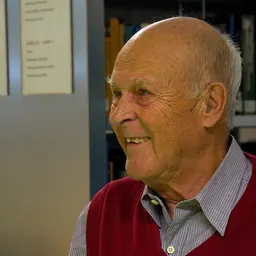
Steven Galloway (born July 13, 1975) is a Canadian novelist and a former professor at the University of British Columbia. He is the author of the award-winning novel The Cellist of Sarajevo.
Early life Galloway was born in Vancouver, and raised in Kamloops, British Columbia. He attended the University College of the Cariboo and the University of British Columbia (UBC).
Career
Galloway taught creative writing at the University of British Columbia for many years. He also taught writing at Simon Fraser University. He published his first novel, Finnie Walsh, in 2000, a second novel, Ascension, in 2003, and followed this with a third book, The Cellist of Sarajevo, in 2008.
In 2013 Galloway became a tenured associate professor at UBC, and served as acting chair of the creative writing program. In 2014 he published his fourth novel, The Confabulist. In 2015 he was confirmed in the position of chair.
Legal issues UBC suspension and termination In November 2015, UBC announced that Galloway was suspended from his position with pay because allegations, which were not specified in the announcement, had been made against him. The Canadian Press spoke with five of the people who had filed complaints against Galloway, and found that complaints included alleged "sexual harassment, bullying, threats and an incident in which Galloway is accused of slapping a student". The letter caused controversy in the Canadian literary community, with some accusing the signatories of taking Galloway's side over that of his accusers.
Investigation and UBC lawsuit In December 2016, Galloway revealed that he had had an affair with a student, for which he apologized. According to Galloway's lawyer Dan Burnett, Madame Justice Boyd conducted an exhaustive review of the whole of the evidence and found on a balance of probabilities that Galloway had not committed sexual assault; Boyd also dismissed several other allegations of misconduct against Galloway including all of the allegations brought by additional complainants. In 2018, UBC was forced to pay Galloway $167,000 for violating his privacy rights and damaging his reputation. On July 13, 2018, Galloway published an essay in the Toronto National Post asserting that he was "not a monster," despite what he felt had been a coordinated campaign to paint him as such, and revealed that the woman who had accused him of assault was the one with whom he had had the affair. Steenkamp told a local newspaper the same day, however, that the dismissal was "fully justified" and that the sexual allegations against Galloway were not the only issues the university had considered. This comment was ruled to be a breach of the confidentiality agreement, which forbade public comments on the reasons for Galloway's dismissal.
Defamation lawsuits In October 2018, Galloway filed a defamation lawsuit against the woman who accused him of sexual assault, along with 20 others who had spread the allegations on Twitter and within UBC, in the Supreme Court of British Columbia. The defendants contended that this was an example of a strategic lawsuit against public participation. Before deciding whether to dismiss the suit, the BC Supreme Court ordered Galloway's accuser to make a series of documents available in discovery. This ruling, which the Supreme Court of Canada declined to review, was upheld by a panel consisting of Chief Justice Robert Bauman and two other judges in April 2020. The disclosure revealed that the accuser (referred to in court documents as A.B.) had copied a Fifth Estate reporter in her initial complaint to UBC president Martha Piper, contradicting some of her previous testimony. Exchanges with reporters led A.B. to write in a subsequent email that was at her insistence read out to all UBC Creative Writing Program Faculty that "the CBC legal team thought my evidence was damning." She referred to this claim as an exaggeration following a statement by CBC that no such vetting had taken place. This assertion of "vetting" was the underpinning of a threat to sue UBC and the Creative Writing Program if they did not acquiesce to her demand to take action against Galloway. As reported in the Globe and Mail, A.B. said:
A nine day hearing on the lawsuit began in April 2021. During the proceedings, one of A.B.'s friends argued that her tweets about Galloway were inconsequential and that she had already suffered career setbacks by criticizing him. Galloway described how the allegations against him had destroyed his life and career, specifically mentioning the fact that his publisher withdrew a three book contract in 2018, and how he had been reduced to doing manual labor jobs, including cleaning swimming pools, for a living. He also took issue with a critic's review of a 2018 art exhibit, featuring art by A.B., which described the alleged assault without naming Galloway. It was revealed that two defendants, UBC Professors Keith Maillard and Annabel Lyon, had organized the meeting which first alerted other department members to the allegations — a meeting which one attendee described as "[an effort to] protect students and faculty" and another described as "a toxic, traumatic event". Maillard and Lyon, who were on A.B.'s committee, rejected claims that their handling of the allegations was related to the fact that they had approved her application to graduate without a complete thesis.
Writing about this hearing in the National Post, Adam Zivo summarized Adair's ruling:
Adair's decision was appealed, and a hearing took place in May 2023 in the BC Court of Appeals. In January 2024, a three judge panel on the appeals court unanimously upheld Justice Adair's ruling and allowed Galloway's suit to proceed further to trial.
The defendants subsequently appealed to the Supreme Court of Canada in one last attempt to have the case dismissed. However, in October 2024, the Supreme Court refused to hear the case and rejected all appeals, with Galloway being awarded costs. This means that the defendants now have no more avenue of appeal and that the case will go to trial. The trial is now set to begin in October 2026 and is expected to last for up to twelve weeks. At some point during the summer of 2026, in either June or July, Professors Maillard and Lyon chose to settle with Galloway. The terms of the settlement are confidential and remain unknown.
Books
Finnie Walsh Galloway's debut novel, Finnie Walsh (2000), was nominated for the Amazon.ca/Books in Canada First Novel Award. It was described as "a work about the love of hockey and the way two boys form a bond that carries them through life's tragedies and trials". Galloway was recognized for successfully portraying a child's perspective without "giving a child an adult's perspective". The ethnic and economic diversity of the characters had critics describing it as a "truly Canadian book both in content and sensibility".
The Cellist of Sarajevo Galloway's third novel, The Cellist of Sarajevo (2008), was nominated for the International Dublin Literary Award, longlisted for the 2008 Scotiabank Giller Prize and won the 2009 Evergreen Award, the George Ryga Award for Social Awareness in Literature and the Borders Original Voices Award. It was heralded as "the work of an expert" by The Guardian, and has become an international bestseller with rights sold in over 30 countries.
The novel is set during the siege of Sarajevo in the mid-1990s and explores the dilemmas of ordinary people caught in the crisis. The novel follows the lives of three fictional citizens of Sarajevo as they struggle to survive the war, including one who seeks to protect the cellist: "He has said he will do this for twenty-two days. This is the eighth. People see him. The world has seen him. We cannot allow him to be killed." The novel examines the gentleness found in humanity and the lasting and healing power of art.
Vedran Smailović did not learn of the book until after it had been published. Galloway had been advised to contact Smailović, who had purposefully embraced a quiet, private life in Warrenpoint, Northern Ireland, but did not do so. and pointing out differences between the story and his actual life.
Galloway, claimed that Smailović's playing of the cello as a protest was a public act, Galloway sent the cellist a signed copy of the book.
The Confabulist The Confabulist is a story told some time after 2010 by an elderly man named Martin Strauss who claims to have killed Harry Houdini. Mostly employing flashbacks, the novel alternates between Houdini's point of view and Strauss's point of view to describe the years leading up to their 1926 encounter in Montreal. Several aspects are historically accurate including attempts to have Houdini join espionage circles, and his efforts to champion skepticism over spiritualism. However, it gradually becomes clear that Strauss is an unreliable narrator. The Confabulist was shortlisted for The Rogers Trust Fiction Prize and received favourable reviews from Marcia Kaye of The Toronto Star and Keith Donohue of The Washington Post. In the National Post, Zoe Whittall said "But this is Steven Galloway we're talking about — a brilliant Vancouver novelist, and the author of The Cellist of Sarajevo — and I believe that, no matter the setting or conceit, a good novelist can make anything worth your while. And Galloway is nothing if not a good novelist. I'm happy to report that The Confabulist, his fourth novel, is a stunning achievement." Conversely, Jenny Hendrix of the New York Times criticized the narrative as heavy handed.
Don’t just read it —
keep it.
Full-length biographies made to live with: read them, listen on the way to work, watch them tonight.
- E-book
- Audio
- Video
Instant download · yours to keep · every purchase keeps this site free
Important facts
People in Steven Galloway's life
Named in this biography and alive at the same time



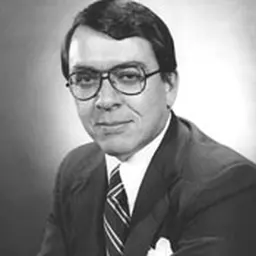


Related people
Same field, nearest in time


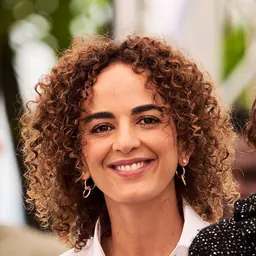

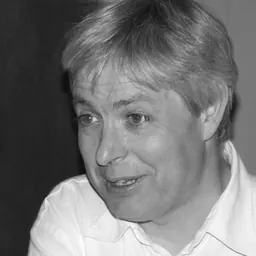
Contemporaries
People whose lives overlapped Steven Galloway's

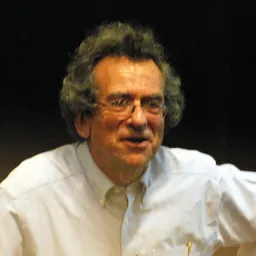


Frequently asked questions
Who is Steven Galloway?
Canadian writer
When was Steven Galloway born?
Steven Galloway was born on 13 July 1975 in Vancouver.
What is Steven Galloway's occupation?
Steven Galloway is a novelist and writer.
What nationality is Steven Galloway?
Steven Galloway is Canadian.
Sources & further reading
· DBpedia: Steven Galloway (writer)
Cite this page
APA: Biography.guide. (2026). Steven Galloway. https://biography.guide/steven-galloway/
MLA: "Steven Galloway." Biography.guide, https://biography.guide/steven-galloway/.
Chicago: "Steven Galloway." Biography.guide. https://biography.guide/steven-galloway/.
Data last updated: 2026-09-20 · Spot an error? Report a correction.
Page generated 2026-09-27 05:32 UTC