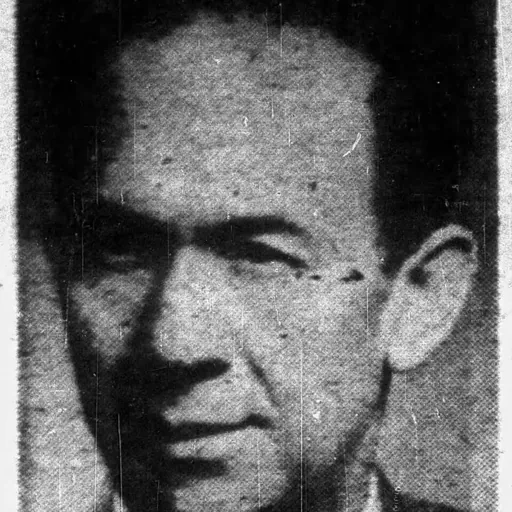
About Steve Nelson
Lived 1903 – 1993 (aged 89–90). Steve Nelson was an American activist and soldier.
Steve Nelson (born Stjepan Mesaroš; January 1, 1903 – December 11, 1993) was a Croatian-born American labor activist. He was one of nearly 3,000 American volunteers who joined the Abraham Lincoln Brigade in the Spanish Civil War, where he served as a political commissar. For years, he was a leading functionary of the Communist Party USA. He achieved public notoriety in the early 1950s when he was convicted and imprisoned under the Pennsylvania Sedition Act and the federal Smith Act. He is perhaps best remembered as the defendant in Pennsylvania v. Nelson, a U.S. Supreme Court ruling in 1956 which invalidated state sedition laws.
Early life Stjepan Mesaroš (sometimes spelled Mesarosh) was born in Subocka, Croatia (then a part of the Austro-Hungarian Empire) on January 1, 1903 to Michael (1870–1920) and Mary Mesaroš (1883–1986). His family were of Hungarian extraction and had been millers on both sides for generations.
His early education was meager as he noted in his oral autobiography:
In 1920, Mesaroš emigrated with his mother and three sisters to the United States, specifically to Philadelphia, Pennsylvania where his uncle lived. The first job Mesaroš obtained, with his uncle's help, was in a slaughterhouse. Mesaroš then had a series of jobs in machine shops, auto plants, and metal works. Eventually he found work as a carpenter, which would remain his primary means of income.
In the course of his blue-collar employment in Philadelphia, Mesaroš came in contact with radical co-workers who spurred on his political education. He soon joined the South Slavic branch of the Socialist Labor Party (SLP). In 1923, after he grew dissatisfied with the "stagnancy" of the SLP, he joined the Communist Party's youth group, the Young Workers League (YWL) (later renamed the Young Communist League).
Career Communist Party
In the fall of 1923, by now using the Americanized name "Steve Nelson", he relocated to Pittsburgh, which he was told was "a good labor town" with better prospects of finding employment. Through the Pittsburgh branch of the YWL, Nelson met his future wife, Margaret Yaeger. She came from a family with deep roots in radical labor politics. He described her as "much better educated and more sophisticated" than himself. She encouraged him on a path of reading and self-learning, which compensated for his lack of childhood schooling.
In 1925, Nelson left the YWL and joined the Communist Party USA (CPUSA). That same year, he and Margaret moved to Detroit. He worked in the auto industry as an assembly line worker and union organizer.
In 1931, he and Margaret were sent to Moscow for two years at the International Lenin School. He became a courier for the Comintern, delivering documents and funds to Germany, Switzerland and China. Following heavy losses at Brunete (during which he briefly served as battalion commander following the death of Oliver Law), the Lincoln Battalion and the George Washington Battalion were merged into the Lincoln–Washington Battalion. Mirko Markovics, a Yugoslav-American, was appointed as commander of the joint unit, with Nelson serving as the commissar.
In August 1937, the American forces were reorganized. Nelson was promoted to brigade commissar, and Robert Hale Merriman became brigade chief of staff. Hans Amlie was the new commander of the Lincoln–Washington Battalion. Nelson saw action at Quinto and the Battle of Belchite. One of the scientists identified was Joseph Weinberg, who worked at UC Berkeley's Radiation Laboratory.
In April 1943, Nelson met with Vasily Zarubin, the most senior NKVD agent in the United States. Nelson was running a secret "control commission" to find informants and spies in the California branch of the Communist Party. During the meeting, Zarubin delivered money. FBI officials were listening in, and they learned the purpose of the transaction was to obtain information for transmittal to the USSR. However, according to historian John Earl Haynes, the FBI subsequently concluded that the many Soviet attempts to obtain vital data about the Manhattan Project were ultimately not successful.
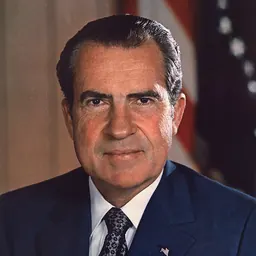
In 1948, Nelson was subpoenaed by the House Un-American Activities Committee (HUAC). As he later recalled, "Although the subpoena was vaguely worded, there was enough of a hint to show what HUAC was after. There was already a campaign underway to prove that the Soviet Union's development of the atomic bomb was the product of espionage." He appeared before the HUAC in June 1949. His counsel Emanuel Bloch urged him to invoke the Fifth Amendment and decline all questions. Years afterward, Nelson admitted he did not fully grasp the Fifth Amendment because he thought he could selectively answer some questions and invoke the Fifth for others. He quickly learned his mistake. As he put it, the HUAC's chief examiner that day, Congressman Richard Nixon, was "threatening me with contempt before the hearings were five minutes old." Nelson wound up with 33 counts of contempt of Congress, each carrying a possible sentence of one year in jail. Six months later, with Milton Freedman as his lawyer, Nelson managed to get the contempt charges dismissed.
Sedition charges Nelson (right) with his attorney Emanuel H. Bloch, June 8, 1951 In August 1950, following a raid on the Pittsburgh Party Headquarters, Nelson and two local Party leaders were arrested and charged under the 1919 Pennsylvania Sedition Act. It was a WWI-era law that made it illegal to incite disloyalty against the government. After 80 lawyers turned down his request for legal counsel, Nelson resolved to handle his own case. In what became a widely publicized trial, he was convicted, fined $10,000 plus court costs, and sentenced to 20 years in prison. Then, in October 1956, the U.S. Supreme Court ruled that the testimony at Nelson's sedition trial had been perjured by an FBI informant, and a new trial was granted. In 1957, the government dropped all charges against the defendants.
Later years
In the aftermath of Nikita Khrushchev's secret speech about atrocities committed under Joseph Stalin's rule, Nelson resigned from the CPUSA in 1957. Over the next couple of decades, he went back to carpentry as his means of earning a living. In 1963, he became National Commander of the Veterans of the Abraham Lincoln Brigade (VALB). In 1975, he and Margaret retired to a home he had built in Truro, Massachusetts on Cape Cod. With help from co-authors James R. Barrett and Rob Ruck, Nelson published his oral autobiography in 1981, Steve Nelson: American Radical.
Death Margaret Nelson died in 1986. Steve Nelson died at Manhattan's Presbyterian Hospital on 11 December 1993, at age 90. His family said the cause was complications after aorta surgery.
Works
Don’t just read it —
keep it.
Full-length biographies made to live with: read them, listen on the way to work, watch them tonight.
- E-book
- Audio
- Video
Instant download · yours to keep · every purchase keeps this site free
Important facts
People in Steve Nelson's life
Named in this biography and alive at the same time





Related people
Same field, nearest in time



Contemporaries
People whose lives overlapped Steve Nelson's

Frequently asked questions
Who was Steve Nelson?
Croatian-born American political activist (1903–1993)
When was Steve Nelson born?
Steve Nelson was born in 1903 in Subocka.
When did Steve Nelson die?
Steve Nelson died in 1993 in Presbyterian Hospital.
What was Steve Nelson's occupation?
Steve Nelson was an activist and soldier.
What nationality was Steve Nelson?
Steve Nelson was American.
Sources & further reading
· DBpedia: Steve Nelson (activist)
Cite this page
APA: Biography.guide. (2026). Steve Nelson. https://biography.guide/steve-nelson-activist/
MLA: "Steve Nelson." Biography.guide, https://biography.guide/steve-nelson-activist/.
Chicago: "Steve Nelson." Biography.guide. https://biography.guide/steve-nelson-activist/.
Data last updated: 2026-09-23 · Spot an error? Report a correction.
Portrait: Wikimedia Commons · author & licence
Page generated 2026-09-27 05:06 UTC